Thursday, September 18, 2014

People of Marrakech


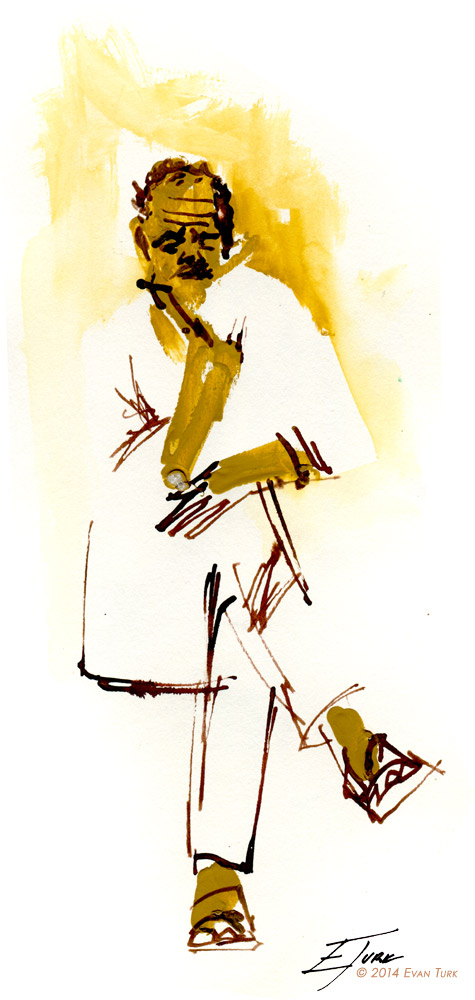
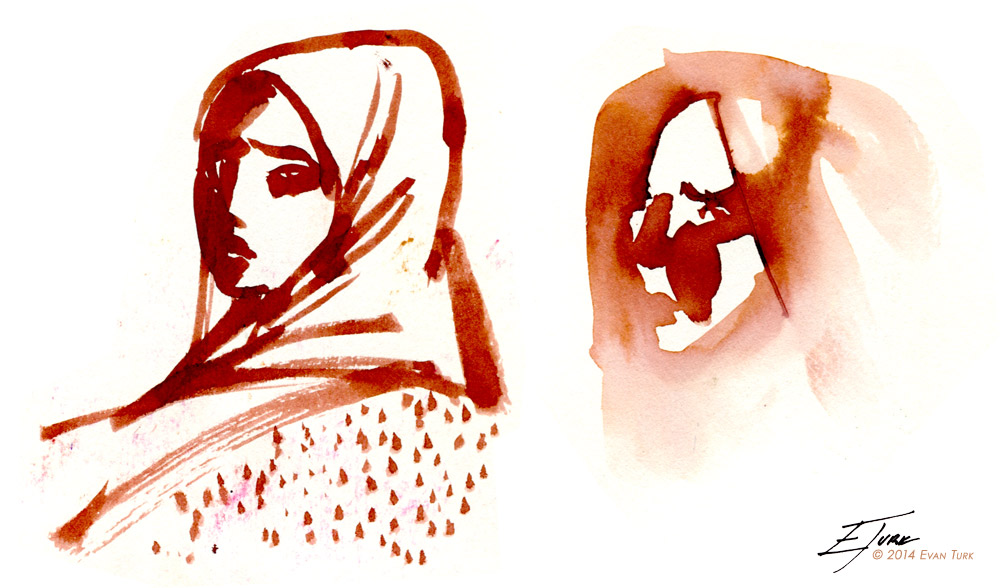
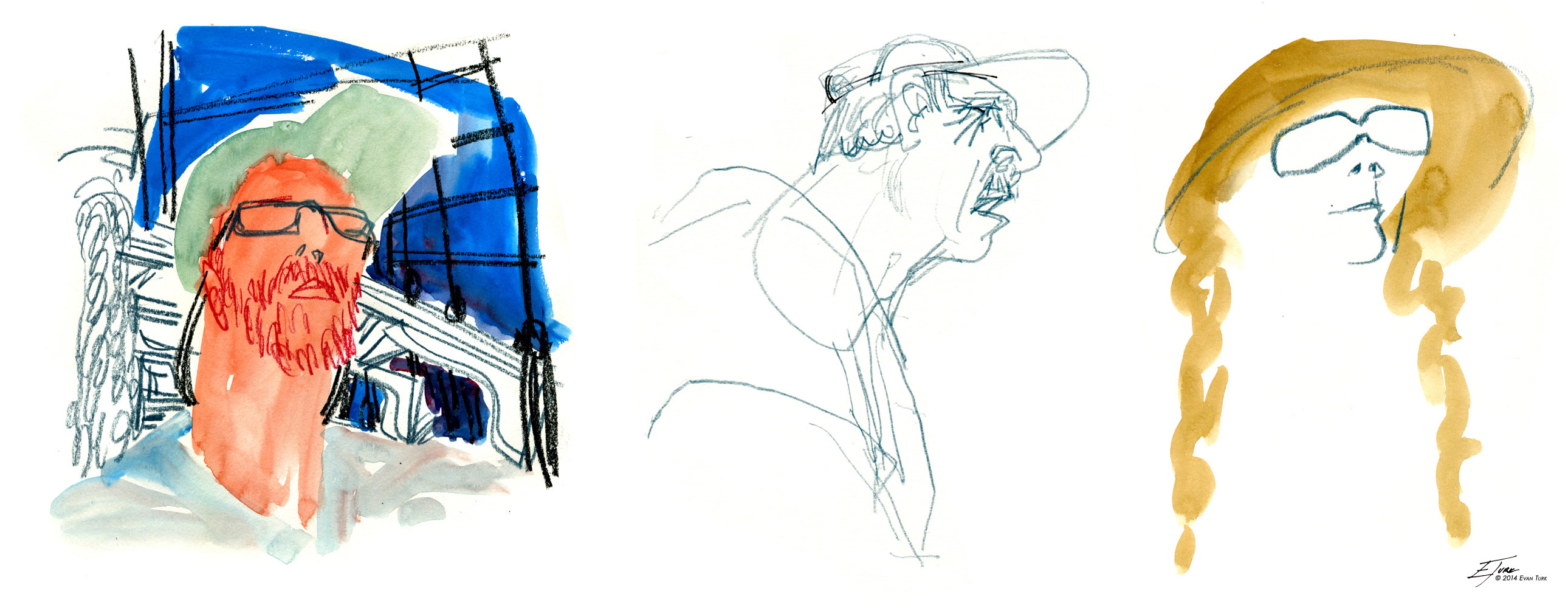
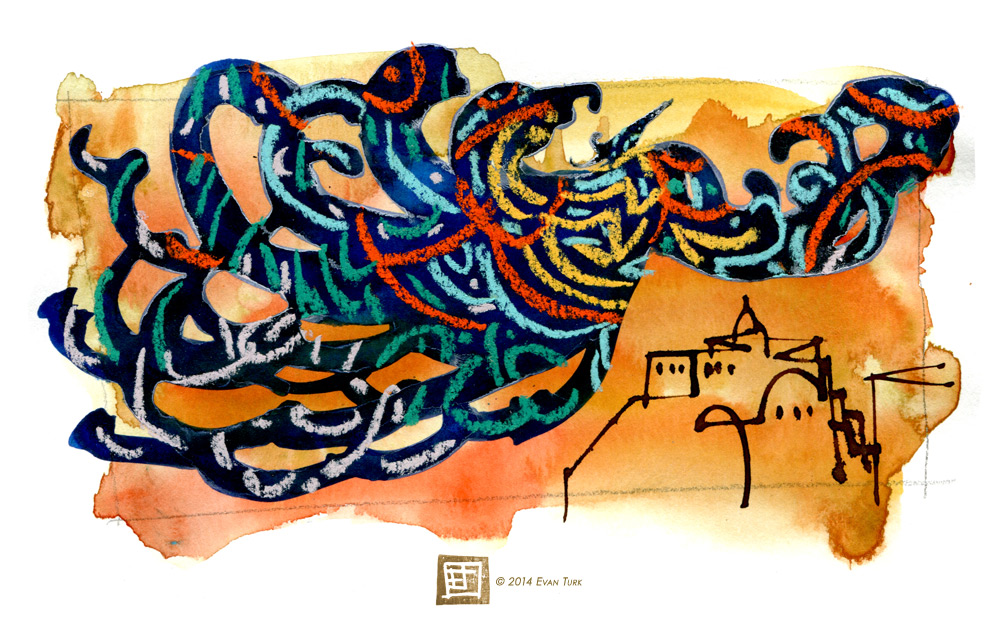
I just returned from a trip to Morocco where I was exploring, drawing, and researching for an upcoming children's book about Morocco. I met amazing people, saw amazing things, and left feeling bewildered and inspired. Most of the work I did there, I will be posting closer to the release of the book (2016!) but I couldn't resist posting a few snapshots of people in Marrakech.


For more of Evan Turk's travel illustration, check out the link below: 

Wednesday, July 23, 2014

The Charles W. Morgan: The 38th Voyage


Why should you be excited that a historic whaleship sailed into a marine sanctuary and saw whales?

It is a valid question, and one I have asked myself as I became increasingly excited and passionate about the trip. On July 10th I boarded the Charles W. Morgan, the last wooden whaleship in the world, as a part of the 38th Voyagers program with Mystic Seaport, funded partially by a grant from the National Endowment for the Humanities. On July 11th we sailed into the Stellwagen Bank National Marine Sanctuary on a mission of peace to the first whales seen off the deck of the Morgan in nearly 100 years. It is an event largely without precedence in our country's relationship to its troubled history with the environment. To use history as the literal vehicle for scientific education about the future is something to be excited about.

Sunset, moonrise, and glittering moonlight over the decks of the Morgan

We approached the Morgan, moored out past the harbor in Provincetown, in the glow of a radiant sunset. As we climbed aboard and began our orientation, I kept rubbernecking to the sunset behind us. After the orientation we had plenty of time to sit on deck, talk amongst the voyagers, and watch the nearly full moon glitter across the water through the rigging.

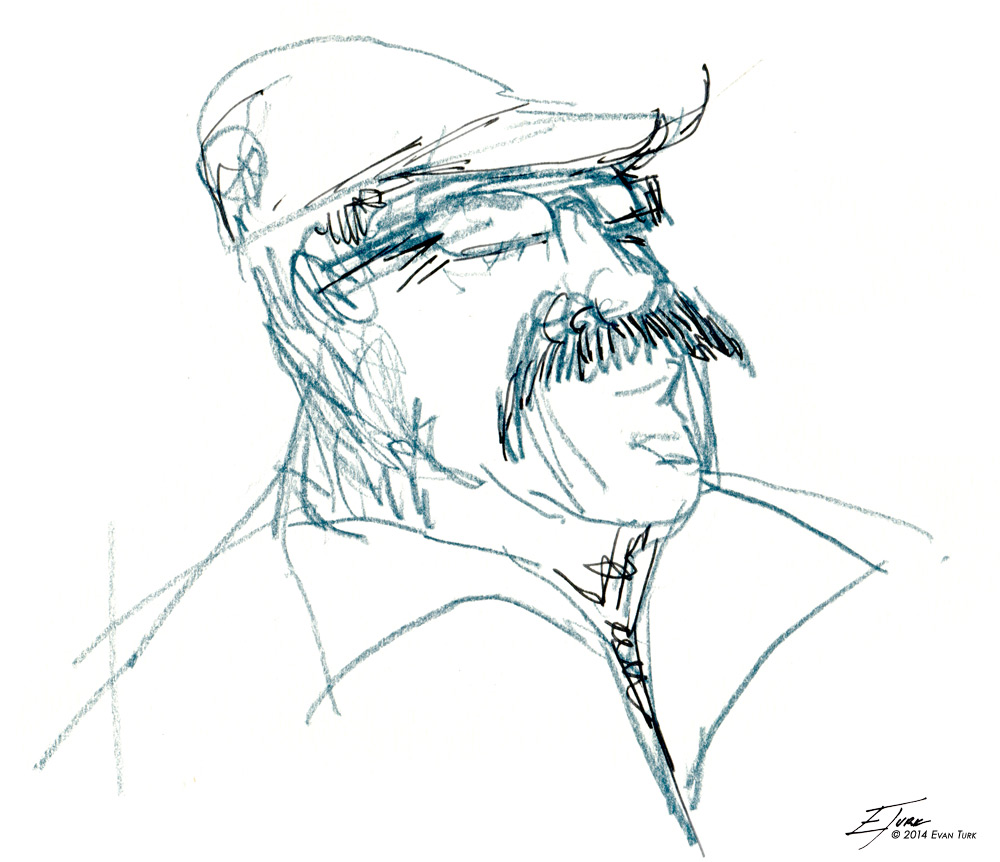
Captain Kip Files

The next morning, after breakfast, we awoke and began preparing for our sail. Captain Kip Files introduced us to the voyage as we prepared to hoist the anchor and head out towards Stellwagen.

Chief Mate Sam Sikkema, Second Mate Sean Bercaw, and Third Mate Rocky Hadler

Chief Mate Sam Sikkema, Second Mate Sean Bercaw, and Third Mate Rocky Hadler (whose birthday it was!) kept the ship and crew moving smoothly as the 38th voyagers wandered about, oohing and ahhing over the experience of being on board.


It took the combined teamwork of most of the crew and guests to haul the 1600 pounds of anchor aboard. With the ship liberated from her root, the tugboat pulled us out to sea.


The tiny figures of the deckhands were suspended 10 stories above us as they climbed aloft and began to release the sails.

  
As the sails began to descend, the entire landscape of the ship would change from one minute to the next. The sails became like canyons across the deck, funneling the wind up and propelling the ship forward on her own power.


As they unfurled the mainsail, it billowed down like a heavy stage curtain until it filled with wind and held taut.


In full sail, the masts soared over the deck like immense, luminous towers that the crew would rotate to follow and catch the wind. The ship moved forward towards the Sanctuary, with its crew of artists, educators, and researchers.

Anne DiMonti and Gary Wikfors

Myself and the other 38th voyagers scurried about, working on our various projects. The scientists began their observations and measurements. Anne DiMonti of the Audobon Society and Gary Wikfors, marine biologist and musician, were two that assisted in dropping a phytoplankton net over the side to examine the types of microscopic life that were living in the bay. On a voyage into a whale sanctuary, it's amazing to see the other side of the size spectrum of life in the same sea.

Beth Shultz

Beth Shultz, a literary scholar, professor, and collector of the art of Moby Dick, was on board absorbing the sights, sounds, and smells of a whaleship and creating poetry from the experience. Other voyagers used photography, video, and historic navigational tools to record their fleeting time aboard.


Then came the moment we had all been waiting for. With the tugboat gone, we were at full sail and entering the Marine Sanctuary. Suddenly, from up in the masts, the shout came out: "WHALE!"


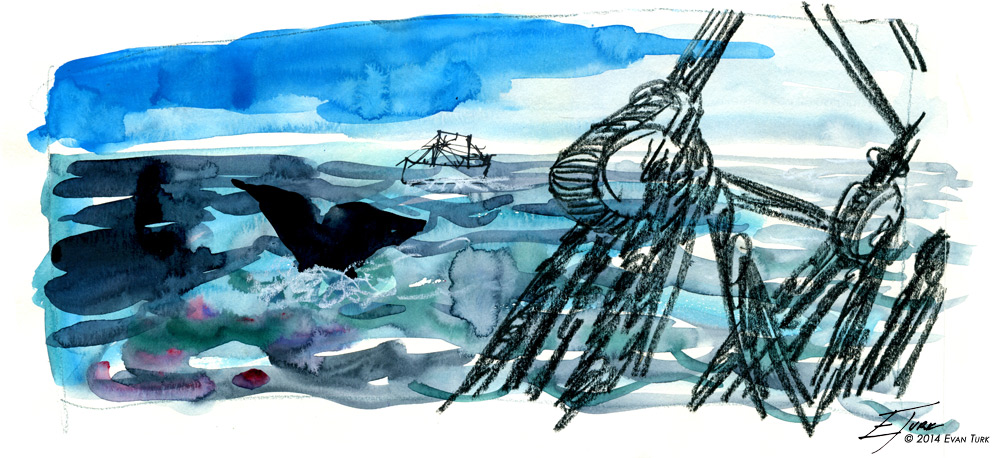
And there, just over the starboard side of the ship, a minke whale's arched back crested the water and slithered back underneath. This was the first whale seen from the deck of the Morgan in almost 100 years. We watched her fade into the distance as we sailed by, her glistening fin surfacing every so often until she disappeared under the water.


As we sailed deeper into the sanctuary, the whaleboat was lowered over the side, in the same way it would have been during a whale chase.


In the distance, we began to see spouts, the shimmering exhalation of the whales.


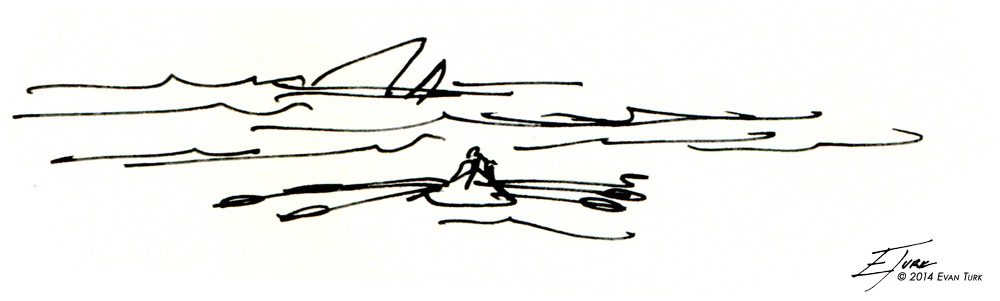
Soon we were surrounded by humpback whales, surfacing, feeding, and spouting. The tiny whaleboat gingerly approached them, becoming dwarfed by the massive creatures.


With no malice on either side, the crew on the whaleboat watched as humpback whales surfaced, fluked, and fed just a little ways from their boat. How magical to be in the same place as a whaler from the Morgan, but with no task to do, no prey to kill, just time to sit and watch in awe.


The whales came closer to the Morgan, raising their elegant tails into the air and mightily slapping the surface of the water right next to the ship. It's hard not to think that the whales are aware that they are communicating with us. Whether or not they were trying to directly say something, their actions communicated with us nonetheless. They were not fleeing, they were not attacking, we were merely two species sharing the same speck of ocean for a time.


The crew and guests, meanwhile, buzzed about in a state of euphoria. Nearby, prominent marine biologist and explorer Sylvia Earle was interviewed about her thoughts on the Morgan's voyage into the Sanctuary. She spoke about how until recently, and in the time of the Morgan's whalers, it was always taken for granted that there would always be enough fish, enough whales, enough ocean. It is only a new change in perception that we realize that, small though we may be, we have an enormous impact on our environment and it cannot be taken for granted that it will always be there. This new awareness fills the sails of this 38th voyage and propels the Morgan forward on her new journey.

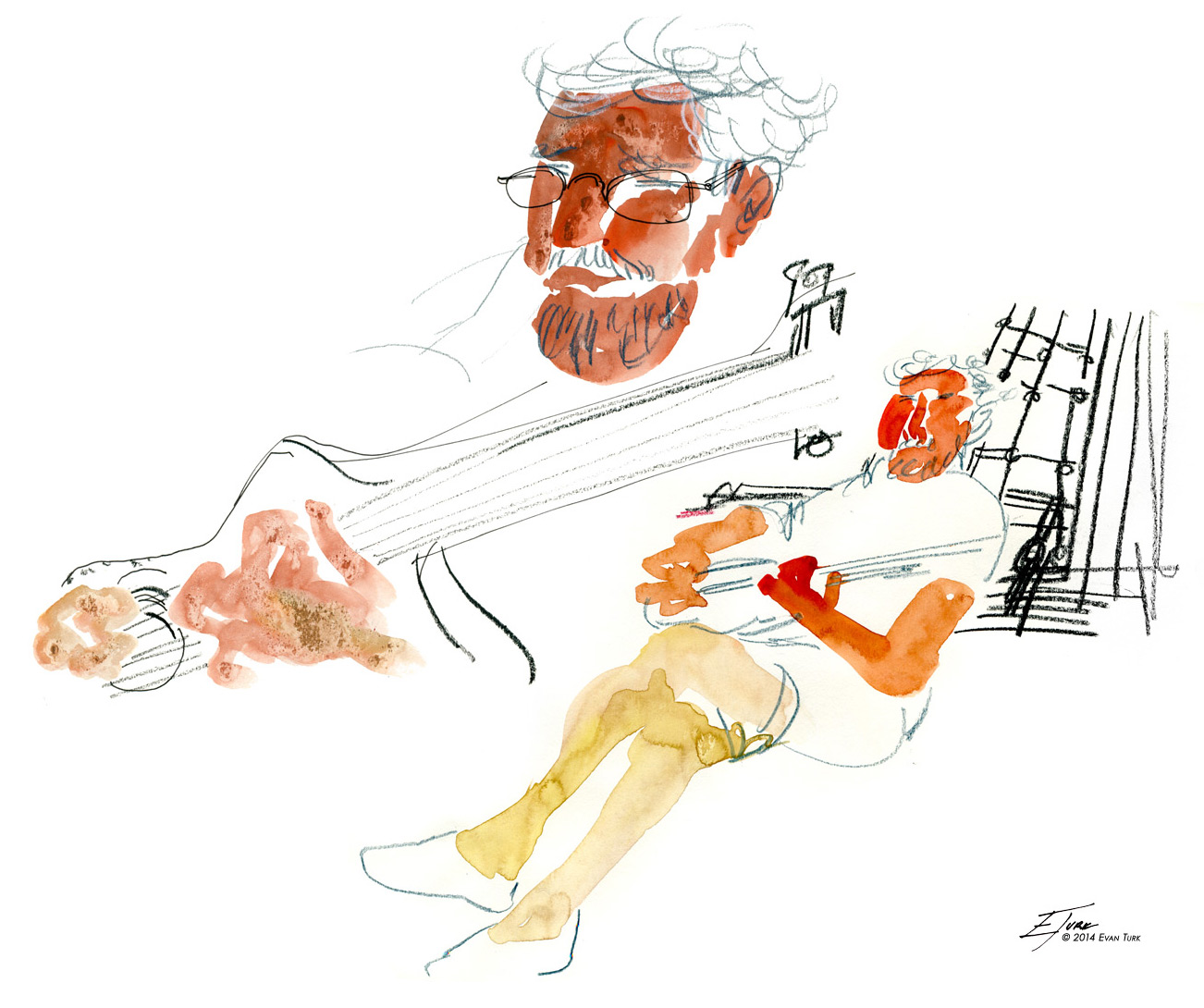
Gary Wikfors plays a German waldzither built during the same time period as the Morgan as we were towed back into port.

The Charles W. Morgan is an amazing confluence of what is important about history, and what is important about the future. Her history knits together the entire world, through her journeys and through the men who sailed aboard her. The cargo she brought back, spermaceti, oil, and baleen, served as the predecessors of the plastics industry and the industrial revolution. The light created from the oil and wax of sperm whales lit the world of the 19th century. The bodies of whales fed hungry people across the world after World War II as mechanized factory whaling took hold and decimated whale populations.


Today, our oceans are in an even more deplorable state as we harvest them beyond their breaking point and pollute them beyond all reason. But as perceptions of the natural world change, whales offer a symbolic embodiment of this change. These immense creatures that were once floating commodities, are now seen as one of the greatest ambassadors of the awe of the natural world.


The sailing of this ship is not just an event that is important to New England and its community that is so inextricably linked to whaling history, it is of nationwide and worldwide importance. To be able to resussitate a piece of history and use it as a catalyst for education and change is an amazing feat, and one that can act as an inspiration going forward. History and tradition do not need to be impediments to change and progress; they can be the wind that carries this change.


Through history, people can reaffirm their connections to their roots, while also becoming educated and invigorated about how that history connects to the changes that need to be made today. Provincetown, from which I sailed on the Morgan into the Stellwagen National Marine Sanctuary, used to be one of the busiest whaling ports in the world. Today, it is a huge center for whale conservation and related tourism. A large part of the town’s image today is based around the idea that protecting and learning about whales can be good business.


Imagine if communities across the world, entrenched in history and tradition, saw conservation as a viable way to preserve those histories.  Because of the Morgan’s new message, the history and tradition associated with whaling will be relevant for many more decades to come.


The Morgan sailing again does not mean our oceans are fixed. It does not mean our relationship with our oceans is fixed. The Morgan's voyage is not a victory lap, but it can be the starting pistol.

To see video and photos of the Morgan's voyages in Stellwagen, check out the links below:

From Whaling to Watching

For more of Evan Turk's travel illustration, check out the link below: 
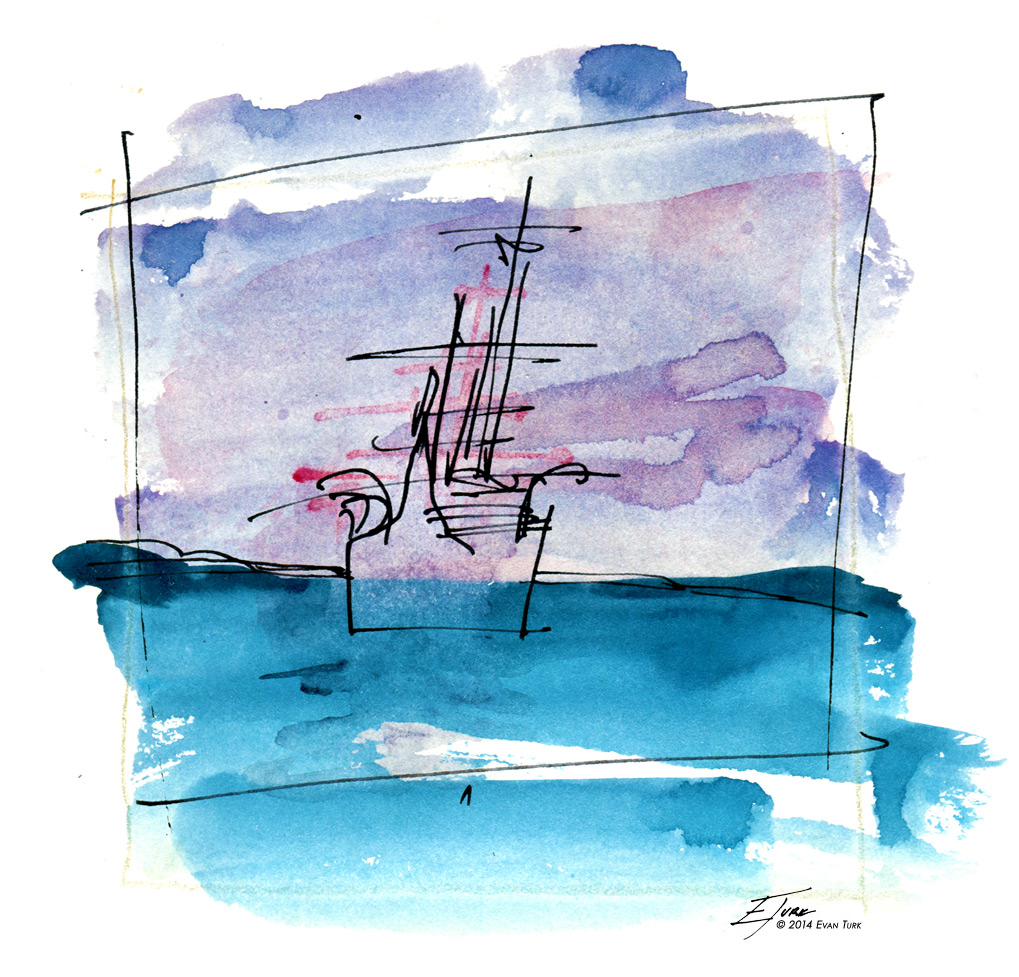
Evan Turk Travel Illustration

Monday, July 7, 2014

The Charles W. Morgan Homecoming: New Bedford
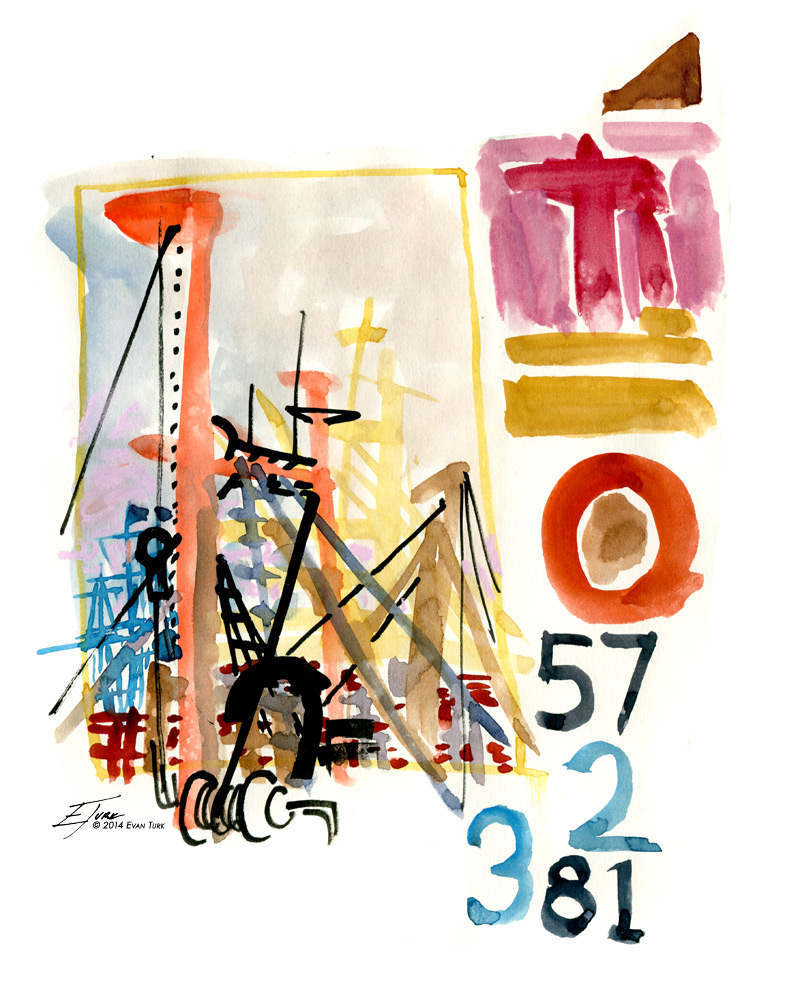

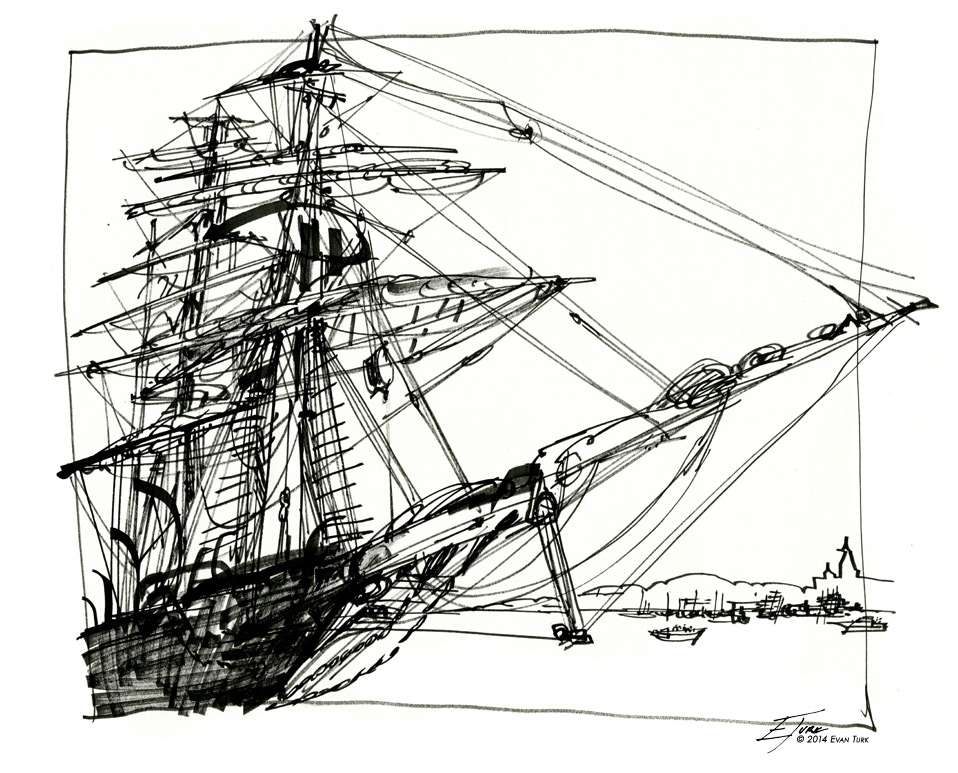
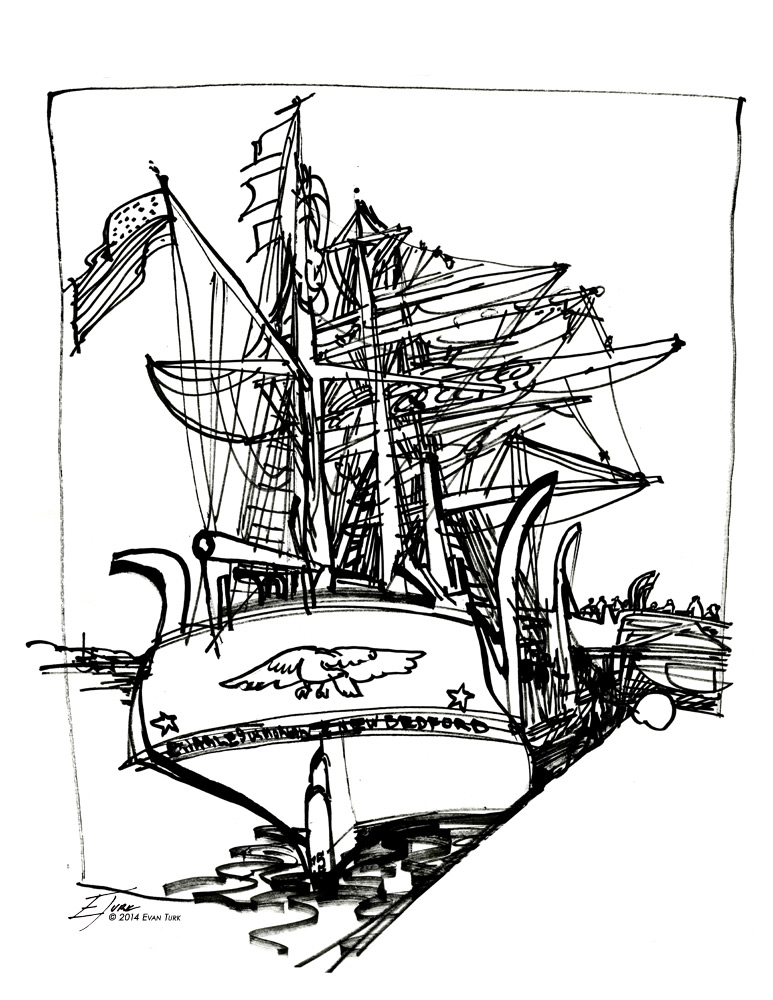
This 4th of July weekend I was able to go to New Bedford to see the Charles W. Morgan on her 38th voyage. The Morgan was built in New Bedford in 1841, and the city gratefully opened its gates to welcome her home over 170 years later.

I will be joining the captain and crew of this 19th-century whaleship as a 38th Voyager during the ship's historic voyage THIS WEEKEND! While aboard, I will be drawing and observing the workings of the ship (and maybe a whale!!!) as she sails into the Stellwagen Bank National Marine Sanctuary. In addition to the work created on-board, I will be creating an animation about the Morgan, whale conservation, and our evolving compassion towards whales, other animals, and each other. You can view my previous animation about the cultural history of whaling below, which was created as a part of a collaboration between Dalvero Academy and Mystic Seaport.


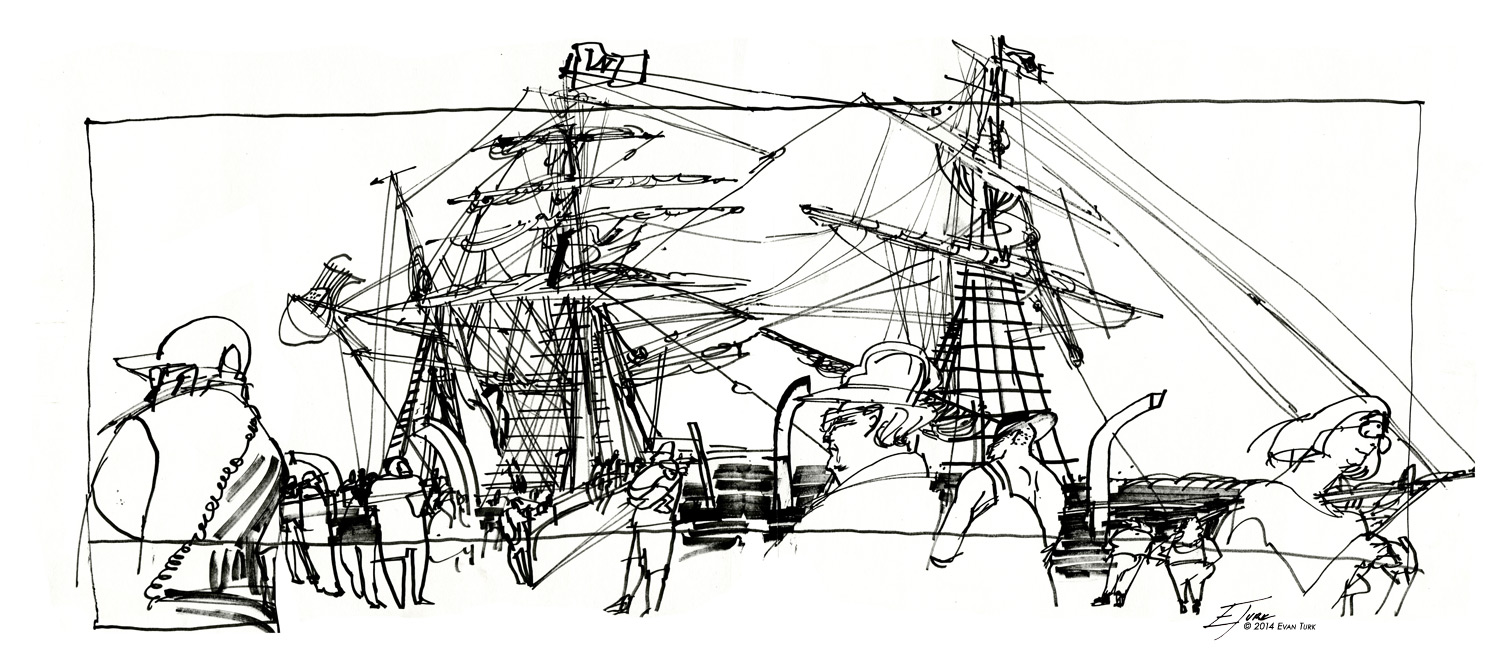
It was my first time seeing her outfitted with all of the rigging and sails. It's amazing how different the experience of drawing her is, compared to several years ago when she was out of the water on dry dock.


Most of the ship we drew is now below water, and with her masts she extends up even higher above the water. She is a completely new shape, but still the same ship.


They closed the Morgan's pier in preparation for the night's fireworks (on July 5th, because New Bedford had been completely flooded on the holiday!) so we moved over to another pier.


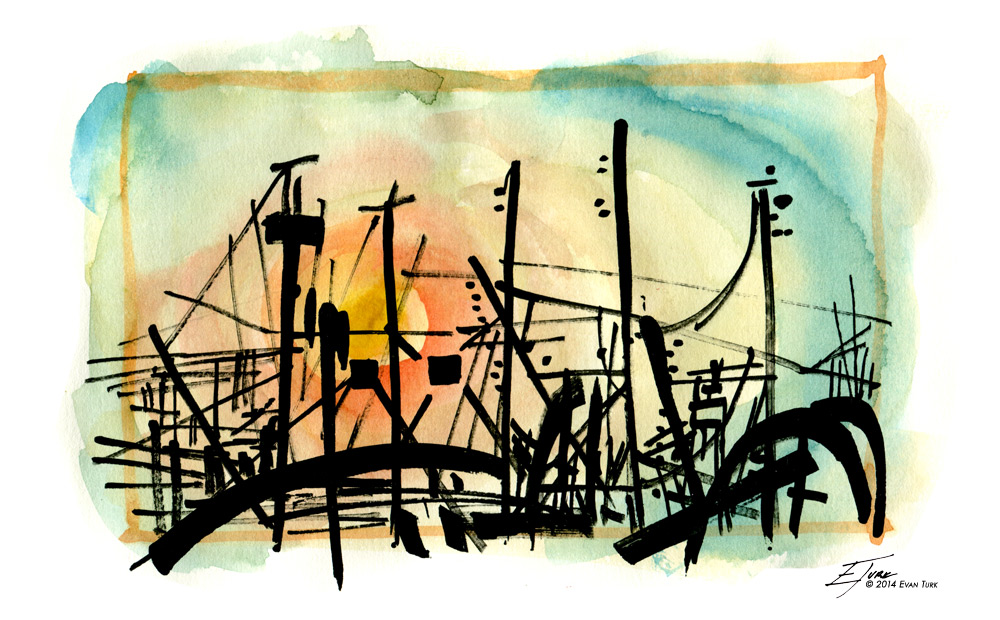
We waited for the fireworks as the sun set behind the rigging of commercial fishing vessels and lit the sky behind the Morgan's masts in the distance.


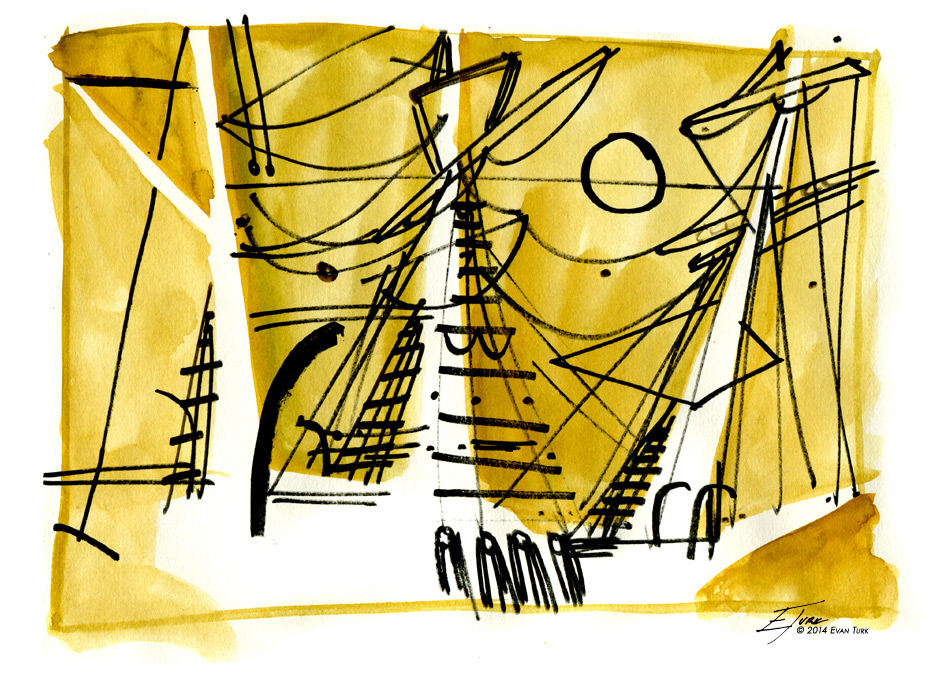
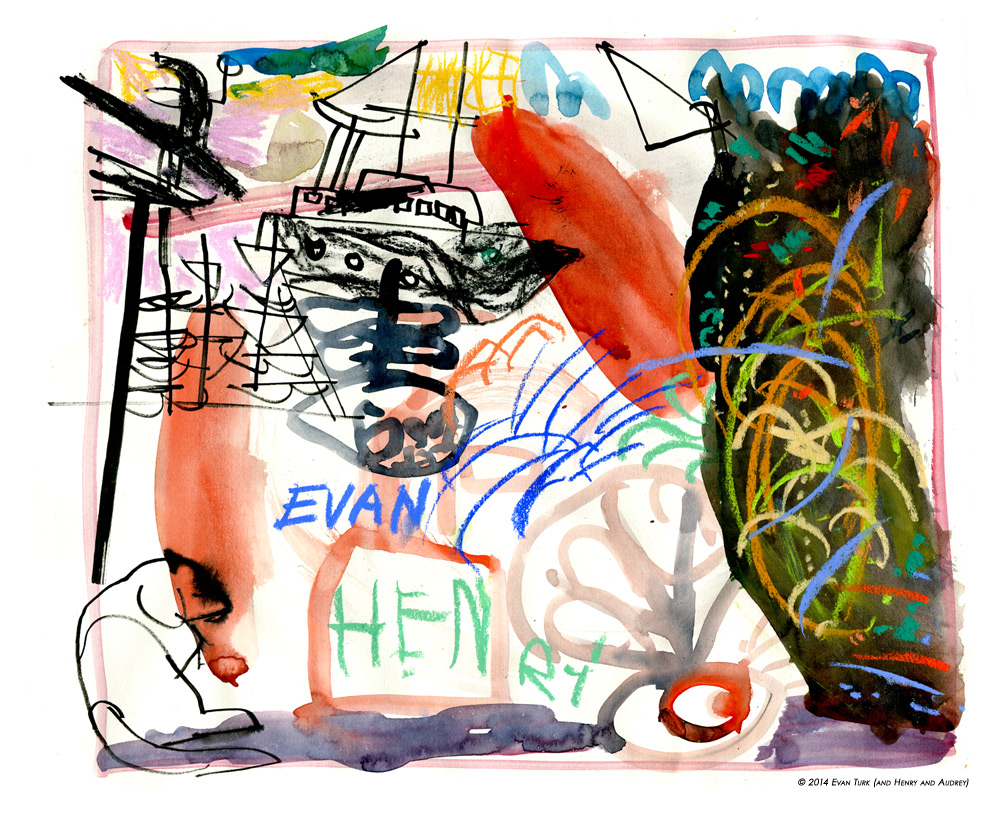
As we waited, a family came over to wait and watch the fireworks on the risers near us. The two kids, Henry and Audrey, were very curious about my drawing and got closer to help art direct as we passed the time. Audrey helped pick the colors, while her older brother helped me figure out what to draw. I like the abstraction that came out of the collaboration in the drawing above! When his mother asked Henry why he thought we were drawing, he very astutely replied "So that you can remember what you see!" Right on, Henry! There is no better way to remember or appreciate something than to spend time drawing it and really thinking about it.


We then collaborated on a drawing of our surroundings. I added in a couple boats, sails, and shapes. Henry added in a sailboat, a flock of birds, the water, and his grandfather in a hat. Audrey then painted over the drawing of the grandfather with black (no offense intended, I'm sure), which Henry and I filled in with bright marks and colors as we watched the fireworks. Such a pleasure to do this drawing with the two of them! It's always nice to unwind and just play around with paint and pastels.

Friday, June 13, 2014

National Geographic Traveller: India & Let's Get Busy!


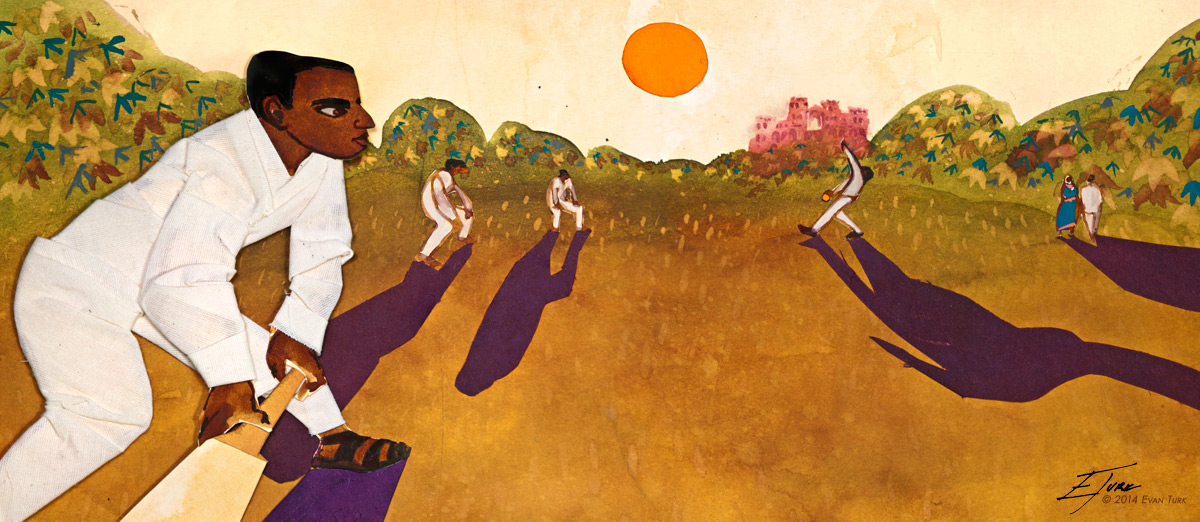
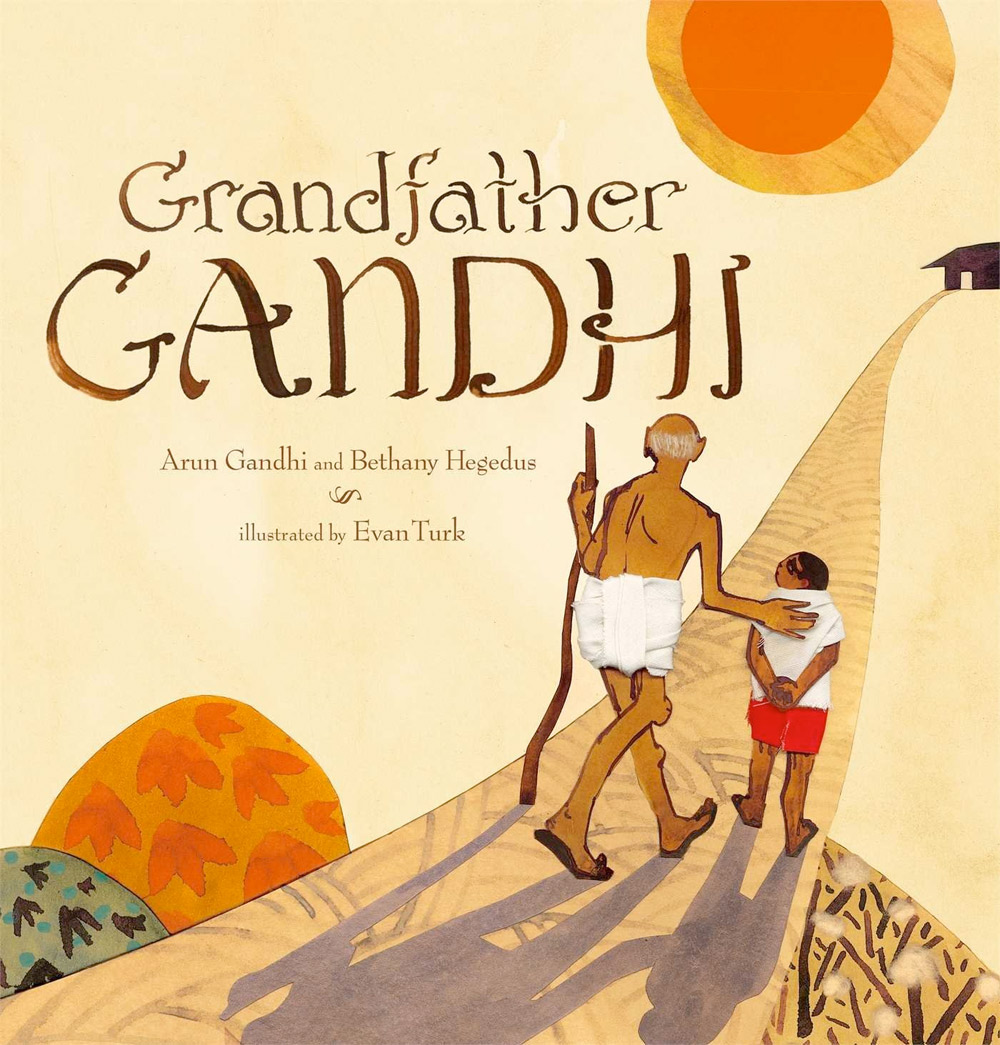
I am back from a wonderful trip to England with some VERY exciting news to announce! Before I left, I was asked to create illustrations for the Indian edition of National Geographic Traveller magazine to go with an travel article about places throughout India that were important in the life of Gandhi called, "In the Footsteps of the Mahatma". They used illustrations from Grandfather Gandhi to represent several of these places, and asked me to create three new illustrations in the same style to show different points on Gandhi's life.

As a huge fan of National Geographic and travel illustration, this was a dream job to get. Even more, they surprised me by putting one of my illustrations on the cover of the issue! It was an amazing feeling seeing that iconic golden rectangle around one of my illustrations. Thank you to the innovative editor Niloufer Venkatraman for the opportunity! You can preview the issue on their site, here: National Geographic Traveller: India


First, was his childhood home in Porbandar, which is maintained as a historical site. Here, young Gandhi is shown in his favorite room on the upper floor of the house. He liked to read up there because the room was so airy and well-ventilated.


The second was Rajkot, where Gandhi lived as a boy. He attended the stately Alfred High School in the background (now known as Mohandas Gandhi High School) and loved to play cricket.


The last (and my personal favorite) was Gandhi as a young lawyer in Mumbai, getting off the train in the Churchgate Station.

In other news, I was also recently featured on the Let's Get Busy! Kids Literature podcast, where I was interviewed by the wonderful Matthew Winner! We talk about travel, my upcoming projects, and the story of how I came to work on Grandfather Gandhi! It was a great pleasure to do, so I hope you enjoy listening! (Link below)

Monday, May 12, 2014

Writing Process Blog Tour

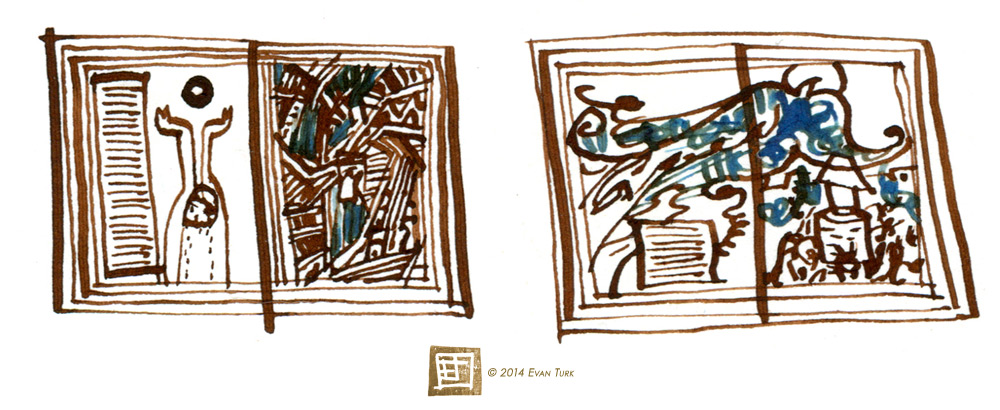
Thumbnail drawing from The Storyteller

I was asked to be a part of the Writing Process Blog tour by my new booking agent, at The Booking Biz, who is an author herself, Carmen Oliver. You can read her post HERE. It's sort of a blog chain letter that asks authors to explain a little bit about their how they write.

I'll be answering four questions about my writing process, which was a fun prompt for me, since this blog is mostly about my illustration and animation. But I love creating stories, whatever the medium.  I'm in the process of creating my first children's book as author and illustrator, so this seemed like a great kickoff.

What am I currently working on?

Thumbnail drawing from The Storyteller
As I mentioned above, I am in the process of writing and illustrating my first solo children's book tentatively called The Storyteller. While reading in preparation for a 3 week trip to Morocco a couple of years ago, I learned about Morocco's rich storytelling history. In a nearly one thousand year old tradition, public storytellers gather a growing audience reciting all the tales from 1001 Nights, hundreds of Moroccan folktales, and stories from the Qur'an, all from memory, and weaving the tales together to impart lessons and entertainment to their audience. This tradition, though, is in danger as less than a dozen storytellers remain in Morocco, often with no apprentices. Inspired by this, I began writing a story in which a young boy unknowingly becomes an apprentice to a storyteller and uses those stories to inspire hope and community to rescue his city from a looming sandstorm.


I am also currently working on an animation and illustration project in conjunction with Dalvero Academy, at Mystic Seaport. I am documenting the restoration of the Charles W. Morgan, the last wooden whaleship in the world, which was built in 1841. This summer, I was one of 79 voyagers selected to sail aboard its 38th voyage, and first sail since 1921. My animation, although still in the early stages, deals with the emotional and cultural impact of whaling on whale and human populations today, and how we can strive to live and grow from that history and use it as the catalyst for healing and a new attitude towards whales and nature. It is a follow up project to my award-winning animation "Patterns" about the global cultural history created by the industry of whaling.


How does my work differ from others of its genre?

I think that my work differs from other children's literature because I have a very serious interest in culture and history, but a very loud, playful, and experimental approach when it comes to art and illustration. I often find that with children's books, more serious or historic topics are often dealt with
in a very somber way, and I like to think that I have a fresh, exciting, and diverse approach to a range of topics from serious to silly. But I am still very new to the children's book industry, so I guess it remains to be seen what will set me apart!

Why do I write what I write?

I write what I write usually because some piece of information, or art, or a story will interest me and I can't help but want to learn more about it and tell that story to others. It is always amazing to me when working on a project how so many different elements all seem to fall into place in one story, and I can discover new ways to tell stories and explore topics. Often I just get excited by the idea of creating art around the idea of a story, and the rest of the pieces come together in the words. I have an interest in folk tales, culture, and art from around the world, and I think there is an immense amount that we can learn from relating to, learning from, and telling stories about traditions and stories that have stood the test of time.

Thumbnail layouts from The Storyteller

How does my individual writing process work?

I usually will begin in an aimless research phase, where I go to museums and draw, travel, or read books and make thumbnails, and just go wherever my interest leads me. Usually, a thread will pop out somewhere along the line that will excite me to learn more, or make more drawings. As a story begins to form in my mind, I usually write it in a shorthand way, just figuring out the layout of the story itself, while making notes, thumbnails, and exploring the art along the way. This is always the most exciting step, when there are infinite possibilities for the art, and I have to sift through them to figure out how best to tell the story. When the story begins to get fleshed out, I will work on creating the page layouts in a series of of thumbnails and working on the actual manuscript for the story. Sometimes, though, the project will turn towards an animation, rather than a book, and I'll have to change gears (or vice-versa). It is all about getting the story across in the best way possible.


Next week, author Tim Anderson will join the Writing Process Blog Tour. I just finished his new book Sweet Tooth, and it was hilarious! I highly recommend it.

Tim Anderson is the author of Sweet Tooth and Tune in Tokyo: The Gaijin Diaries, which Publishers Weekly called "laugh-out-loud funny," Shelf Awareness called "so much fun," and Michiko Kakutani of the New York Times completely ignored. He is an editor and lives in Brooklyn with his husband, Jimmy; his cat, Stella; and his yoga balance ball, Sheila. Tim also writes young adult historical fiction under the name T. Neill Anderson and blogs at seetimblog.blogspot.com. His favorite Little Debbie snack cake is the Fudge Round.