Friday, June 3, 2016

Italy: Rome


I just got back from a three week trip to Italy and am slowly adjusting to real life. What an amazing country with so much beauty packed into such a small place! We were surprised by how much we liked Rome, and were a little disappointed we had only booked two and a half days there. Hopefully we will be back! For an imperial city, it feels unexpectedly inviting. The Tiber River carves an elegant path crossed by grand bridges, and many of the ancient buildings are draped with jasmine that perfumes the whole city.


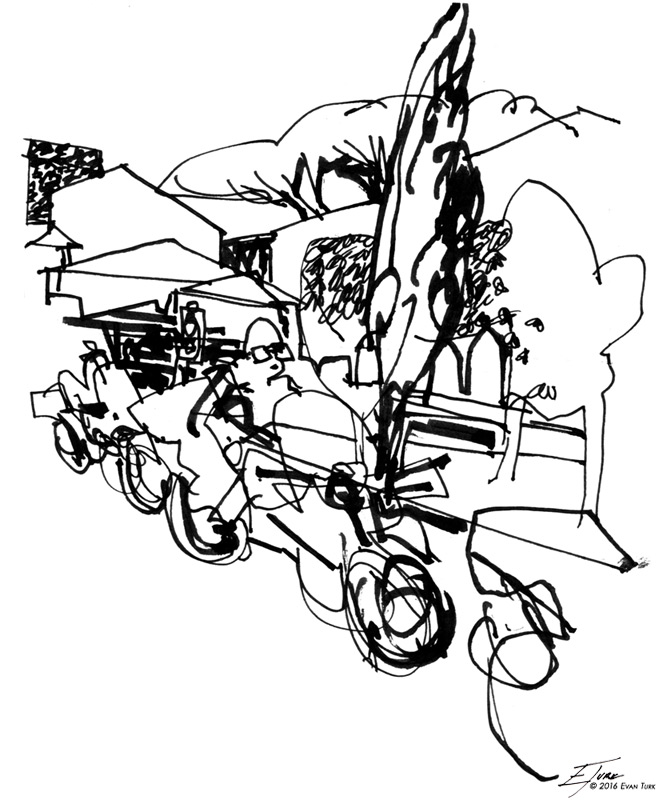
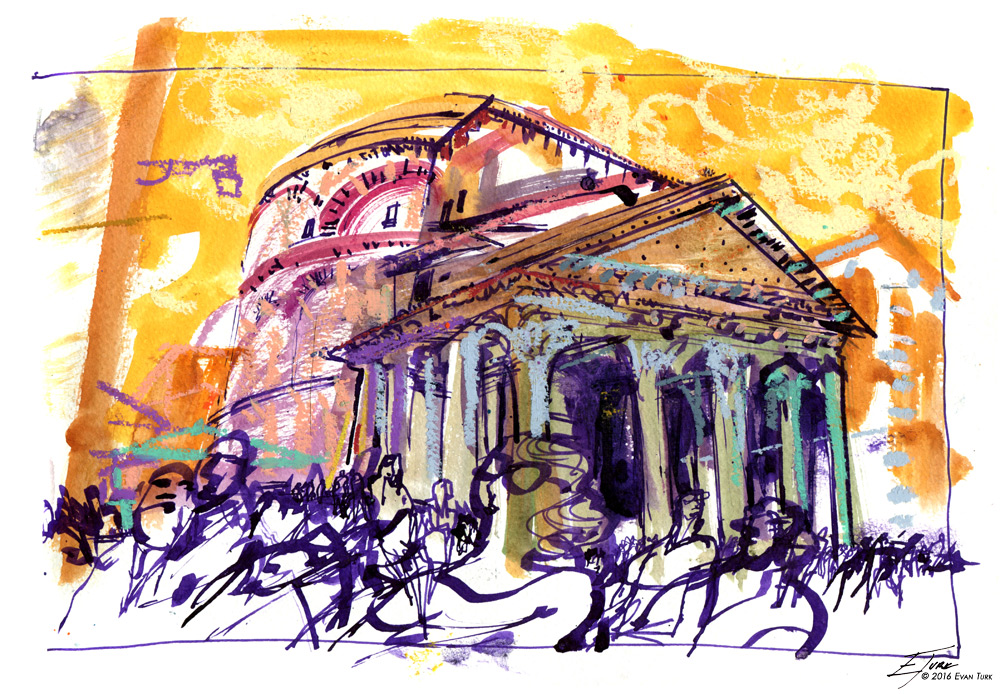
We sort of just wandered from place to place, admiring every street, statue, and piece of architecture, and smelling every flower. Not a bad way to spend a couple of days! We drew in the piazza near the Pantheon (above) as we were serenaded by a street performer singing opera.


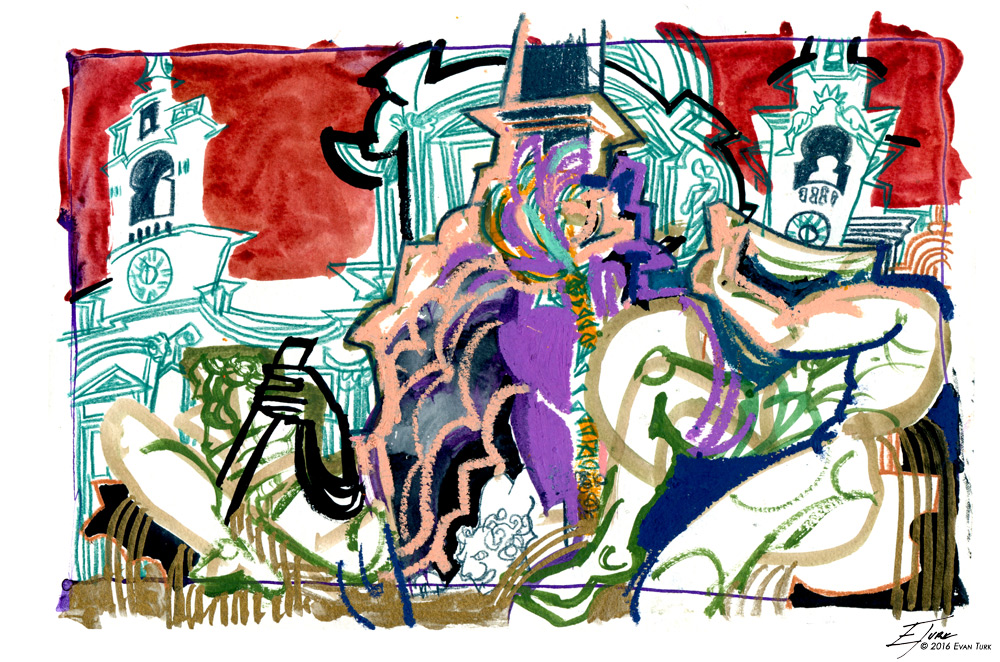
Then we wandered to the Piazza Navona and admired Bernini's Fontana dei Quattro Fiumi or Fountain of the Four Rivers. The allegorical figures represent the four continents and their prominent. rivers: Africa's Nile, Europe's Danube, Asia's Ganges, and the Americas' Río de la Plata. This drawing is of the Ganges on the left, holding an oar representing its navigability, and the Nile on the right, with his head draped to show that people did not know the source of the river at that time.


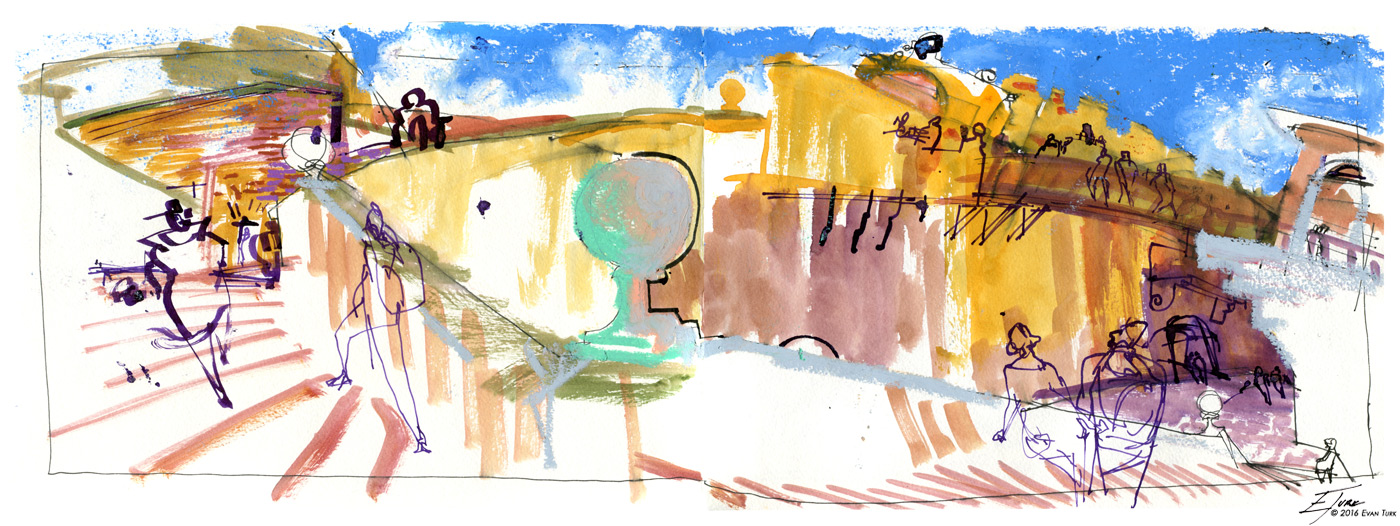
We also visited the Castel Sant'Angelo which was a wonderful surprise. Between its construction in 134 AD and 1900, it served as a mausoleum, fortress, Papal residence, and a prison. This mishmash of uses created a very unique structure with layers and layers of history. It also has amazing views of the Tiber River and the whole city.


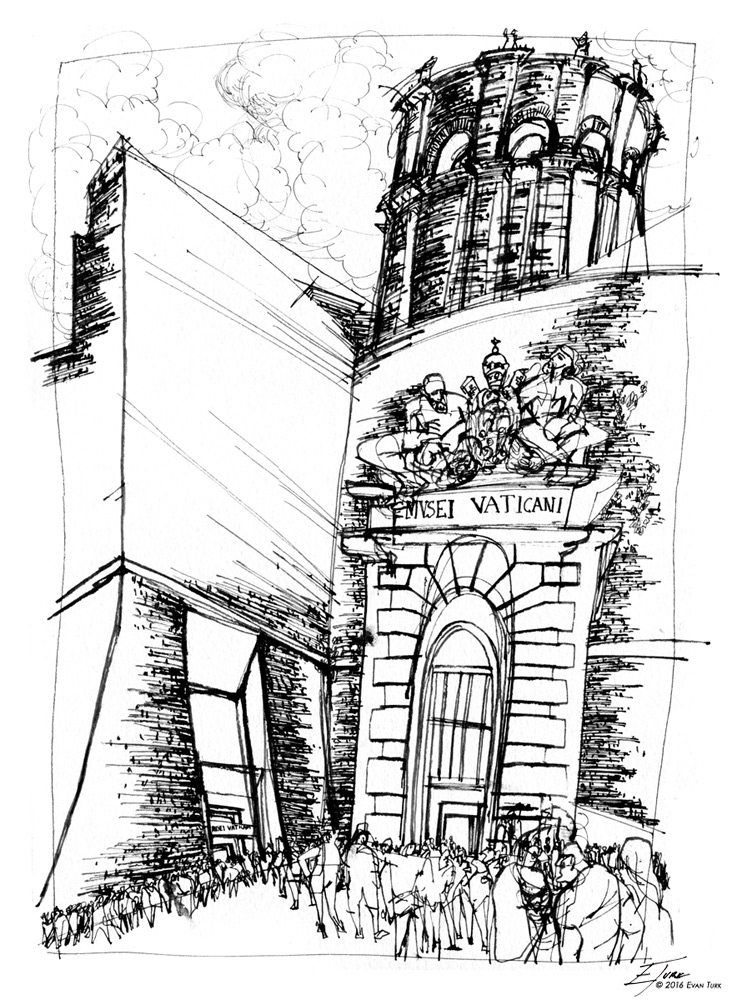
No visit to Rome would be complete without a stop at the Vatican and St. Peter's. I had gone to the Vatican Museum when I was a kid, and really only remembered the Sistine Chapel. Nothing could have prepared me for the exhaustion of the rest of the museum. You are moved in hordes through beautiful room after beautiful room as they slowly lessen the air conditioning to thin the herd before arriving at the Chapel. The ceiling is incredible and well worth it, but by that point you really need a nap.


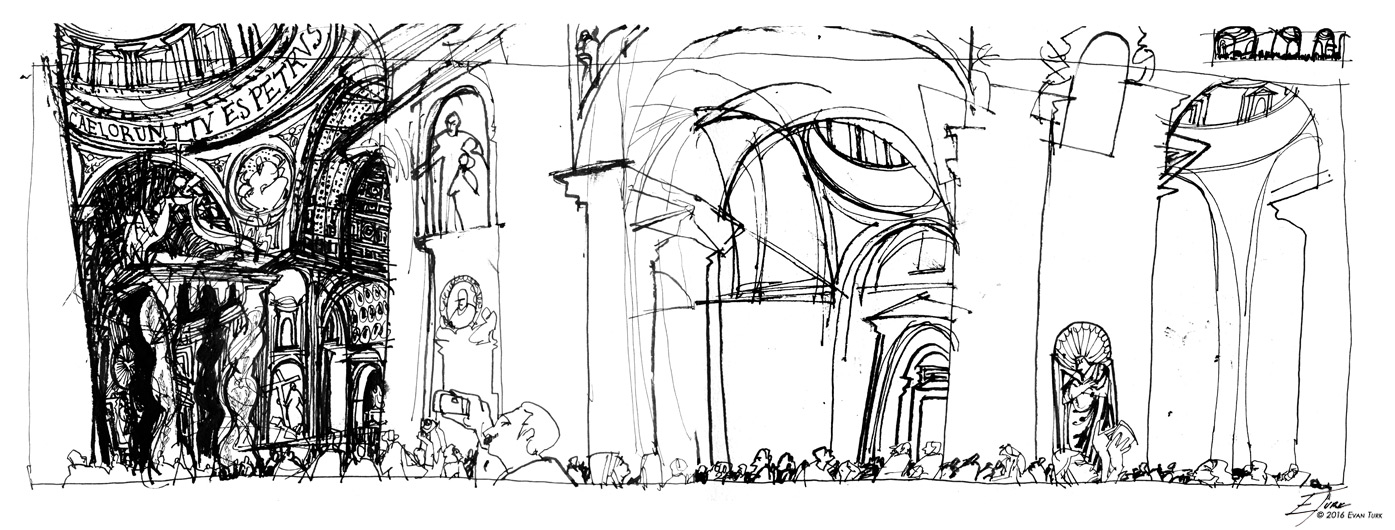
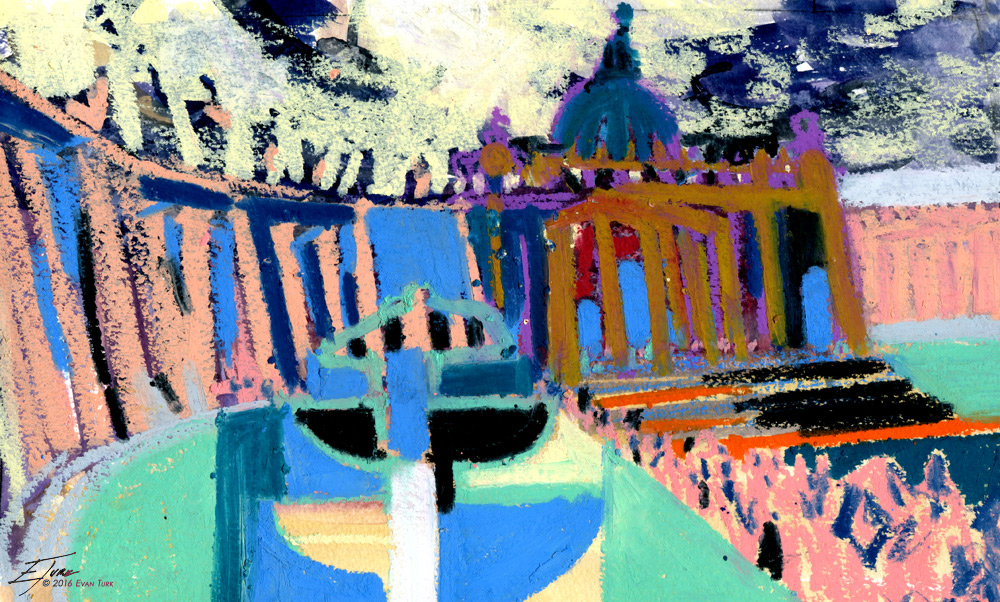
After the Vatican, we went to St. Peter's Basilica, and its impressive, expansive plaza. Inside, the cathedral is wall to wall heavy stone, mosaic, and gilt. It is beautiful, but in an oppressive, heavy-handed way. (Also, they don't let you lean or sit against anything to draw...)


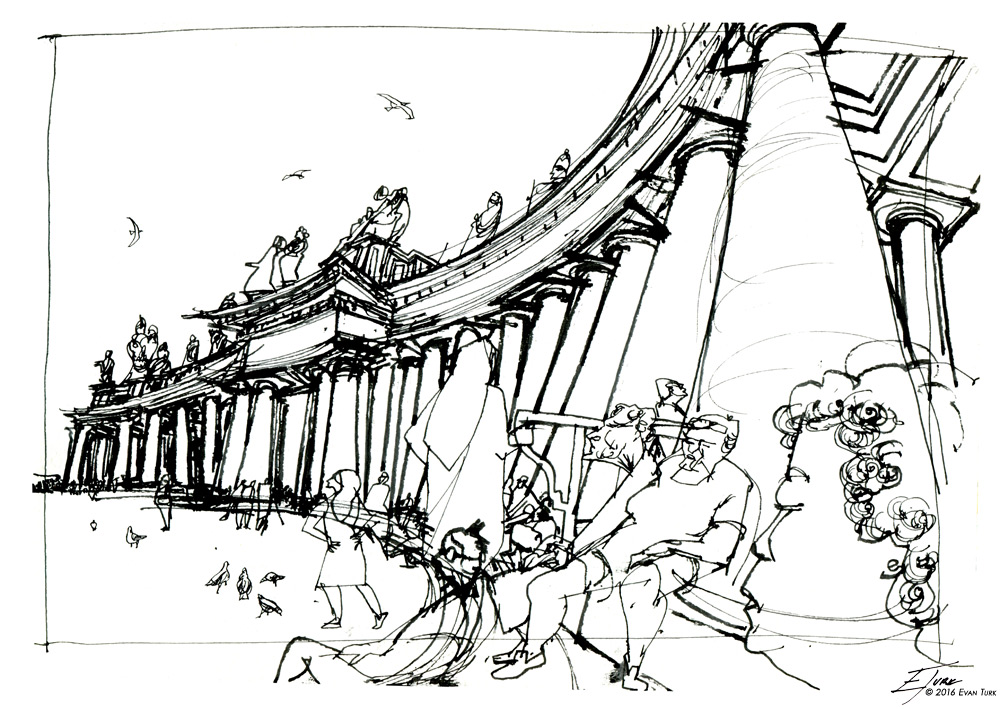
Outside, in the much airier, but equally overwhelming plaza, crowds of tourists exhausted after the Vatican Museum slumped against the endless colonnade.

What a beautiful city; I can't wait to return! But this time, it was on to Tuscany...

This post is part of a series of travel illustration from a three week tour of Italy. For more of Evan Turk's travel illustration, check out the link below: 
 

Sunday, April 24, 2016

Morocco: The weaver as storyteller

I've been busily working on preparing for the release of my new book The Storyteller and have been neglecting my blog! But there are many new posts on The Storyteller website to read about the creation of the book and its art, as well as reviews, event announcements, and educational materials as the release gets closer (June 28!)

I'm so excited for everyone to finally see the book! It has been a long but rewarding process. And the book has been met with a wonderful reception so far! It has received a starred review from Kirkus Reviews and Publishers Weekly, as well as an amazingly thorough and thoughtful review from Betsy Bird at Fuse #8 over at School Library Journal. It is also a Fall 2016 Junior Library Guild selection. 

I am also very excited to announce that original artwork from The Storyteller, as well as some of these reportage drawings from Morocco and preparatory sketches, can be seen at the Brooklyn Public Library as a part of author/illustrator Pat Cummings' show "The Turn of the Page". Pat was one of my favorite teachers at Parsons, and is having a well-deserved residency at the Library. She has invited some of her former students who work in children's books to exhibit with her, and I am so honored to be included! I hope you'll come by and check it out! Opening reception the evening of May 9.

The post below is from The Storyteller website and features drawings from a research trip I took for the book in the fall of 2014. 


 ---
In October 2014 I took a trip to Morocco to do research for The Storyteller. One of my favorite experiences was spending a day in the village of Anzal in southern Morocco and meeting the women carpet weavers there and their family. These drawings (aside from the illustrations from the book at the end) were done on-location in Anzal and the nearby Oasis de Fint.
weaver15

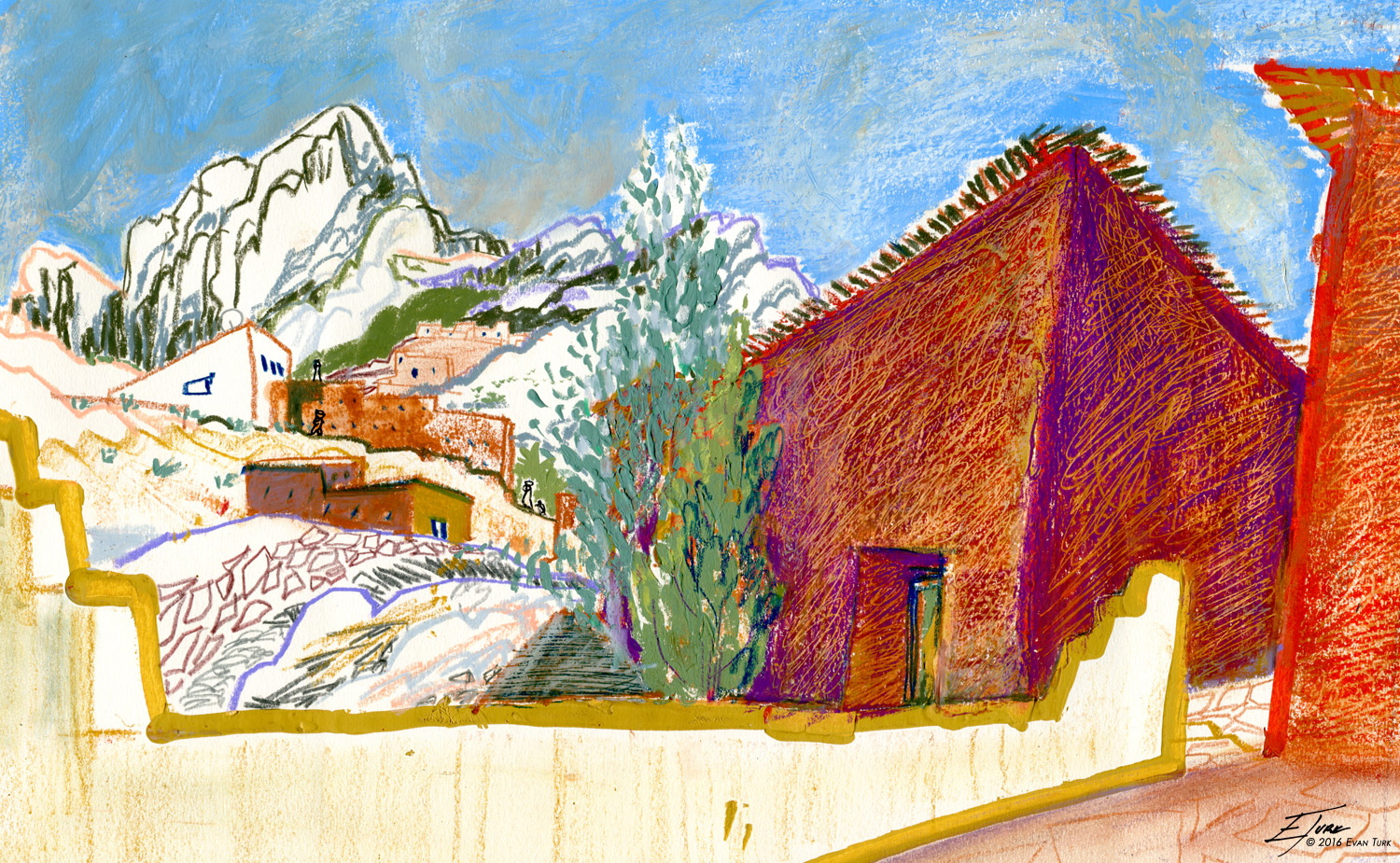
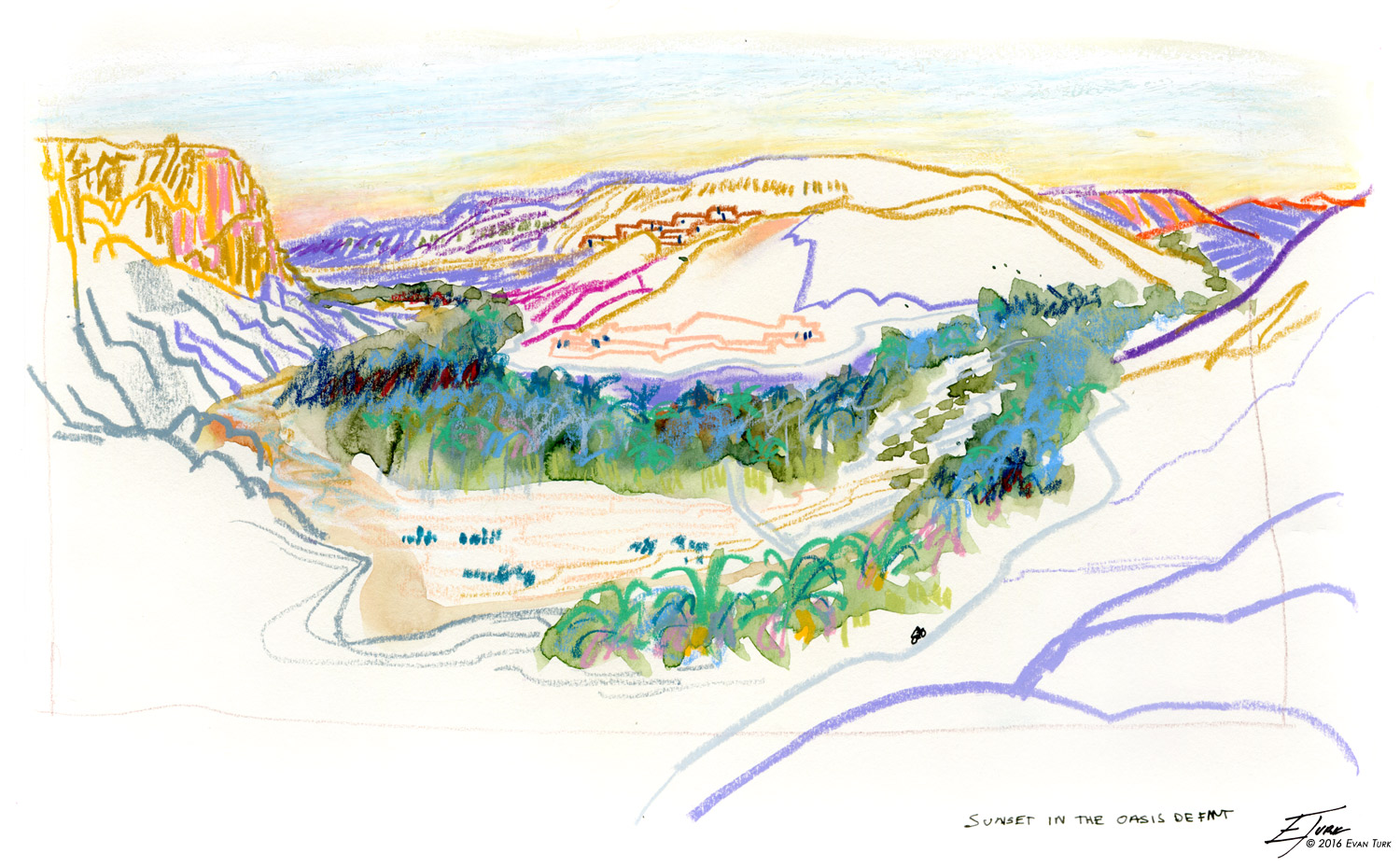
I arrived at the village of Anzal and met, Naoual, a twenty two year old woman from the village who translated for me and told me about her village and the weaving association. The village is nestled in a valley between harsh, dry mountains. The landscape is both empty and calming. The ground and sky seem to extend in all directions for eternity. It is said that the top crossbar of a loom is often called “the beam of heaven” and the bottom bar, “the earth”, with everything between as “creation.”
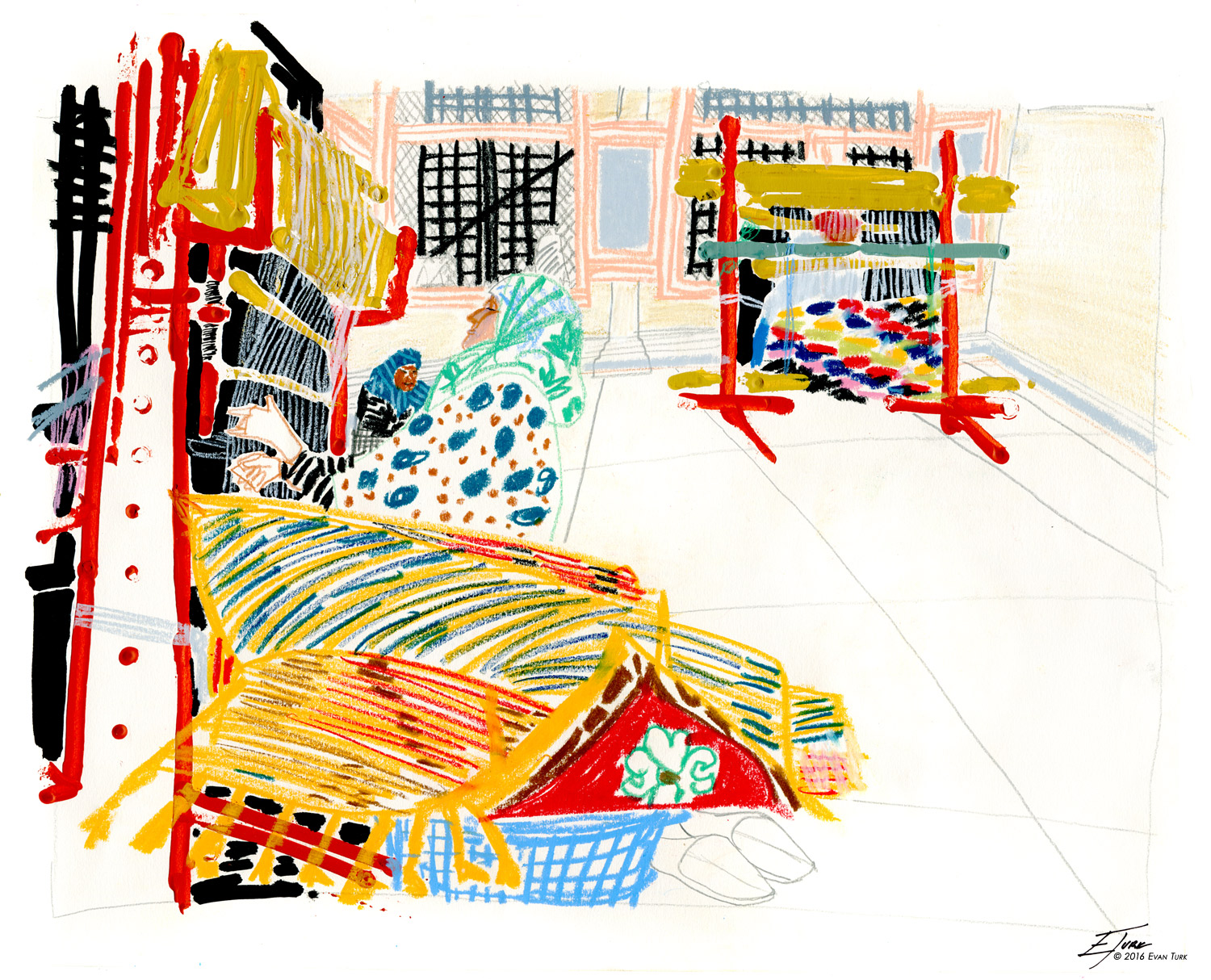
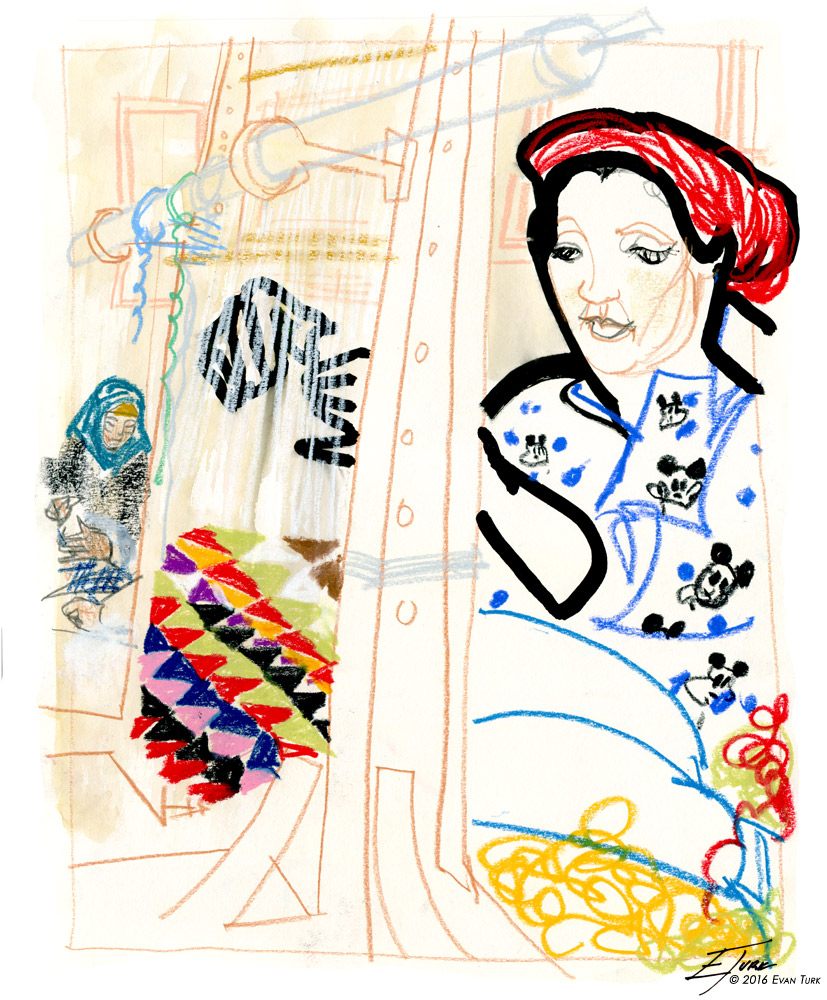
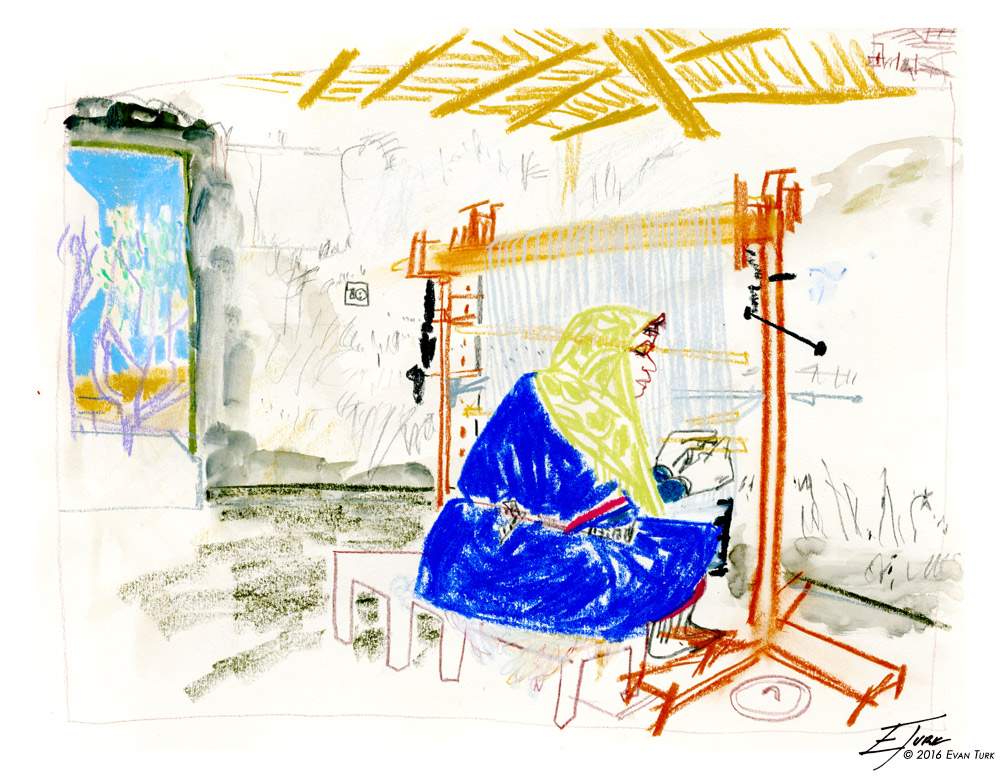
Naoual led me the short distance to the Association where I met Aicha, Fatima, and Rahma, Naoual’s mother-in-law. Aicha and Rahma were seated in front of their looms, made out of red steel I-beams and heavy wooden crossbars. A net of vertical yarns, the warp, stretched between the two crossbars in front of each weaver. Beside them were bags and cans of brightly colored, short pieces of yarn that would be knotted individually around each of the warp threads into a colorful design, the weft.

weaver06

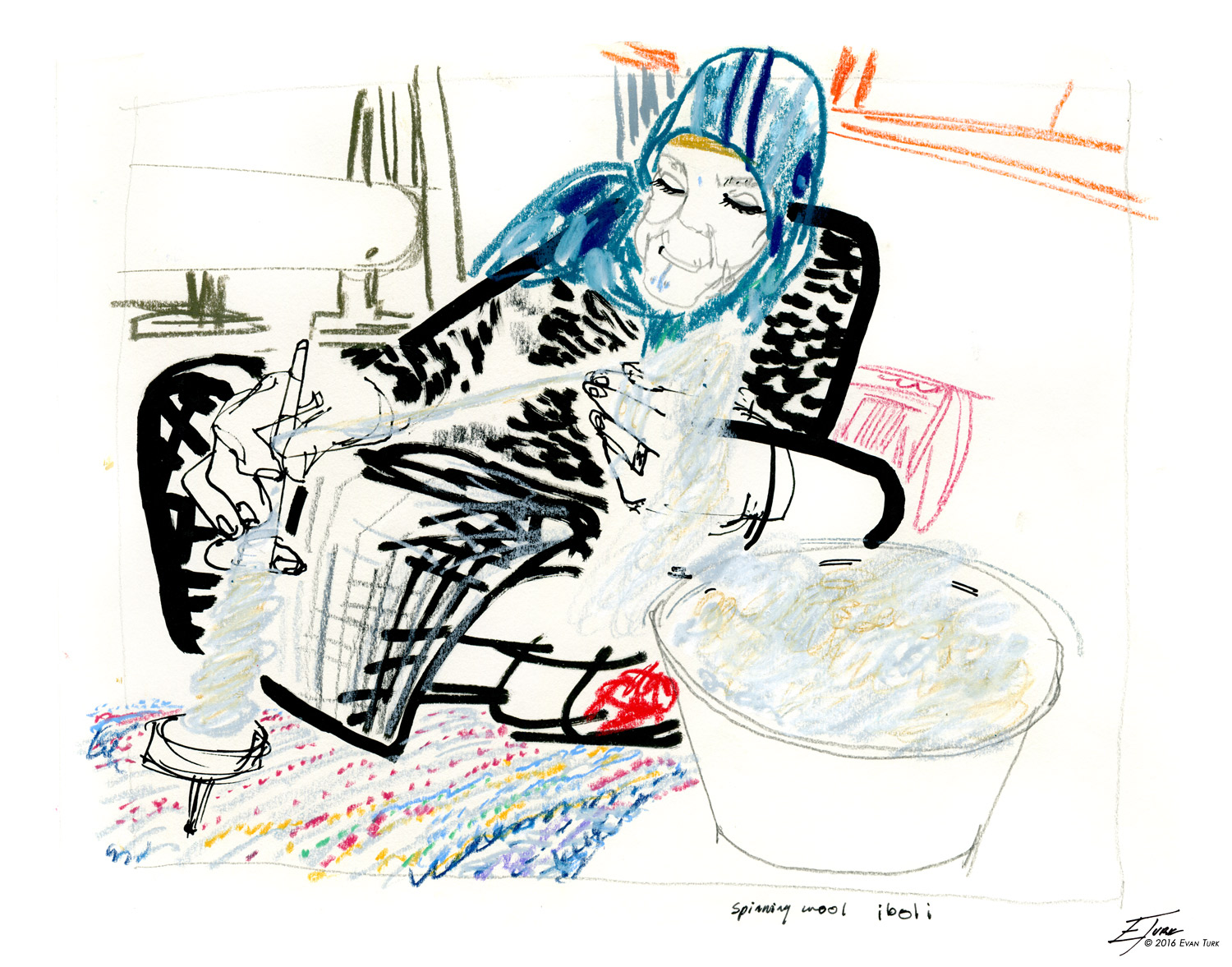
Fatima sat nearby Aicha, taking tufts of wool and winding them into yarn on a spindle, whirring between her fingers.

weaver07

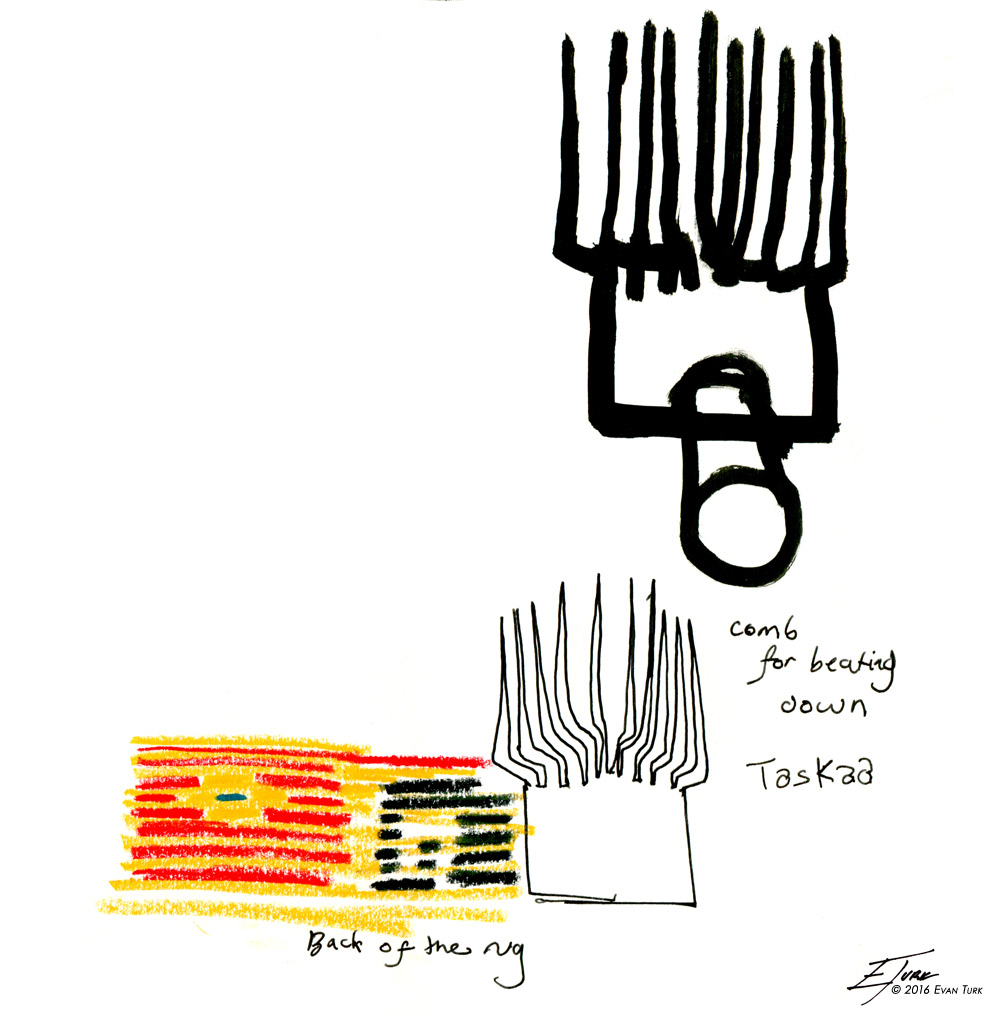
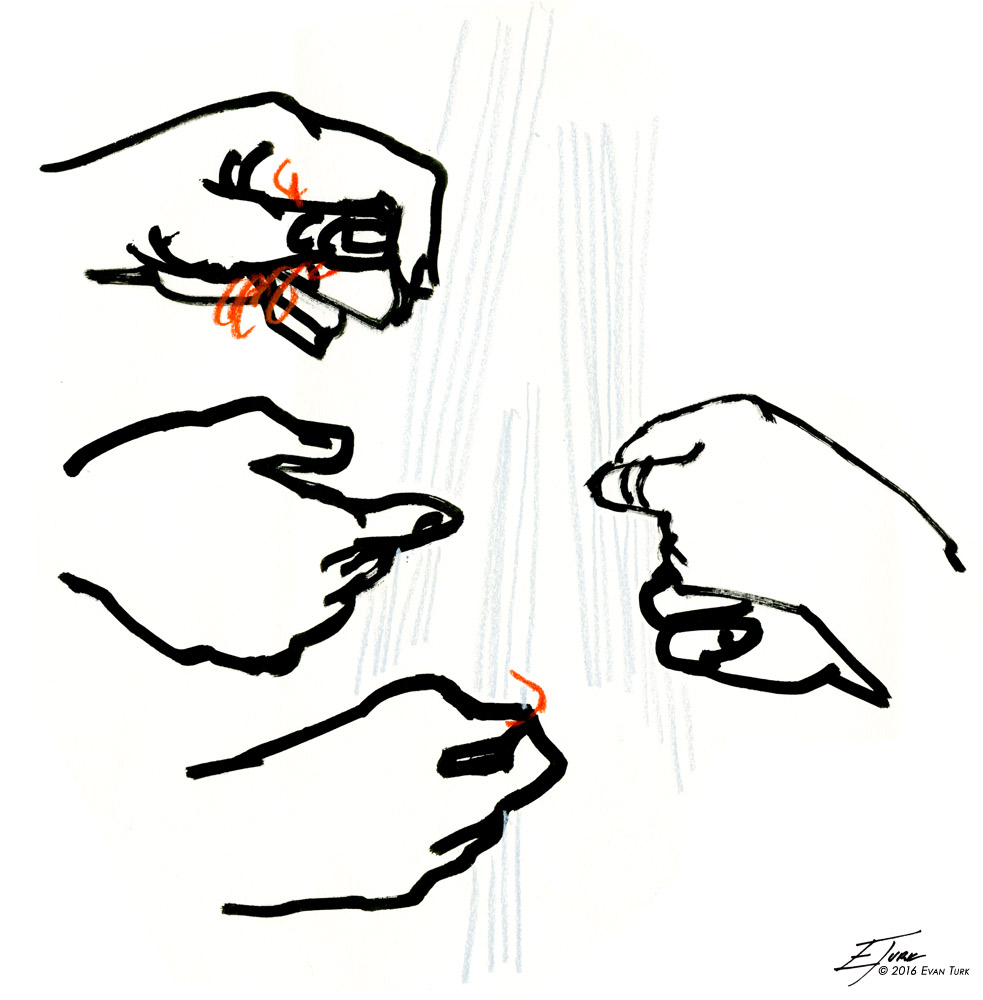
Aicha’s hands worked quickly, knotting each row, and then smacking the knots down with a comb called a taskaa, which resembled a big spider.

weaver09

Spiders are often associated with weavers, and their magical creative ability in forming webs. The act of weaving feels both magical and utilitarian. When you see a finished carpet, the staggering amount of work is both hidden behind the beauty, but also evident in each individual knot.
Patterns spread across the warp, slowly appearing as the weaver moves from side to side, row to row. Symbols, triangles, diamonds, zig-zags, and other shapes emerge. The symbols are infused with historic meaning, but also with the individual whims of the weavers.

weaver13

I watched as Rahma struggled in contemplation in the early stages of her weaving, trying to decide on a color and a direction. The dreaded “blank page syndrome” that plagues all artists at some point, manifests in the even more daunting “blank loom” which will be the home for her hands for the next many hours and days.

weaver17

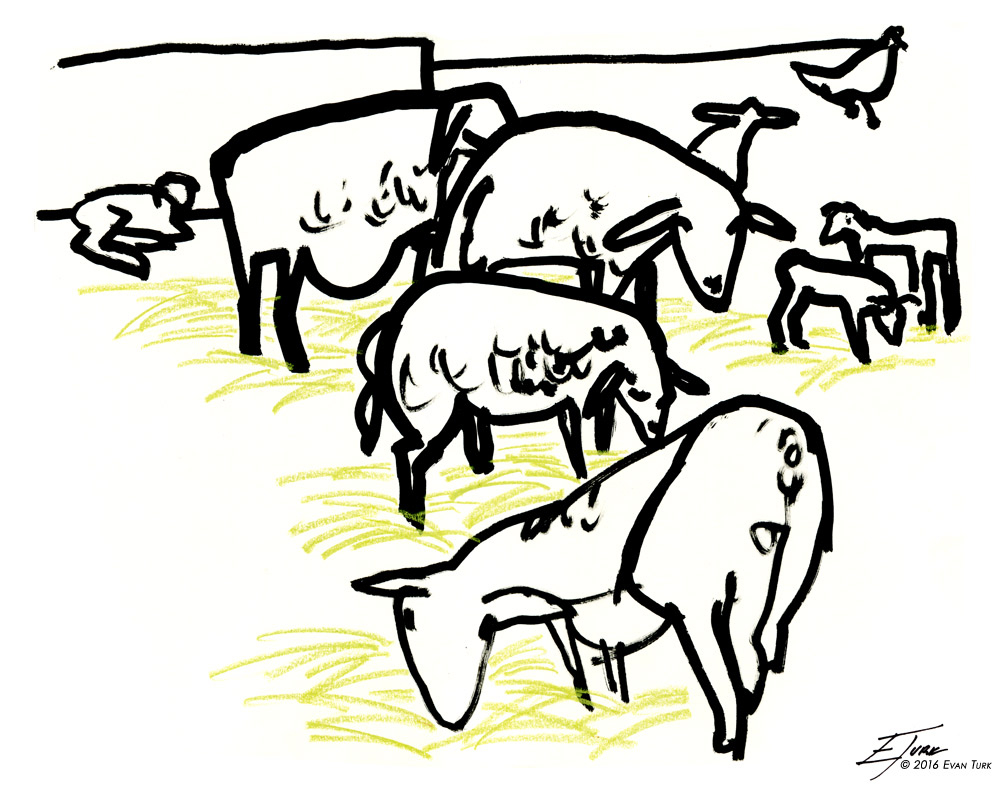
Naoual showed me her family's sheep pen (who's wool is taken for the carpets), and led me to her own house for tea and lunch with her mother-in-law, Rahma, and Fatima, the spinner. I listened as they all spoke back in forth in Tamazigh, as Naoual tried to keep me up to speed on the conversation. We discussed the growing presence of Tamazigh people in the national conversation, as it became an official language in Morocco, in addition to Arabic. Over 80% of the population of Morocco has Tamazigh ancestry, but their language was not recognized until recently. New possibilities are growing as the diversity of the country is embraced.

weaver16

Naoual and her friend then took me on a small tour of the gardens behind the town. She showed me the water source, where Anzal’s water is filtered in from a nearby spring. The water descends from the spring into two divergent paths, towards the reservoir, or off towards the village. Trees line the cement channel made for the water. Twinkling olive trees baked in the sunlight, and shriveled pomegranates littered the ground with their seeds. The gentle breeze flowed through the valley, as if it had come from far off mountains, and the eternity of ground and sky. We talked about our lives, the differences and similarities, hopes and possibilities. As the sun began to set, we made our way back to the Association.

weaver08


We left the open valley and returned to the unadorned room with the weavers.

weaver11

A new weaver, Fatima, joined them with her carpet stretched on the loom. Undulating mountainous forms (or are they clouds?) overlap and emerge as she worked. The pattern grows, creating both ground and sky within the confines of her warp, but extending in all directions into infinity.

Sketch © Evan Turk

We then went to her mother’s house where I met her mother, brother, and sisters as we ate bread, honey, almonds, and ground dates, and laughed while sipping our hundredth cup of delicious mint tea.

weaver14

She took me to her aunt’s house where her cousins, aunt, and grandmother were doing household chores and weaving.

weaver12

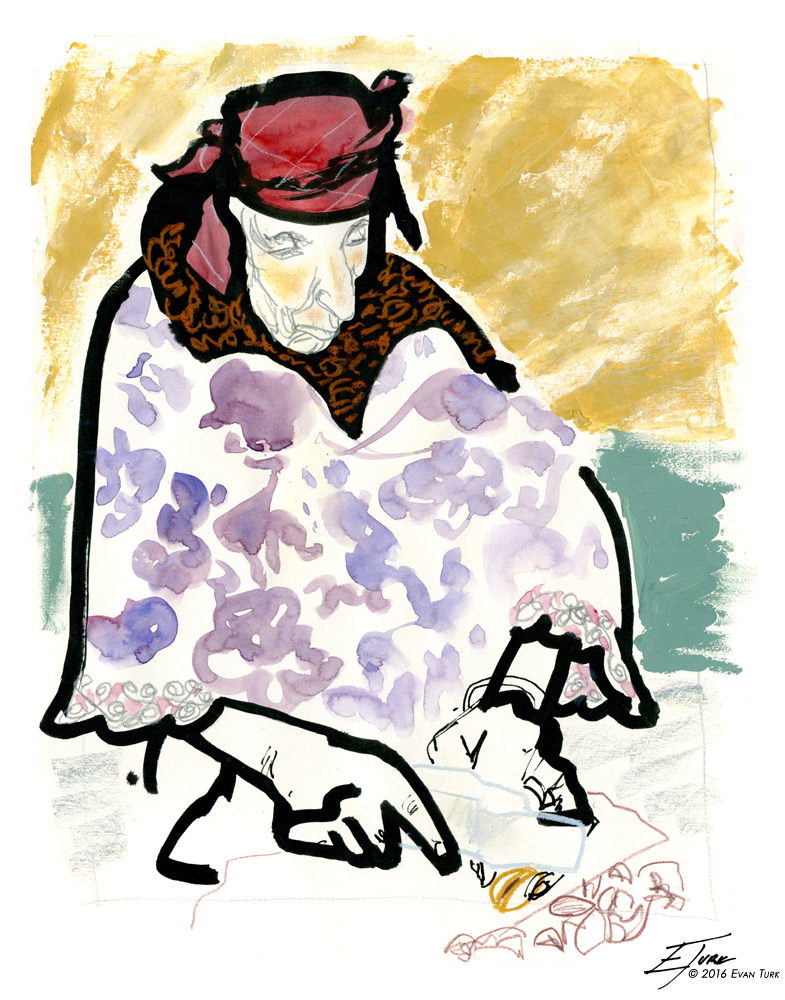
Her grandmother, with high, bronze cheeks and a warm smile, cracked almonds from their trees out of their shells with a stone in the back. She laughed as she saw her portrait, saying she couldn’t wait to tell her son that today she met a man from America who said she looked like his own grandmother.

weaver04

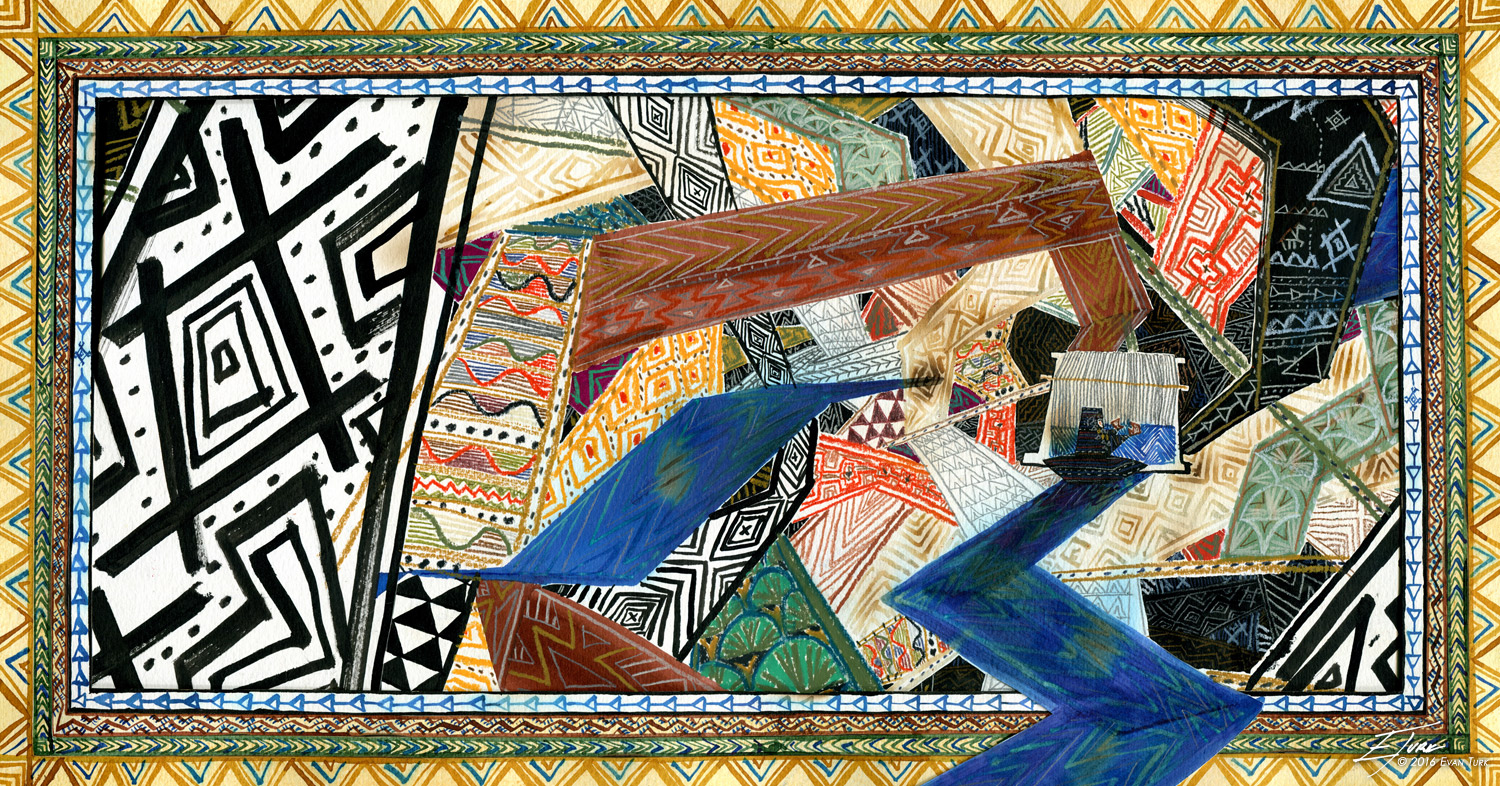
The act of weaving is often related to that of speech, or storytelling. A tale is referred to as a “good yarn” and stories are “woven” in twists and turns. The words "text" and "textile" even come from the same Latin root, texare, which means "weaving." The looms serve as repositories for words and thoughts not necessarily spoken. Patterns and symbols come together across the landscapes of the carpets, often with stories of pregnancies, births, deaths, and weddings. Like scrapbooks, created over months, the knots are woven in time as life events unfold. Older carpets seem to have been formed organically, with no plan in mind. There is just the warp to hold it together, and life to fill in the spaces as it comes.

weaver01

In the ebb and flow,
In warp and weft,
Cradle and grave,
An eternal sea,
A changing patchwork,
A glowing life,
At the whirring loom of Time I weave
The living clothes of the deity.

Goethe, Faust

For more of Evan Turk's travel illustration, check out the link below: 
Evan Turk Travel Illustration

Sunday, January 31, 2016

Chicago Blues


The blues research continues! I am working on the illustrations for an upcoming book called Muddy by Michael Mahin, which tells the story of blues musician Muddy Waters. After traveling to Mississippi in the fall to learn about Muddy's roots, it was time to go to Chicago to see where he became a musical legend. The blues community that Muddy helped develop in Chicago is still active and thriving. It was interesting to feel how Chicago's blues retain the same feeling of the Mississippi Delta, though the settings couldn't be farther apart.


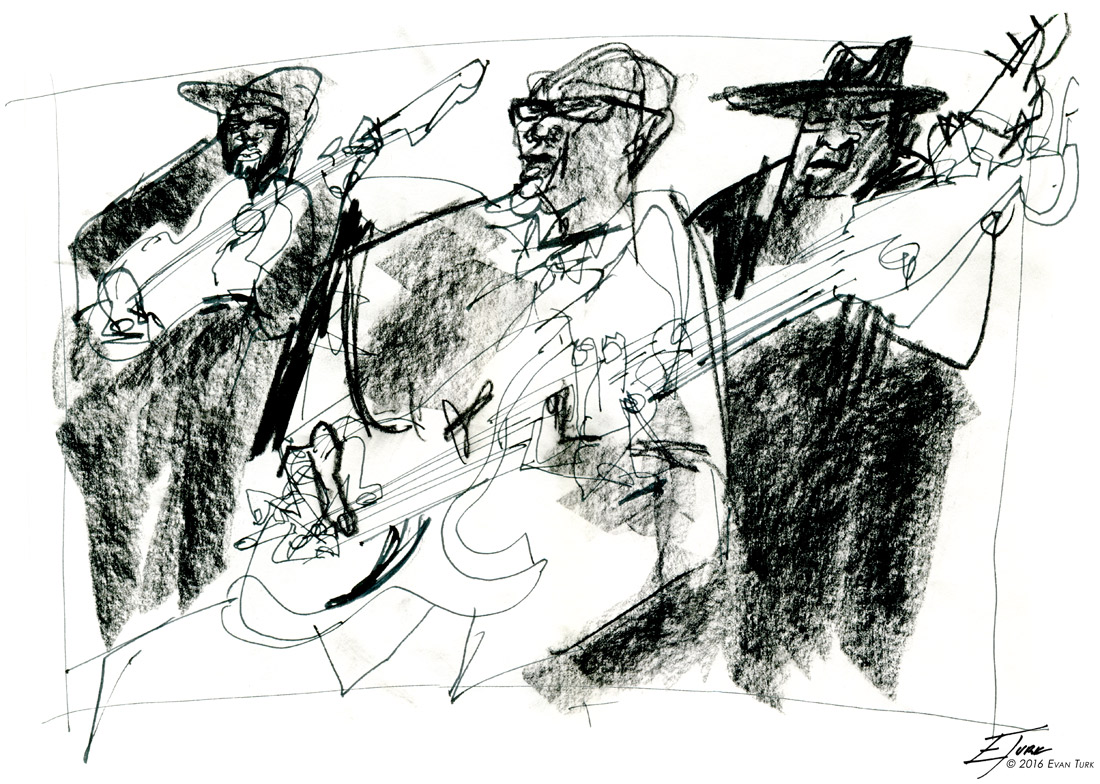
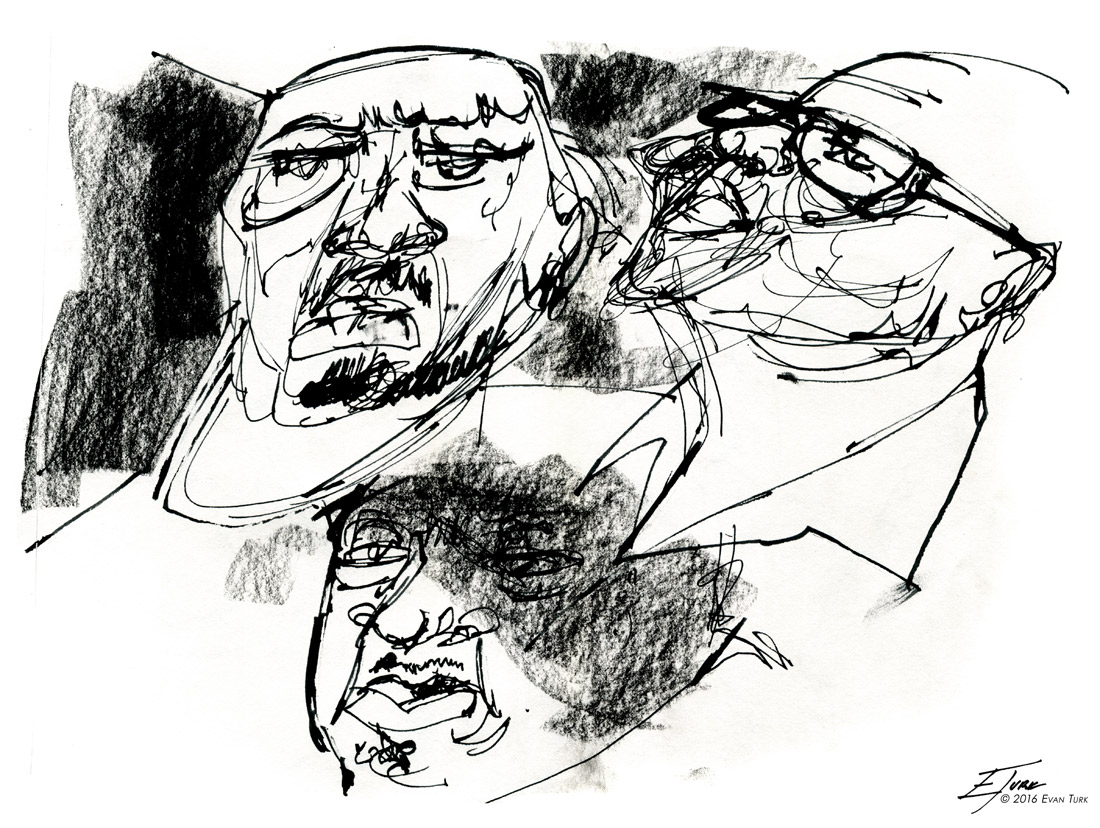
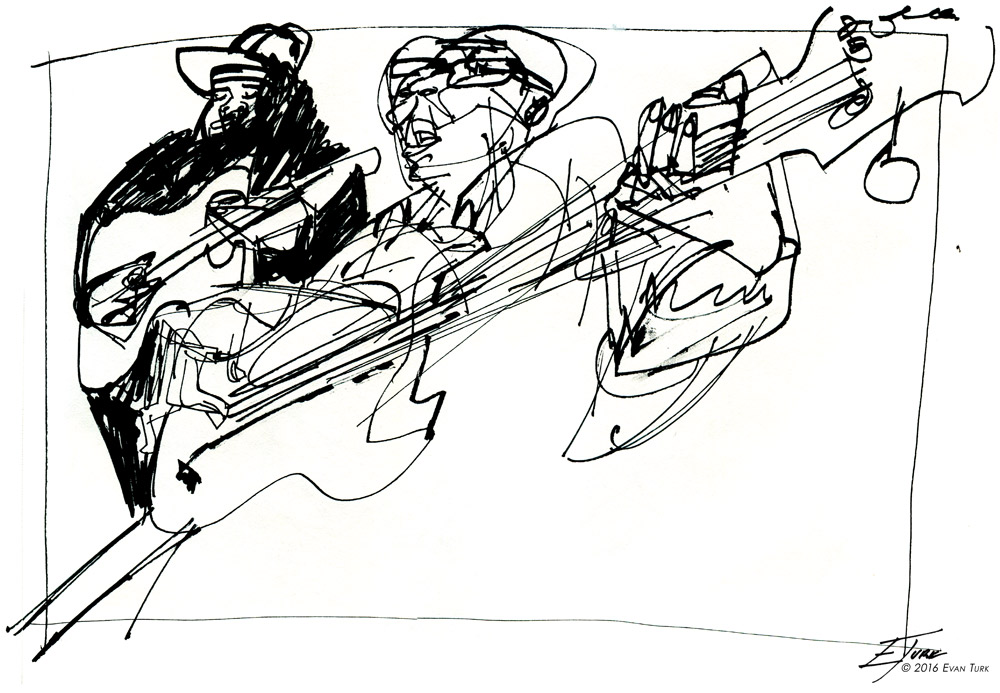
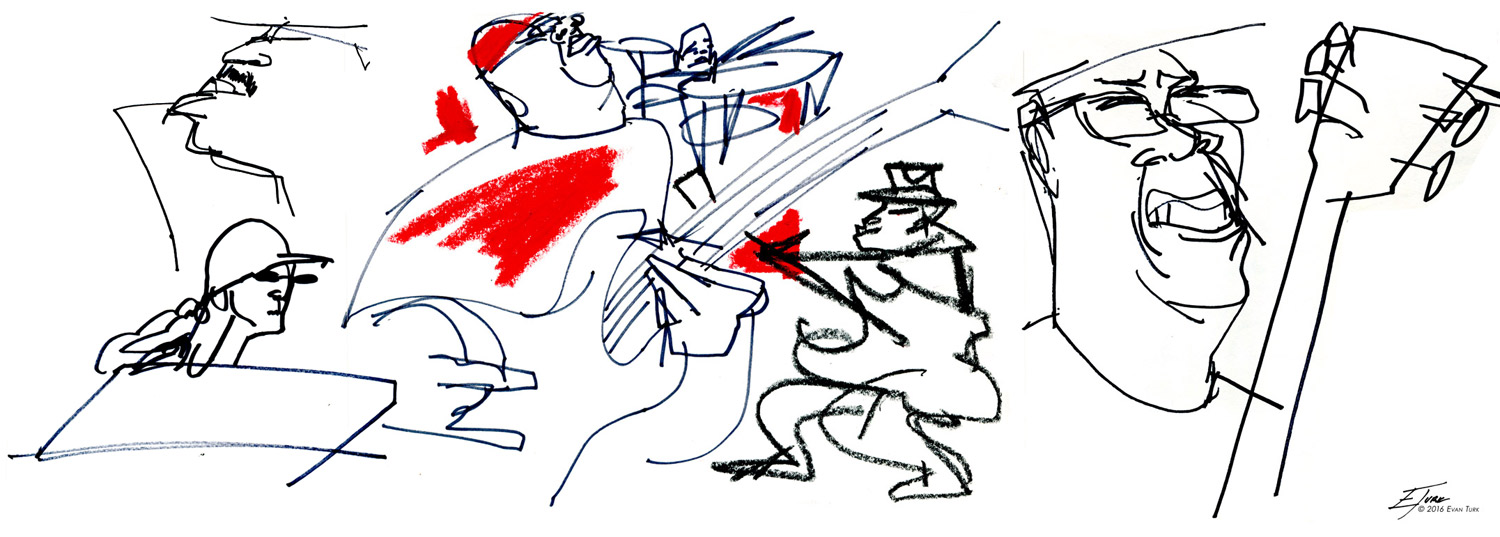
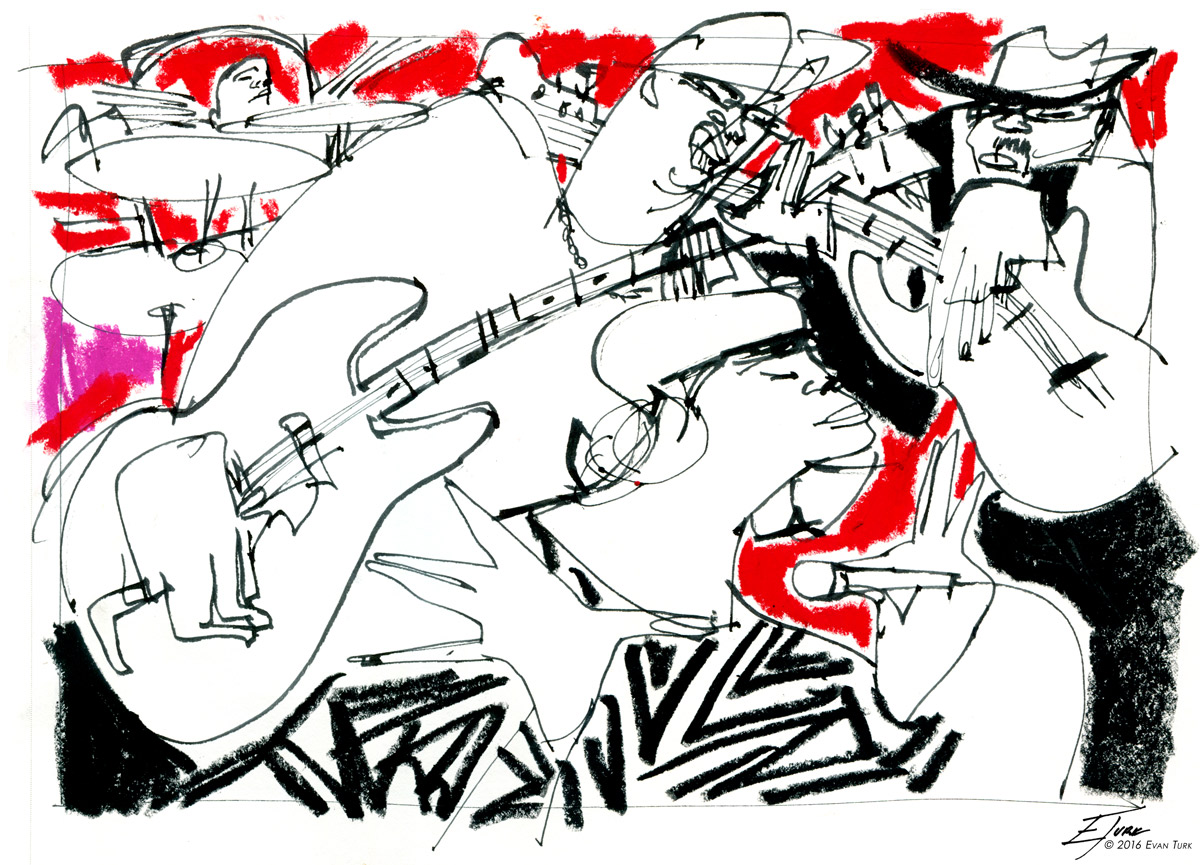
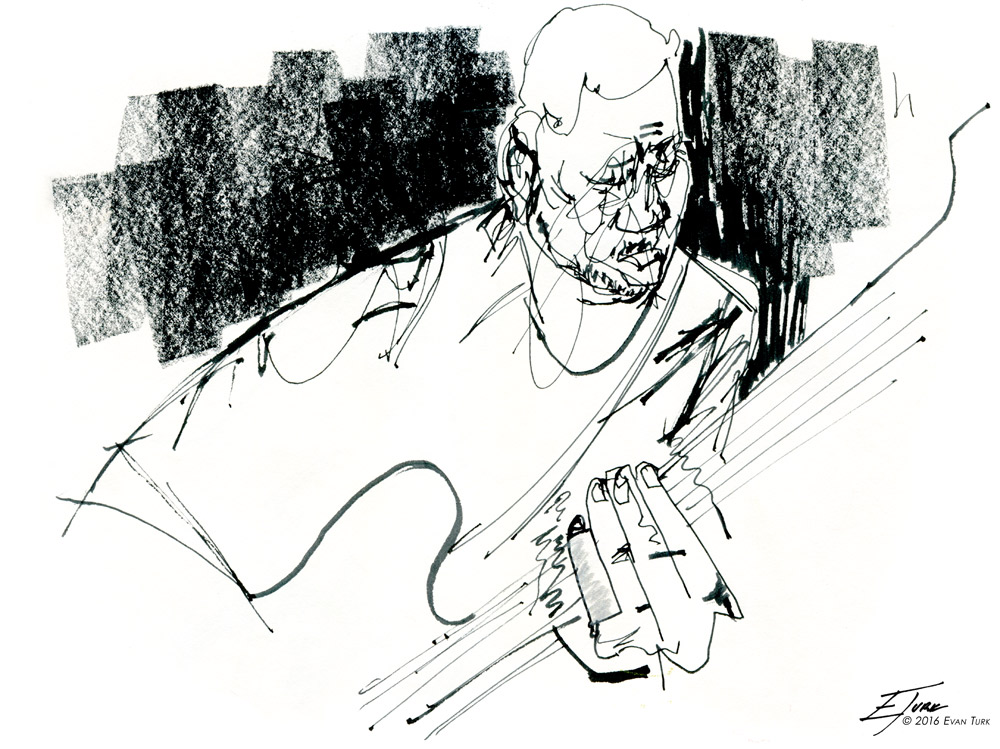
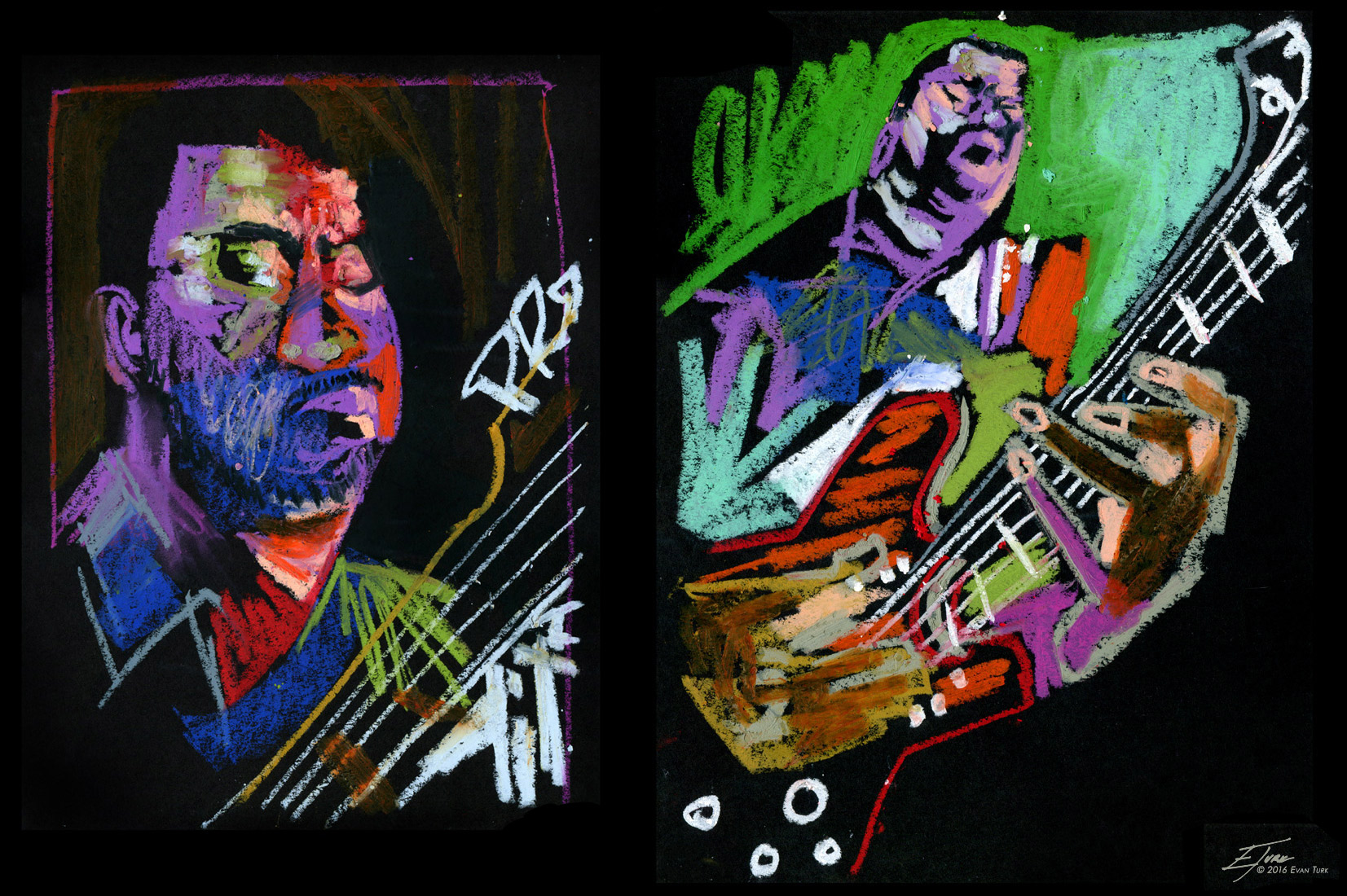
My first stop was Blue Chicago to hear the Tenry Johns Band featuring Claudette Miller. Like Muddy Waters, Tenry Johns is originally from a small town in Mississippi, and you can feel the country blues in his playing. He and his band were high energy, light-hearted, and charismatic from beginning to end.


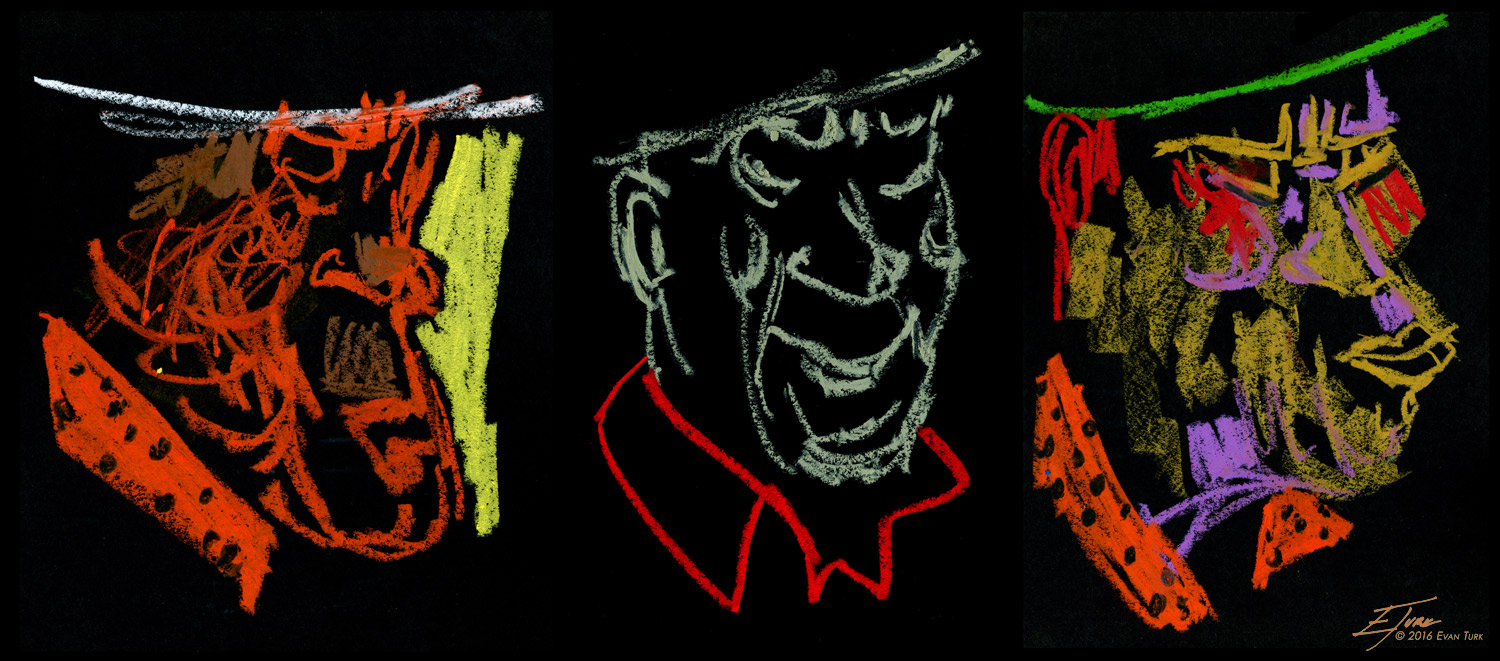
It's always interesting to try and see the different personalities of the different instruments and roles in a band. Tenry, the front man, was all smiles and laughing (upper right). The other two guitarists were quieter and focused.


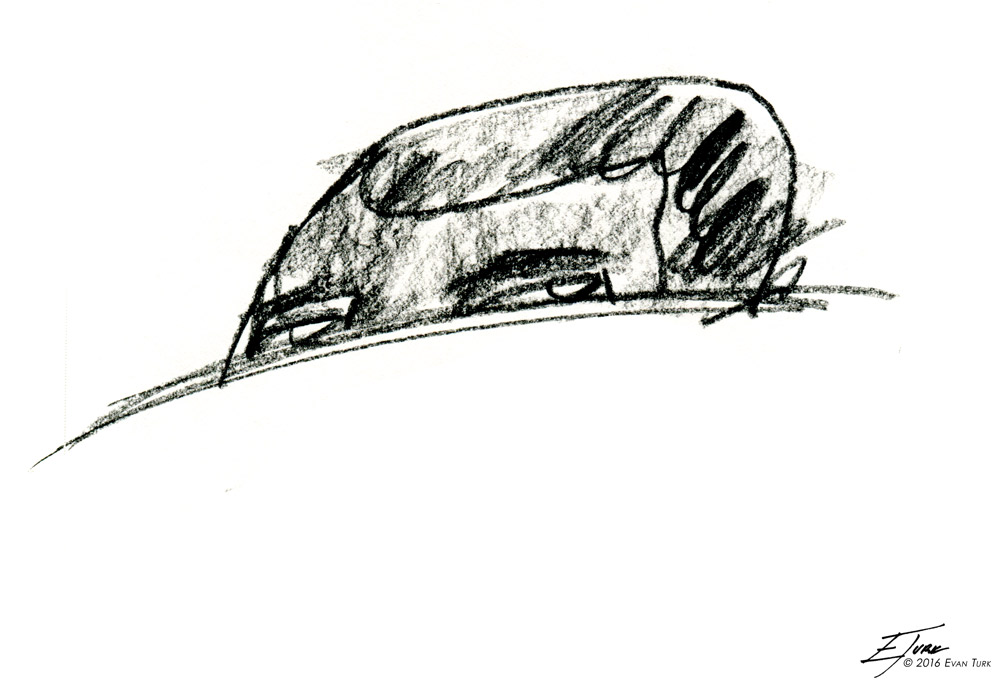
From my vantage point, all I could see of the drummer was his head poking up over the cymbals.


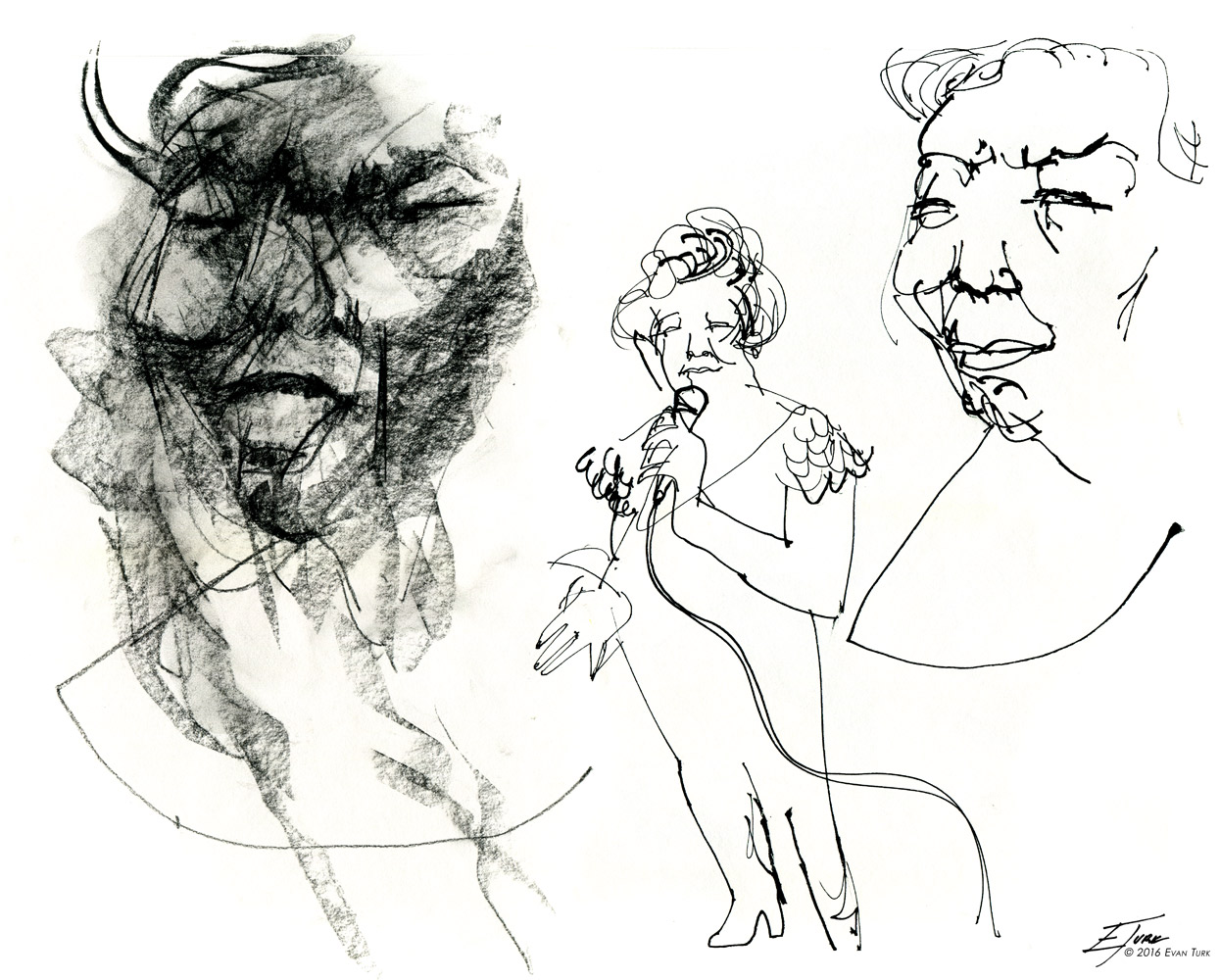
Later in the evening they were joined by the wonderful Claudette Miller, whose smokey voice was both sultry and playful. She was kind enough to chat with me for a little while after her set, and gave me the names of more great blues artists I should know. The blues community here is very tight-knit and passionate.


Their energy was infectious and got the crowd off their seats and dancing.


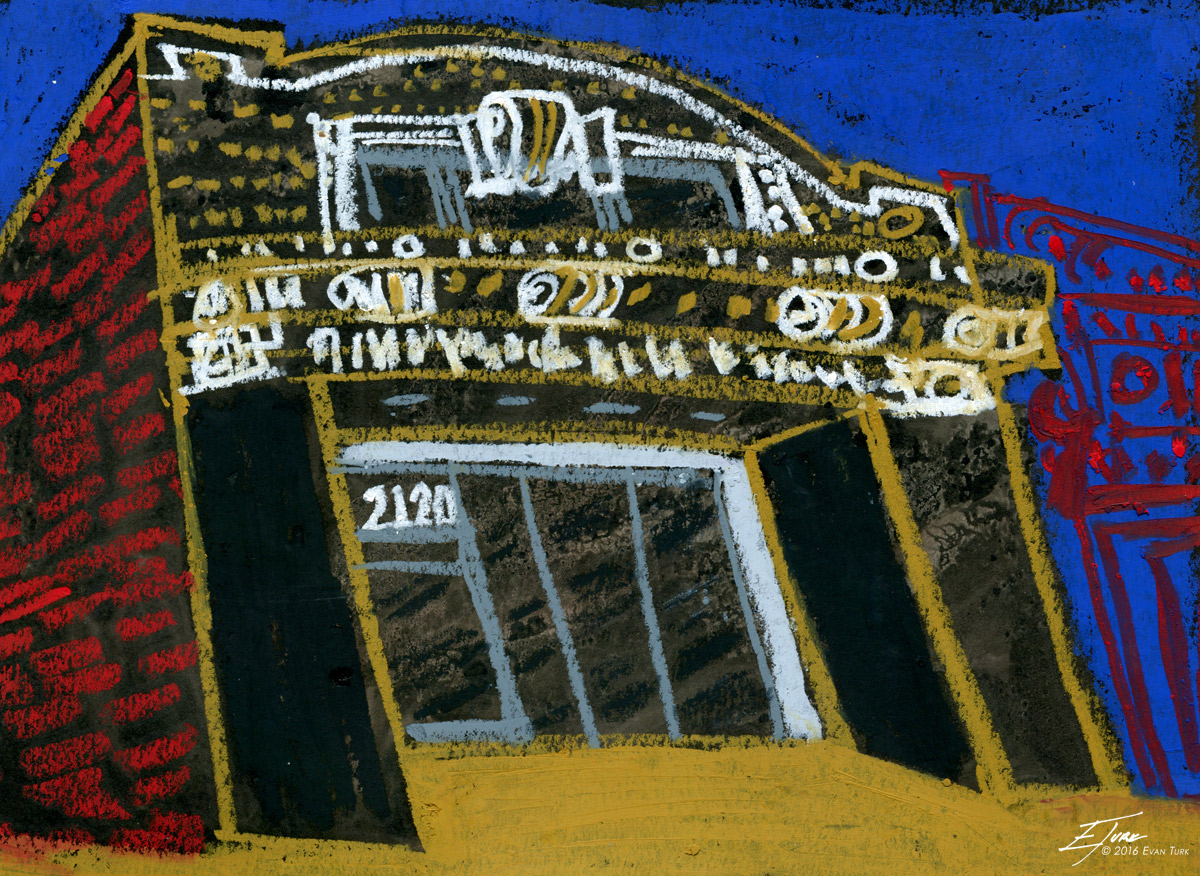
The next day I went to visit the former site of Chess (Aristocrat) Records, the studio where many of the greats, including Muddy Waters, recorded their hits. The building is now the site of the Willie Dixon Blues Heaven Foundation started in honor of Willie Dixon, the musician and songwriter behind many of the biggest blues hits of the 50's and 60's ("Hoochie Coochie Man," "I Just Want To Make Love To You," "My Babe").  The Foundation now seeks to preserve the history of the blues in Chicago, while encouraging and educating young musicians about the business. The Dixon family still runs the foundation—Dixon's knowledgeable and friendly grandson, Keith, volunteers and offers tours—and awards scholarships to students in Chicago. The studio has also become a mecca for musicians such as the Rolling Stones and Steven Tyler to come and soak up the residual blues energy.


That night I went to go see the Mike Wheeler Band at Kingston Mines. These guys electrified the stage, and really gave their all. You could feel the passion in their playing.


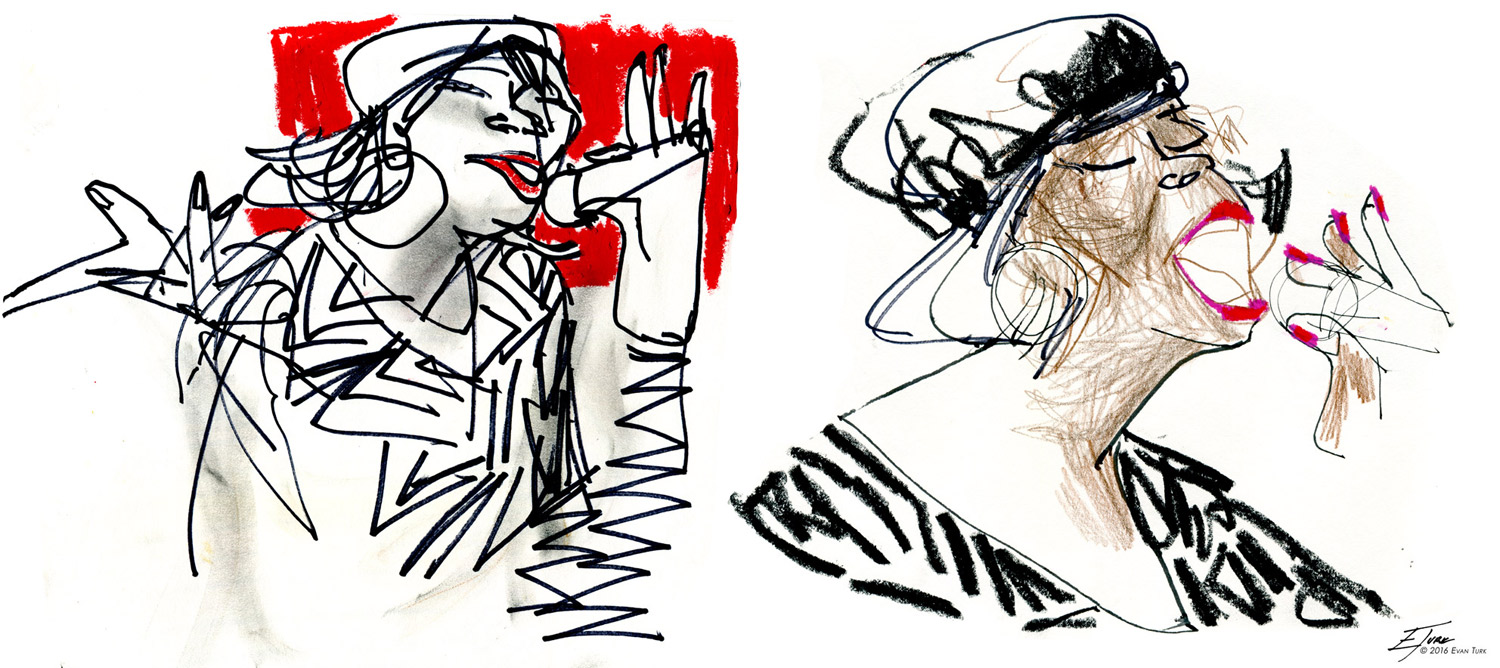
The band was then joined by the amazing Peaches Staten who added her intensity and powerful, growling vocals.


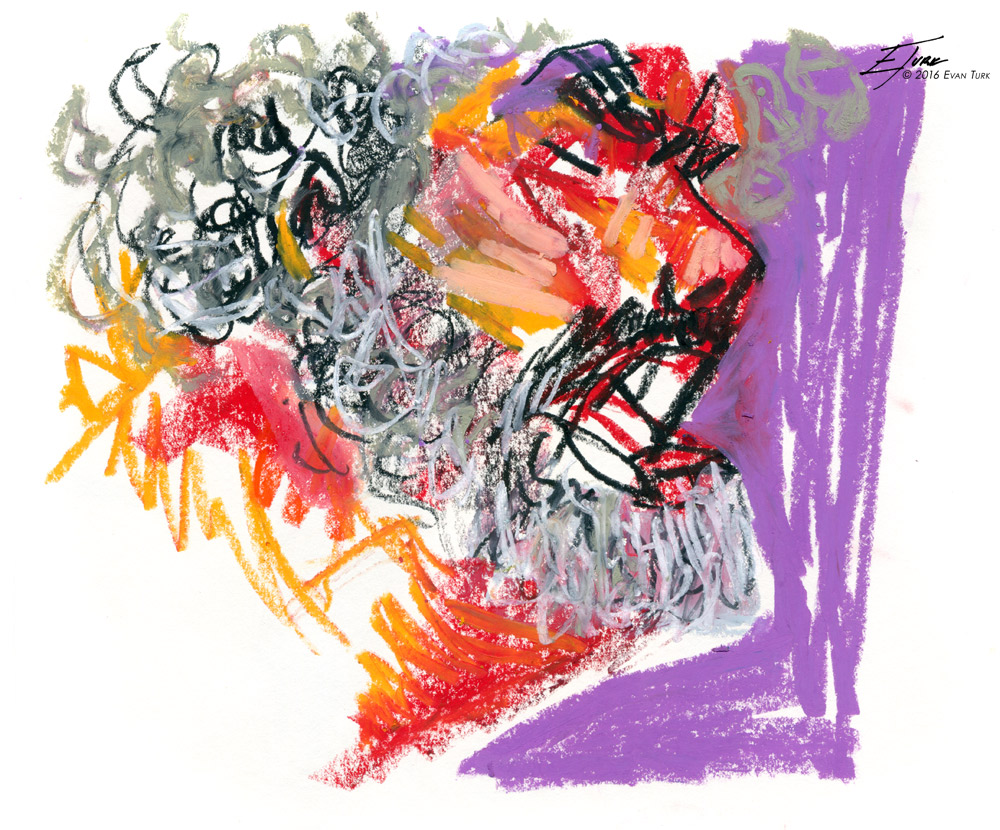
At one point, she did a rubboard solo where she strummed and scraped across the metal ridges of the board for rhythm, all while singing and dancing on stage. She was a powerhouse!


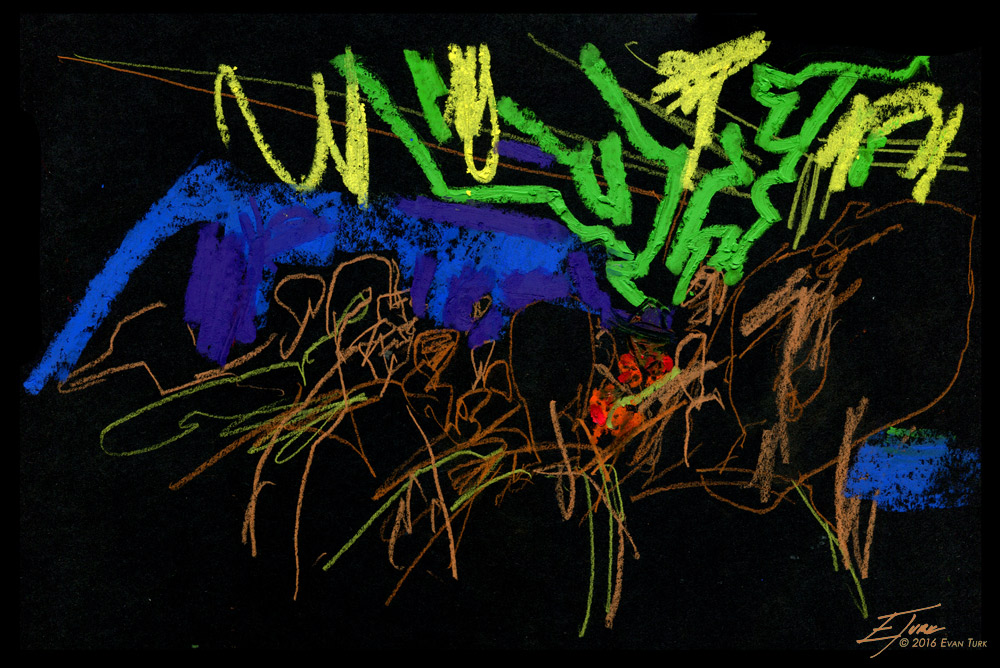
So much intensity on one stage!


After her set, Peaches went onto the dance floor and got the rest of the crowd moving and shaking.


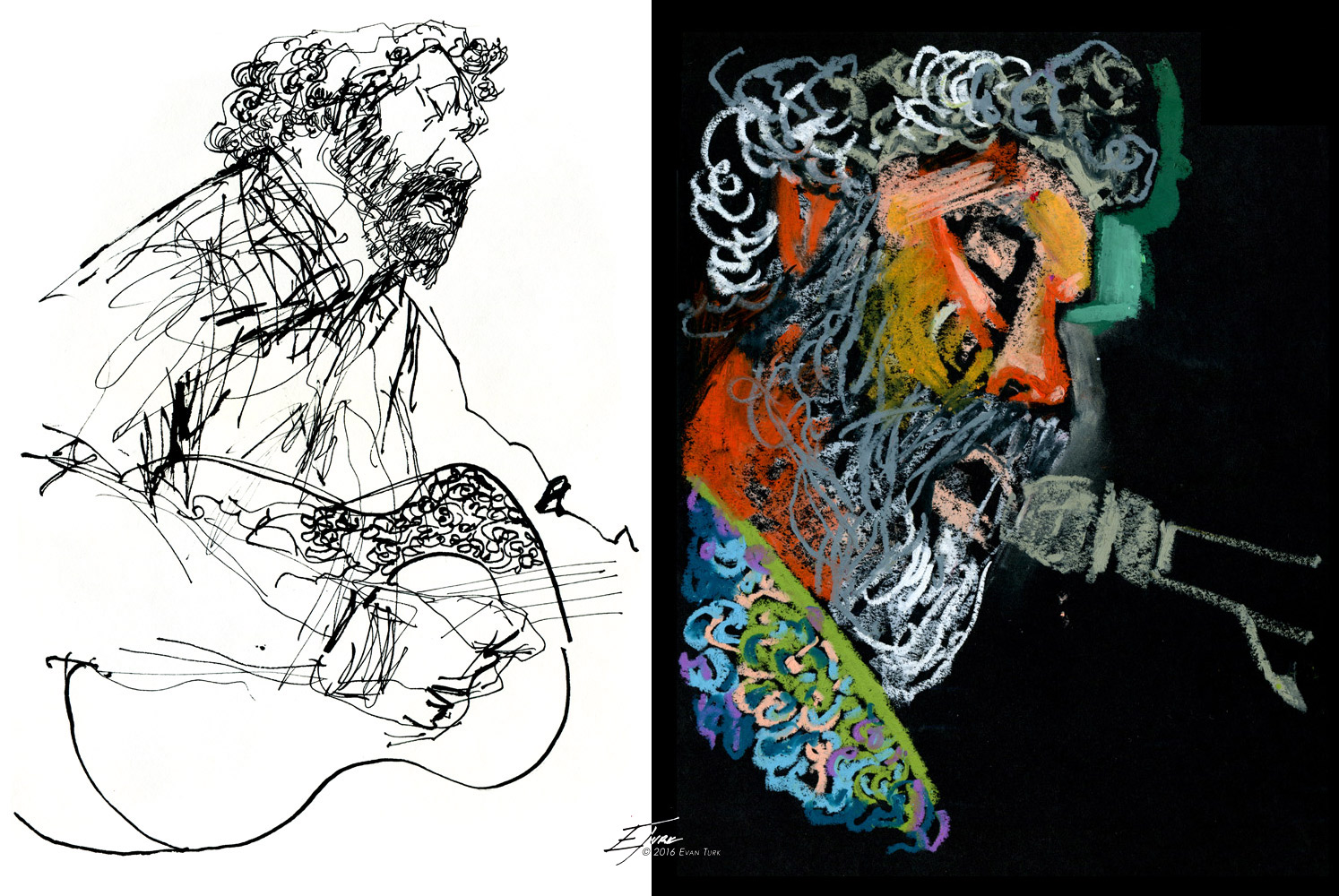
The next day it was all about Buddy Guy's Legends club. Among his many accolades, Buddy Guy is the recipient of six Grammys and the National Medal of Arts. Early on in his career in the 60's, he played alongside Muddy Waters. Now, at the age of 79, and with the recent passing of B.B. King, he is one of the last torchbearers of this generation of blues. Needless to say, he has quite a few fans. So to make sure I had a good spot, I had to get to his club eight hours early (and tables were already filling up by that point). Fortunately, there were some fantastic acts throughout the day. I arrived in the middle of Eddie Taylor Jr.'s set. Son of Chicago bluesman Eddie Taylor, he carries on his father's trade.


His sound was less electrified rock, more country blues, and reminded me of Muddy's Folk Singer album. His singing and playing are subtle, strong, and sensitive.


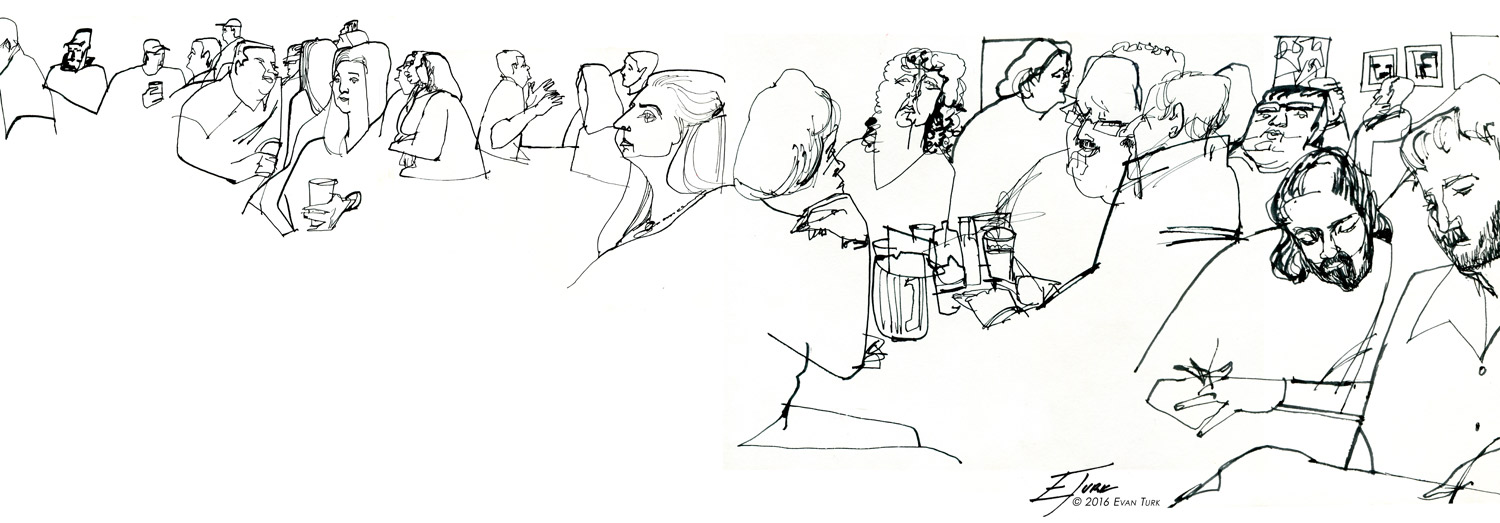
When his set was over, there was a few hours before the next performer, so I passed the time drawing the crowd ordering more and more drinks as they waited.

Next up was Nicholas Barron with an unusual, percussive singing style combined with a deep, gravelly, soulful voice.


A visual artist as well, his guitar was covered with beautiful swirling patterns.


His second set that he played a bit later was even more powerful, where he really let loose and let his voice fly.


Then it was time for the opening act, Vino Louden. This guy was, straight out of the gate, so full of energy it was hard to keep up. He commanded the stage with an unbridled, sensual electricity.


Louden was a guitarist for the late blues singer Koko Taylor, and at one point in the show he told of how he and the rest of her band were in a terrible car accident. Louden was the worst off, with a severely broken pelvis, life-support, and two heart attacks. But through a painful rehabilitation, he relearned how to move his body, and regained his life. He sang a moving and plaintive rendition of Sam Cooke's "A Change Is Gonna Come".


Maybe it's because of that hard-won and fought-for life that his performance was so full of vitality. You could tell he was feeling every single note he played.

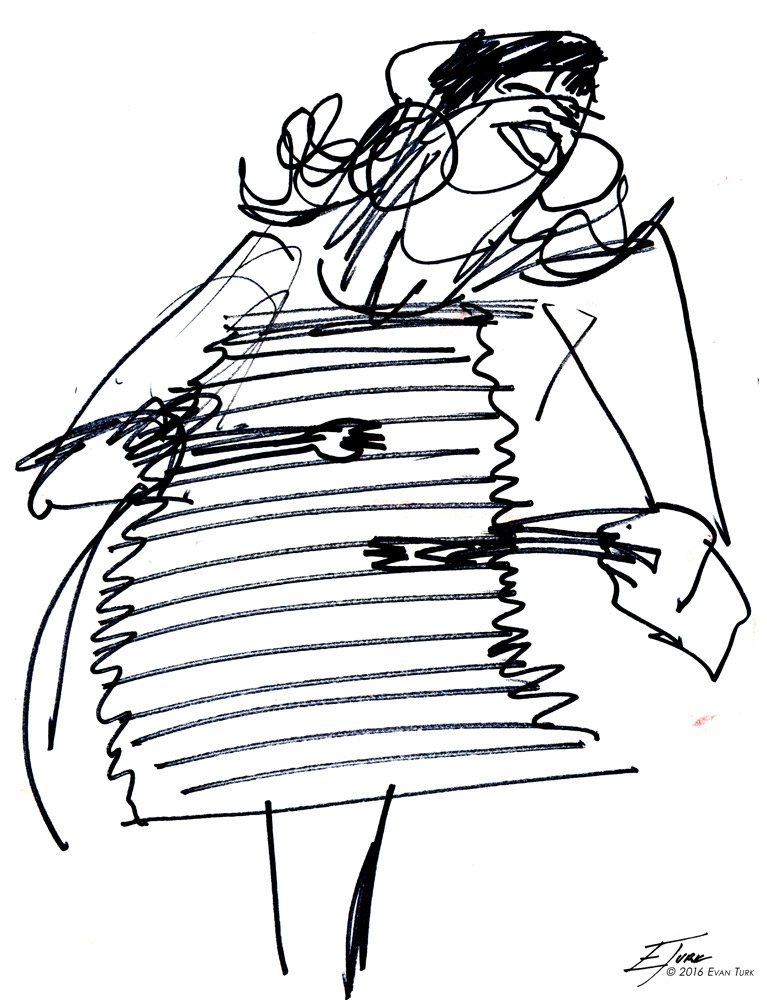
His keyboardist, too, had some particularly jaw-dropping solos.


Absolutely blown away by Vino and his band, I couldn't wait for what was coming next.


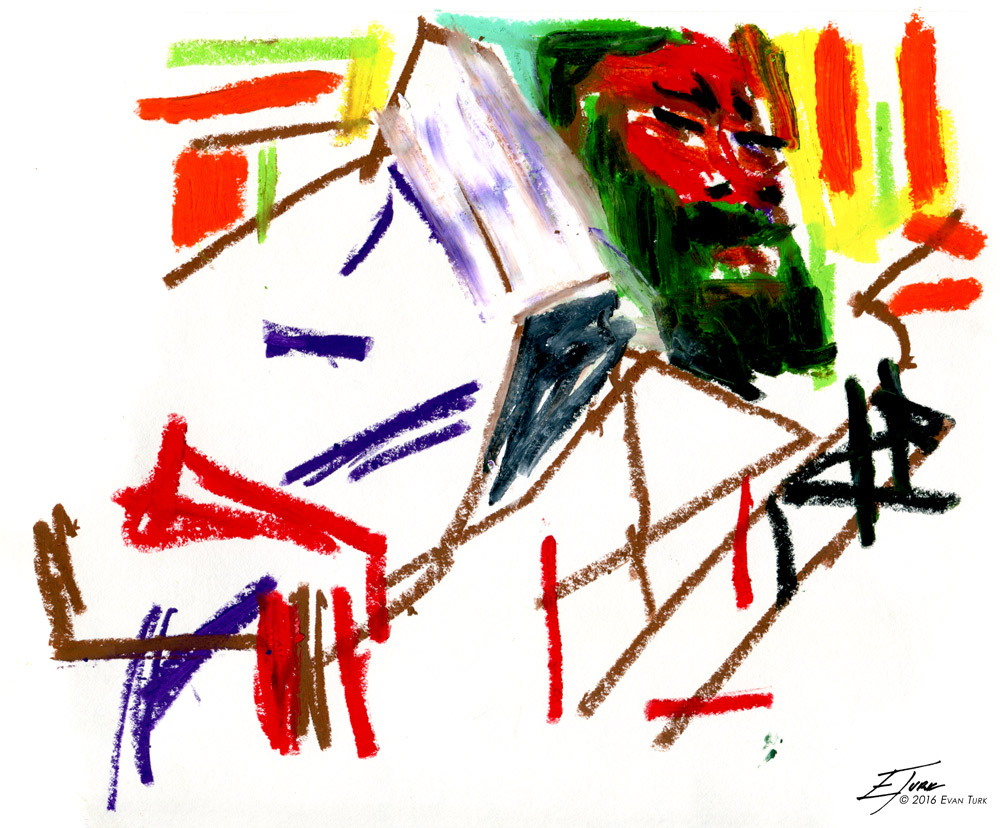
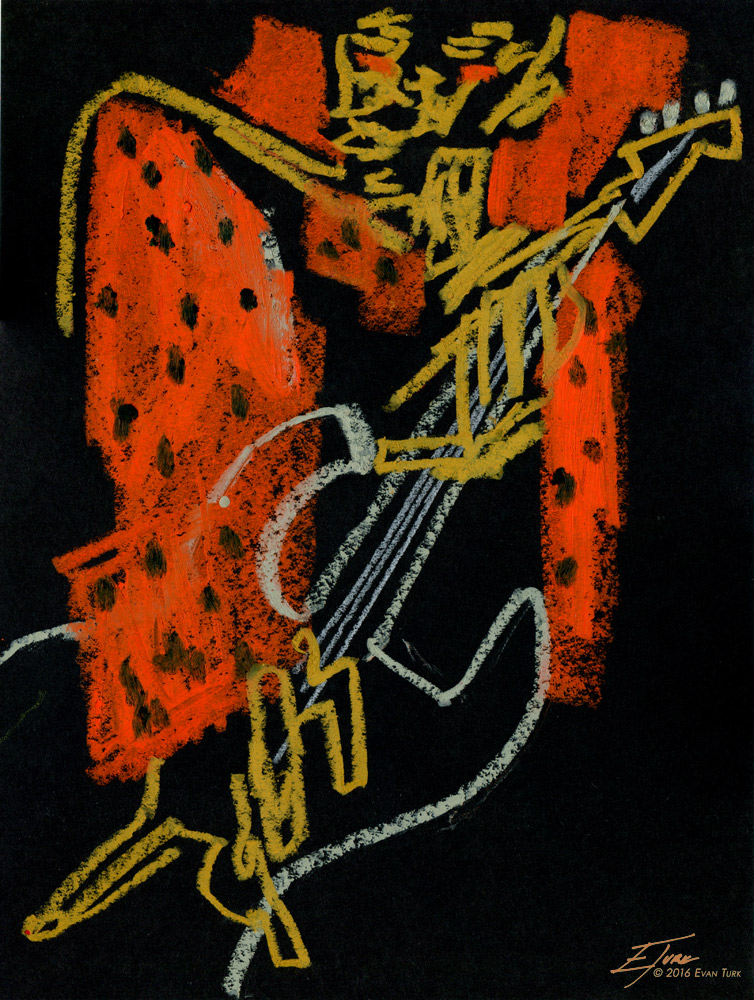
To a roaring cheer, Buddy Guy entered the stage in a red and black polka dot shirt. Polka dots are Buddy's trademark. With his parent's encouragement, he left Louisiana for Chicago, and promised his ill mother that he would buy her a polka dot Cadillac one day. But she passed away without ever getting to see him play, so he wears the polka dots as a reminder of his promise to her.


At 79, he is somewhat unassuming. But once he starts to speak, or sing, or play, he grows 10 feet in a second.


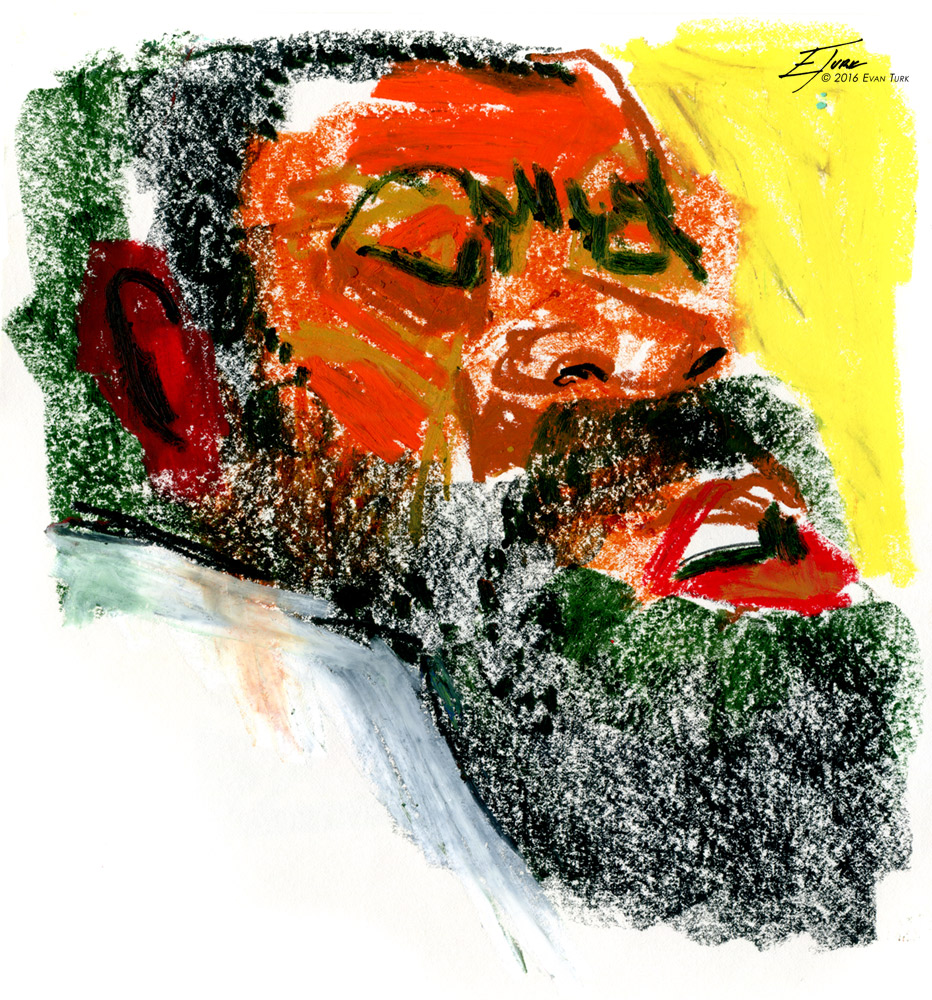
I loved watching his face as he sang, spoke, and played, shifting from one second to the next from intense focus, to a wry, curled grin, to a state of spiritual ecstasy.


What struck me the most about watching him perform, was that drawing his actual presence on stage almost became beside the point. He was so in tune and skillful with the guitar and the joyful theatrics of his playing, that he dissolved away, and all that was left was this screaming, howling intensity of sound. His voice, from gentle, pained weariness to primal screams, melted into bare emotion.


Near the end of the show, he went on a tour of the bar, disappearing into the crowd except for flashes of red and polka dots. But as he literally disappeared behind his throngs of adoring fans, his sound filled the room, like he was in every single corner at once.


Before Buddy came out, the MC told the audience how this club, and this performance were the result of a promise. Buddy, Muddy Waters, B.B. King, Bryan Lee, and Junior Wells promised each other that they would do their best to keep the blues alive. With his unparalleled intensity, skill, and passion, Buddy Guy is doing just that.


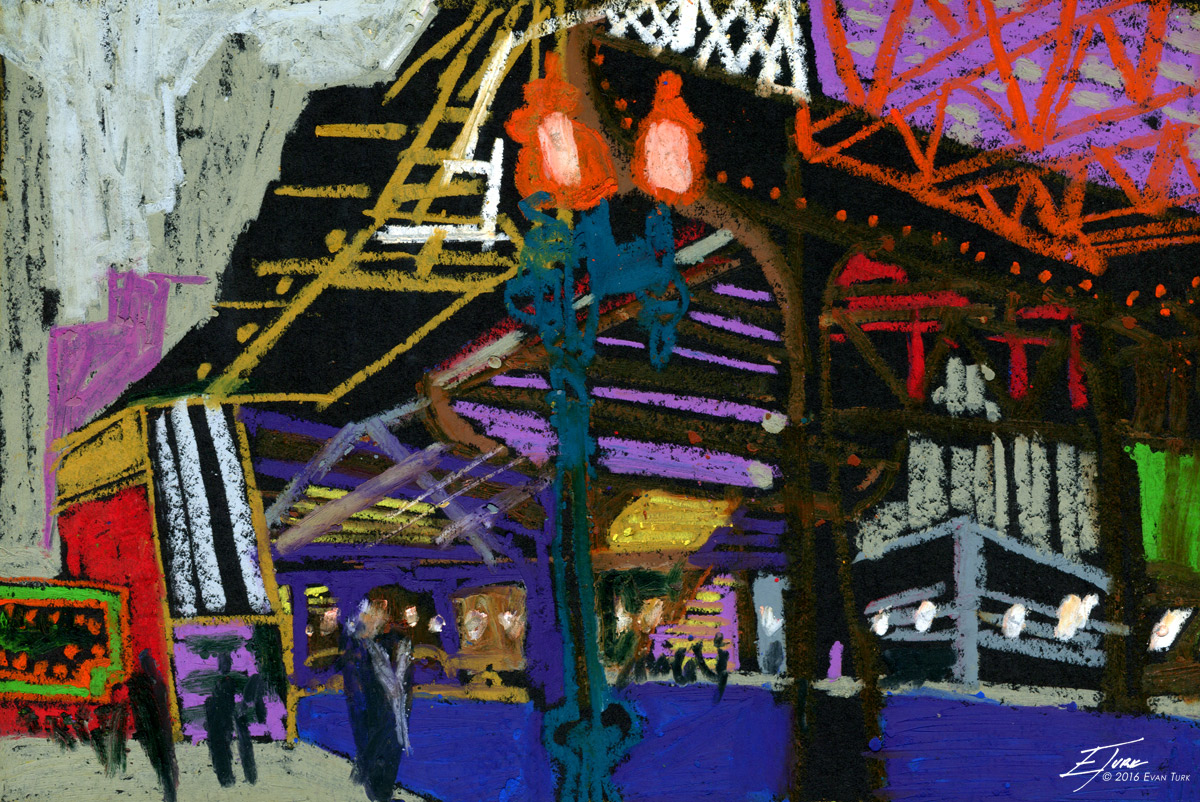
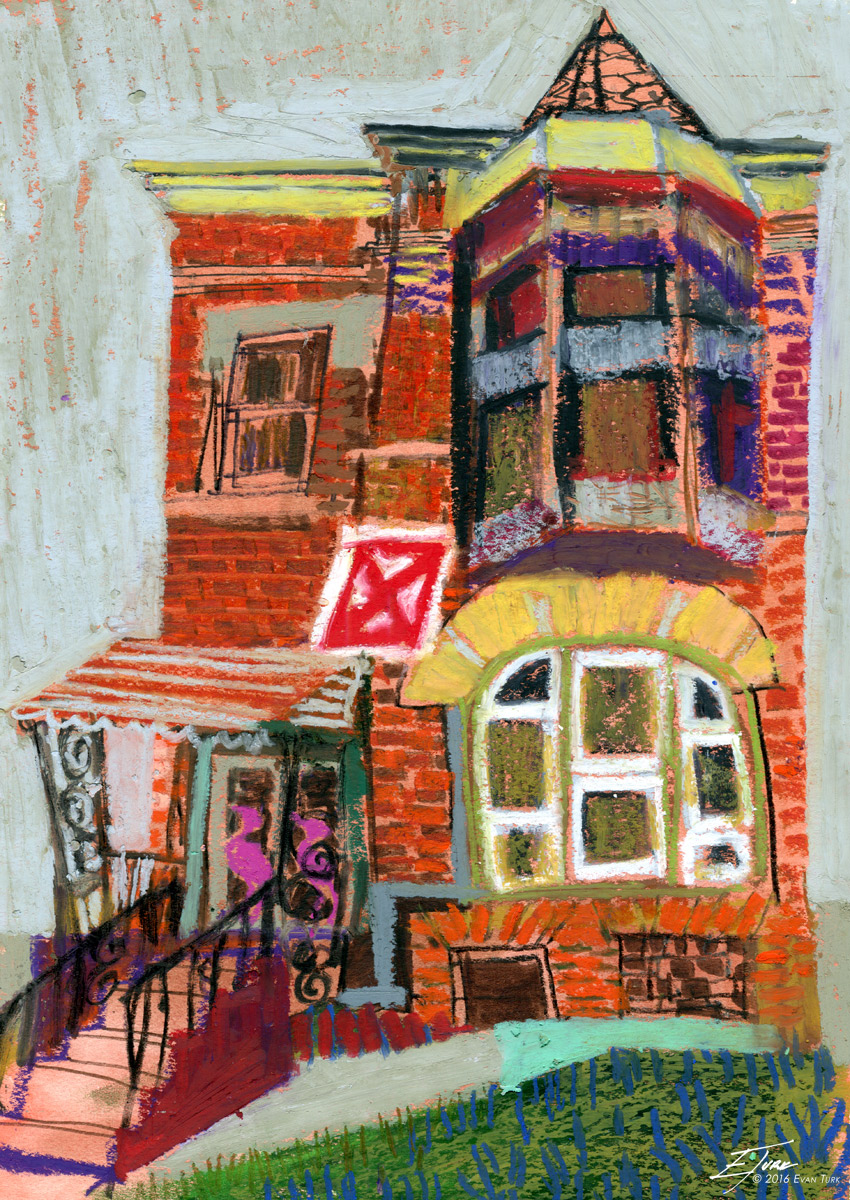
The promise, though, reminded me of my last stop in Chicago: Muddy Waters' house on the West Side. The house now sits abandoned, marked with a red X to show that it is not structurally sound. The windows are boarded up. As I drew outside, crouched near a lamppost as it started to snow, many neighborhood kids came by and asked why I was drawing the house. I told them about Muddy Waters, and pointed them to the weathered Blues Trail sign behind me talking about his history. The house has been saved from demolition, and many have talked about turning the house into a Blues museum. But none so far have been successful, and its future remains uncertain. The history of the blues is integral to the history of not just American music, but America itself. Whether through Buddy's club, Muddy's house, or Willie Dixon's foundation, it is important that we keep this history alive to educate future generations.
For more of Evan Turk's travel illustration, check out the link below: