Monday, July 7, 2014

The Charles W. Morgan Homecoming: New Bedford


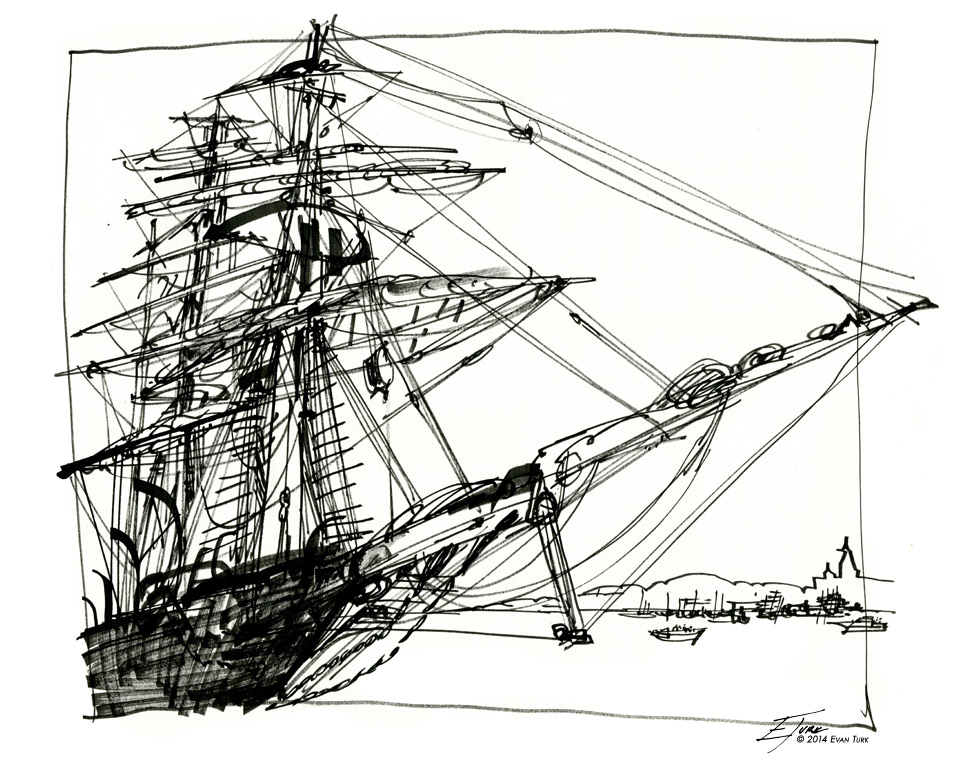
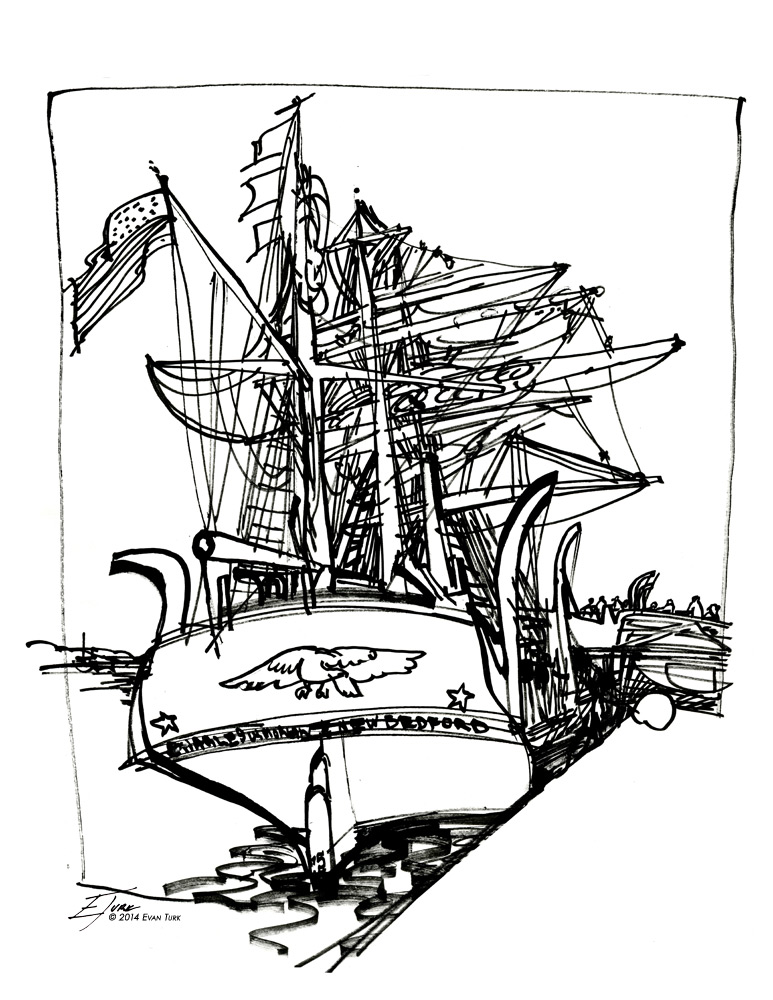
This 4th of July weekend I was able to go to New Bedford to see the Charles W. Morgan on her 38th voyage. The Morgan was built in New Bedford in 1841, and the city gratefully opened its gates to welcome her home over 170 years later.

I will be joining the captain and crew of this 19th-century whaleship as a 38th Voyager during the ship's historic voyage THIS WEEKEND! While aboard, I will be drawing and observing the workings of the ship (and maybe a whale!!!) as she sails into the Stellwagen Bank National Marine Sanctuary. In addition to the work created on-board, I will be creating an animation about the Morgan, whale conservation, and our evolving compassion towards whales, other animals, and each other. You can view my previous animation about the cultural history of whaling below, which was created as a part of a collaboration between Dalvero Academy and Mystic Seaport.


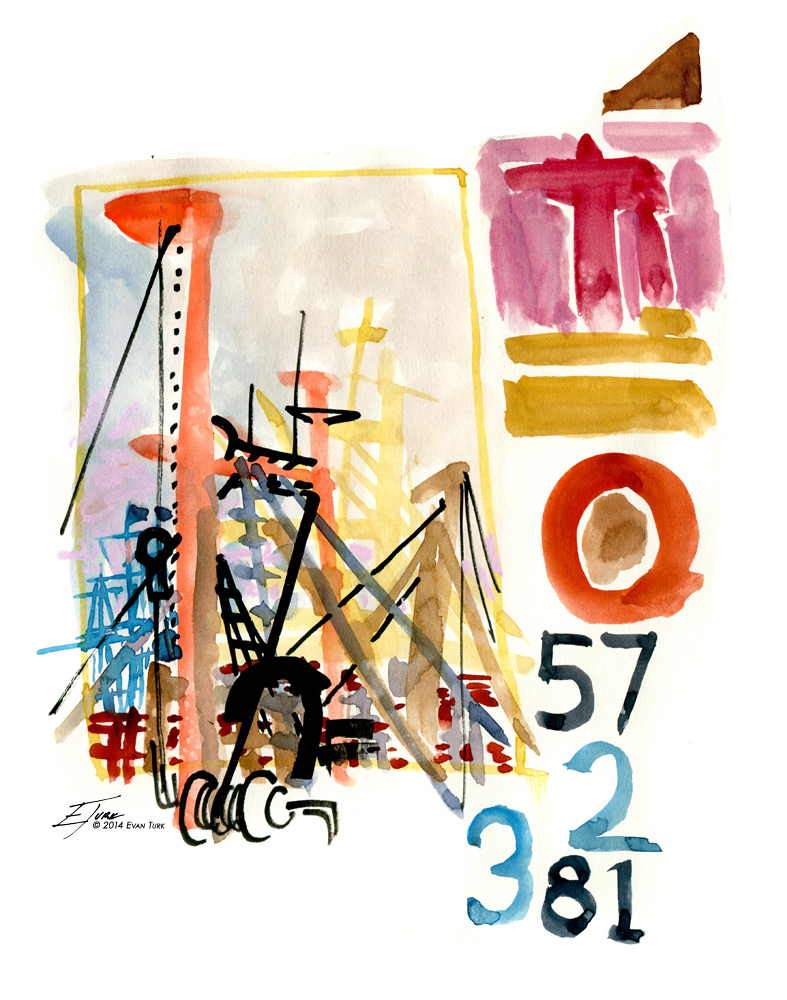
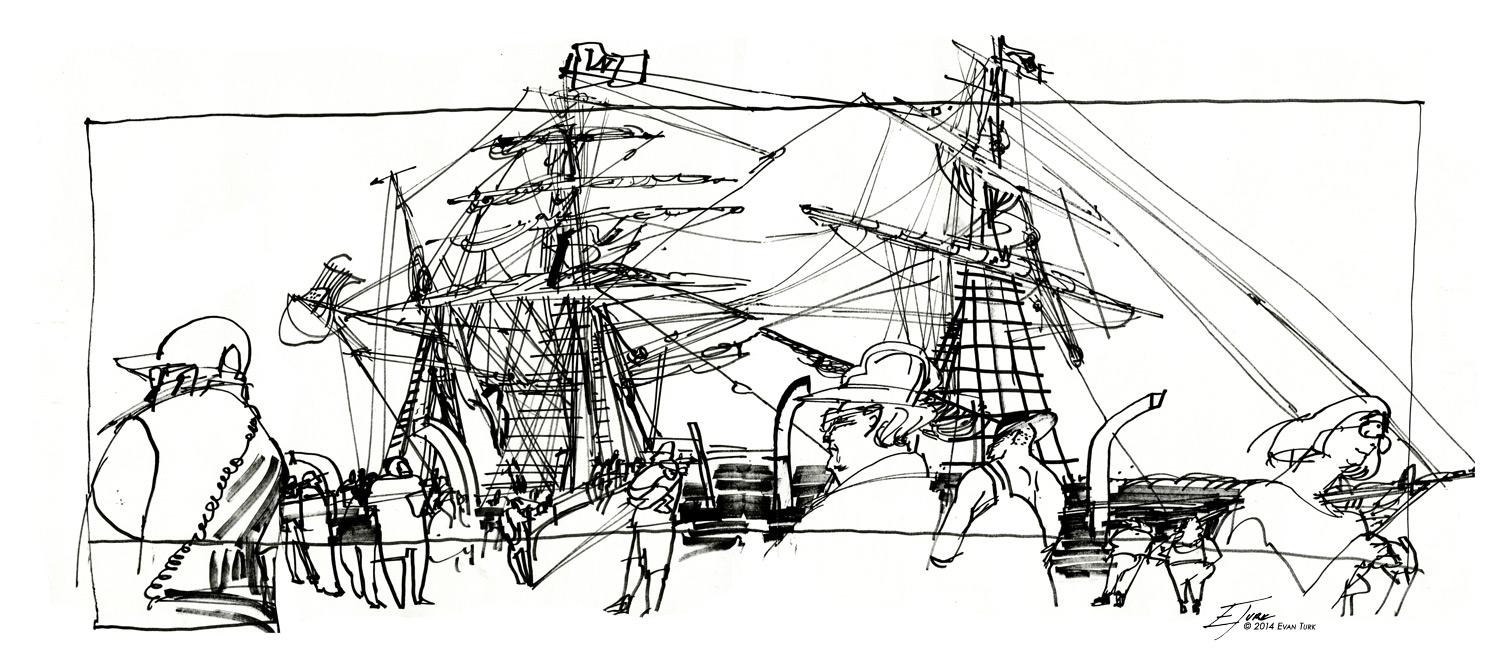
It was my first time seeing her outfitted with all of the rigging and sails. It's amazing how different the experience of drawing her is, compared to several years ago when she was out of the water on dry dock.


Most of the ship we drew is now below water, and with her masts she extends up even higher above the water. She is a completely new shape, but still the same ship.


They closed the Morgan's pier in preparation for the night's fireworks (on July 5th, because New Bedford had been completely flooded on the holiday!) so we moved over to another pier.


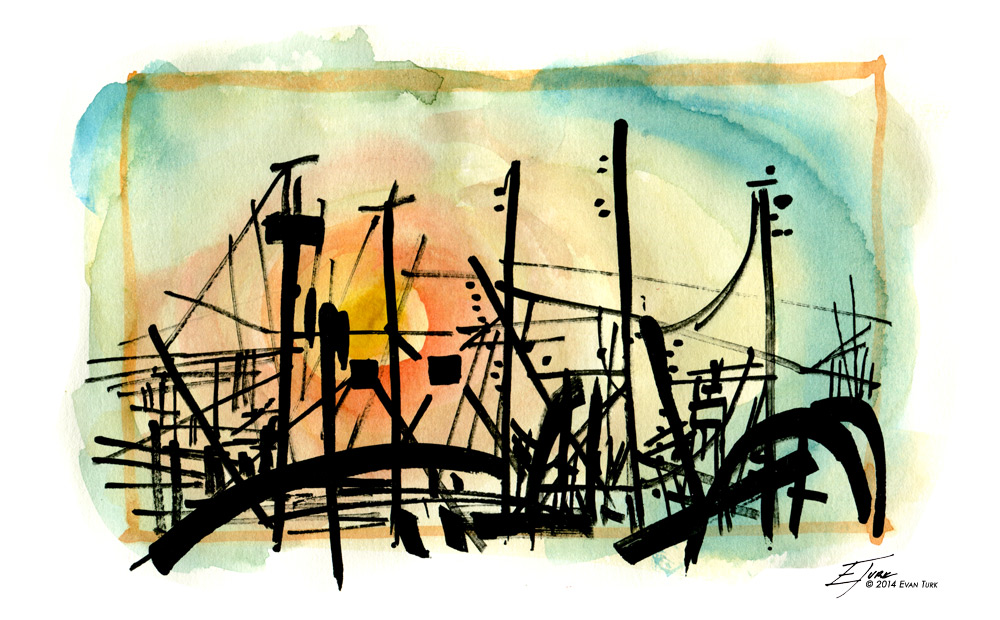
We waited for the fireworks as the sun set behind the rigging of commercial fishing vessels and lit the sky behind the Morgan's masts in the distance.


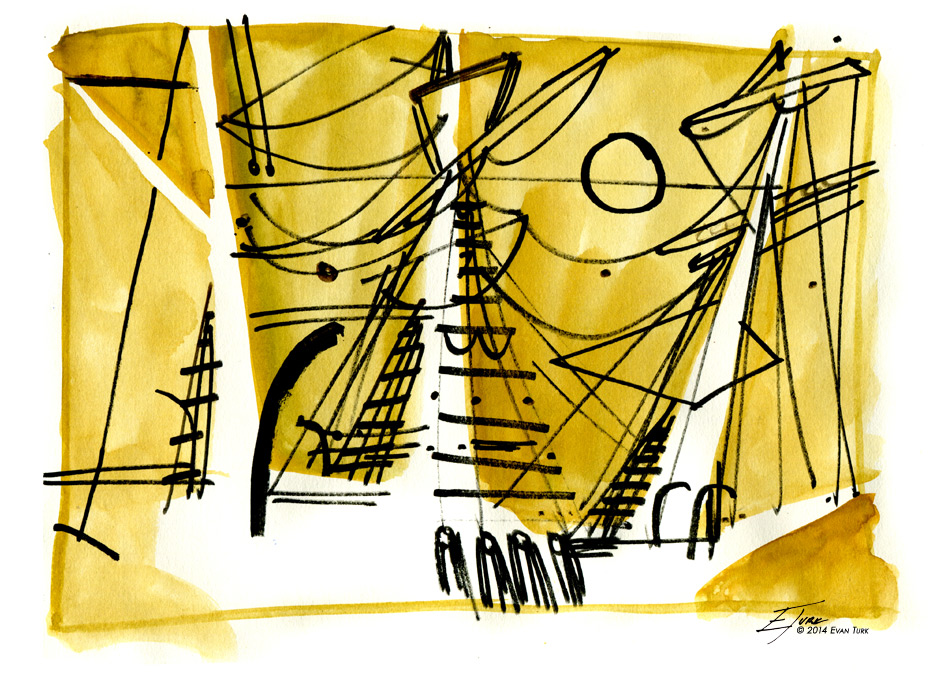
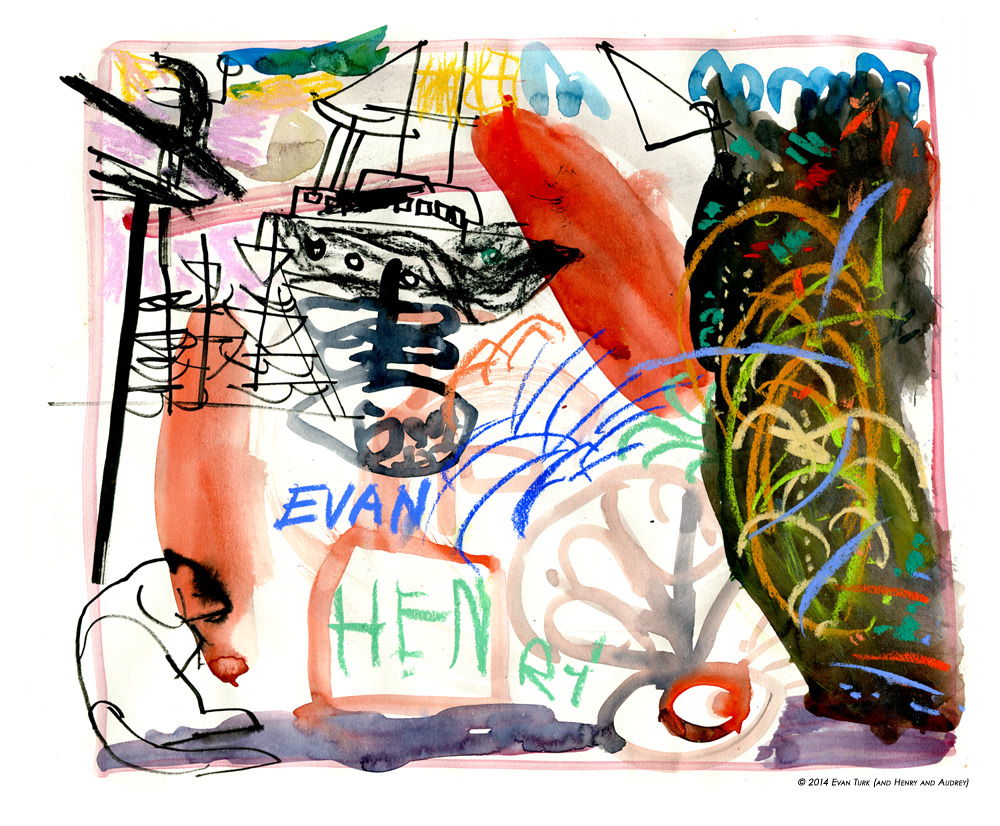
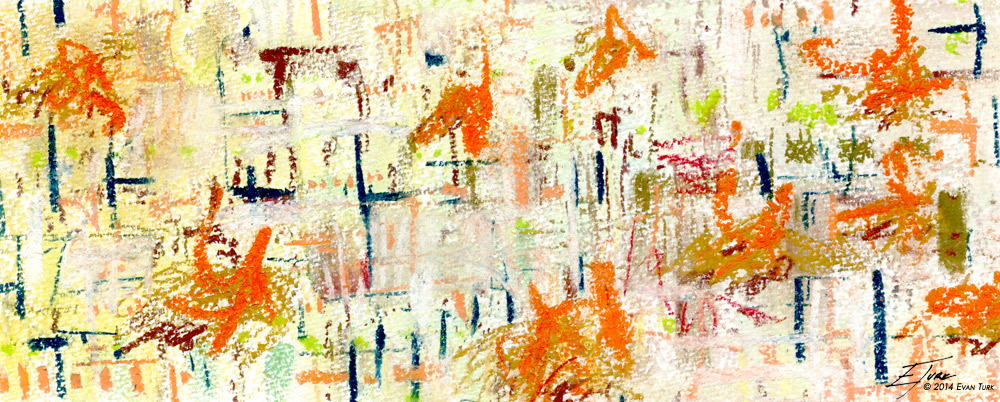
As we waited, a family came over to wait and watch the fireworks on the risers near us. The two kids, Henry and Audrey, were very curious about my drawing and got closer to help art direct as we passed the time. Audrey helped pick the colors, while her older brother helped me figure out what to draw. I like the abstraction that came out of the collaboration in the drawing above! When his mother asked Henry why he thought we were drawing, he very astutely replied "So that you can remember what you see!" Right on, Henry! There is no better way to remember or appreciate something than to spend time drawing it and really thinking about it.


We then collaborated on a drawing of our surroundings. I added in a couple boats, sails, and shapes. Henry added in a sailboat, a flock of birds, the water, and his grandfather in a hat. Audrey then painted over the drawing of the grandfather with black (no offense intended, I'm sure), which Henry and I filled in with bright marks and colors as we watched the fireworks. Such a pleasure to do this drawing with the two of them! It's always nice to unwind and just play around with paint and pastels.

Friday, June 13, 2014

National Geographic Traveller: India & Let's Get Busy!


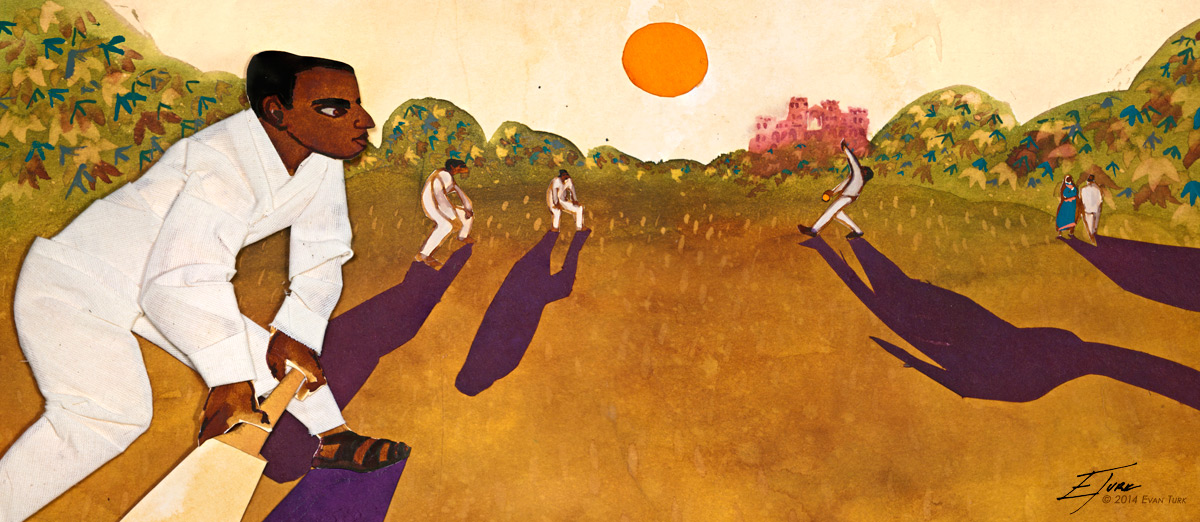
I am back from a wonderful trip to England with some VERY exciting news to announce! Before I left, I was asked to create illustrations for the Indian edition of National Geographic Traveller magazine to go with an travel article about places throughout India that were important in the life of Gandhi called, "In the Footsteps of the Mahatma". They used illustrations from Grandfather Gandhi to represent several of these places, and asked me to create three new illustrations in the same style to show different points on Gandhi's life.

As a huge fan of National Geographic and travel illustration, this was a dream job to get. Even more, they surprised me by putting one of my illustrations on the cover of the issue! It was an amazing feeling seeing that iconic golden rectangle around one of my illustrations. Thank you to the innovative editor Niloufer Venkatraman for the opportunity! You can preview the issue on their site, here: National Geographic Traveller: India


First, was his childhood home in Porbandar, which is maintained as a historical site. Here, young Gandhi is shown in his favorite room on the upper floor of the house. He liked to read up there because the room was so airy and well-ventilated.


The second was Rajkot, where Gandhi lived as a boy. He attended the stately Alfred High School in the background (now known as Mohandas Gandhi High School) and loved to play cricket.


The last (and my personal favorite) was Gandhi as a young lawyer in Mumbai, getting off the train in the Churchgate Station.

In other news, I was also recently featured on the Let's Get Busy! Kids Literature podcast, where I was interviewed by the wonderful Matthew Winner! We talk about travel, my upcoming projects, and the story of how I came to work on Grandfather Gandhi! It was a great pleasure to do, so I hope you enjoy listening! (Link below)

Monday, May 12, 2014

Writing Process Blog Tour

Thumbnail drawing from The Storyteller

I was asked to be a part of the Writing Process Blog tour by my new booking agent, at The Booking Biz, who is an author herself, Carmen Oliver. You can read her post HERE. It's sort of a blog chain letter that asks authors to explain a little bit about their how they write.

I'll be answering four questions about my writing process, which was a fun prompt for me, since this blog is mostly about my illustration and animation. But I love creating stories, whatever the medium.  I'm in the process of creating my first children's book as author and illustrator, so this seemed like a great kickoff.

What am I currently working on?

Thumbnail drawing from The Storyteller
As I mentioned above, I am in the process of writing and illustrating my first solo children's book tentatively called The Storyteller. While reading in preparation for a 3 week trip to Morocco a couple of years ago, I learned about Morocco's rich storytelling history. In a nearly one thousand year old tradition, public storytellers gather a growing audience reciting all the tales from 1001 Nights, hundreds of Moroccan folktales, and stories from the Qur'an, all from memory, and weaving the tales together to impart lessons and entertainment to their audience. This tradition, though, is in danger as less than a dozen storytellers remain in Morocco, often with no apprentices. Inspired by this, I began writing a story in which a young boy unknowingly becomes an apprentice to a storyteller and uses those stories to inspire hope and community to rescue his city from a looming sandstorm.


I am also currently working on an animation and illustration project in conjunction with Dalvero Academy, at Mystic Seaport. I am documenting the restoration of the Charles W. Morgan, the last wooden whaleship in the world, which was built in 1841. This summer, I was one of 79 voyagers selected to sail aboard its 38th voyage, and first sail since 1921. My animation, although still in the early stages, deals with the emotional and cultural impact of whaling on whale and human populations today, and how we can strive to live and grow from that history and use it as the catalyst for healing and a new attitude towards whales and nature. It is a follow up project to my award-winning animation "Patterns" about the global cultural history created by the industry of whaling.


How does my work differ from others of its genre?

I think that my work differs from other children's literature because I have a very serious interest in culture and history, but a very loud, playful, and experimental approach when it comes to art and illustration. I often find that with children's books, more serious or historic topics are often dealt with
in a very somber way, and I like to think that I have a fresh, exciting, and diverse approach to a range of topics from serious to silly. But I am still very new to the children's book industry, so I guess it remains to be seen what will set me apart!

Why do I write what I write?

I write what I write usually because some piece of information, or art, or a story will interest me and I can't help but want to learn more about it and tell that story to others. It is always amazing to me when working on a project how so many different elements all seem to fall into place in one story, and I can discover new ways to tell stories and explore topics. Often I just get excited by the idea of creating art around the idea of a story, and the rest of the pieces come together in the words. I have an interest in folk tales, culture, and art from around the world, and I think there is an immense amount that we can learn from relating to, learning from, and telling stories about traditions and stories that have stood the test of time.

Thumbnail layouts from The Storyteller

How does my individual writing process work?

I usually will begin in an aimless research phase, where I go to museums and draw, travel, or read books and make thumbnails, and just go wherever my interest leads me. Usually, a thread will pop out somewhere along the line that will excite me to learn more, or make more drawings. As a story begins to form in my mind, I usually write it in a shorthand way, just figuring out the layout of the story itself, while making notes, thumbnails, and exploring the art along the way. This is always the most exciting step, when there are infinite possibilities for the art, and I have to sift through them to figure out how best to tell the story. When the story begins to get fleshed out, I will work on creating the page layouts in a series of of thumbnails and working on the actual manuscript for the story. Sometimes, though, the project will turn towards an animation, rather than a book, and I'll have to change gears (or vice-versa). It is all about getting the story across in the best way possible.


Next week, author Tim Anderson will join the Writing Process Blog Tour. I just finished his new book Sweet Tooth, and it was hilarious! I highly recommend it.

Tim Anderson is the author of Sweet Tooth and Tune in Tokyo: The Gaijin Diaries, which Publishers Weekly called "laugh-out-loud funny," Shelf Awareness called "so much fun," and Michiko Kakutani of the New York Times completely ignored. He is an editor and lives in Brooklyn with his husband, Jimmy; his cat, Stella; and his yoga balance ball, Sheila. Tim also writes young adult historical fiction under the name T. Neill Anderson and blogs at seetimblog.blogspot.com. His favorite Little Debbie snack cake is the Fudge Round.
Tuesday, April 29, 2014

Israel: Jerusalem: Temple Mount/Haram al-Sharif


The Temple Mount in Judaism is said to be the place where God gathered dust to create Adam, the place where Abraham bound Isaac for sacrifice, the location of the first and Second Jewish temples, and the home of the Foundation Stone from which the Earth itself was created.


The Haram al-Sharif, or Noble Sanctuary, is the third holiest site in Islam. It holds the Al-Aqsa Mosque, to which Muhammed made a miraculous journey from Mecca in only one night. For a time, in the early days of Islam, Muslims were instructed to pray towards Jerusalem instead of Mecca, and the site of the glittering Dome of the Rock is where Muhammed is said to have ascended to heaven.


Unfortunately, these two sites are the exact same place. The Mount sits directly above the blocks of the Western Wall, the remaining piece of the Jewish temple. After the site was conquered in 1967 by Israel, it was immediately turned over to Jordanian control to avoid inciting a war, and it remains in their control today. It is one of the most politically and religiously charged places in the world, and is a pin in the semi-dormant grenade of the Israeli-Palestinian peace talks.


The ascent to the Mount is not made easy by any means. Non-Muslim visitors are only allowed to ascend between 7 and 10 in the morning and between 12:30 and 1:30 in the afternoon, so that they are only there in between prayer times. Non-Muslims are also not allowed into the Dome of the Rock or the Al-Aqsa Mosque. Islam maintains a very private, mysterious, and exclusive air in a city where religions are so jumbled.

Visits require strict security as the site often erupts into sometimes violent political displays and protests. Non-Islamic prayer is not allowed on top, so bags are searched to remove any books written in Hebrew that might be used for prayer.


Once the gates were opened, I climbed up a narrow, rickety plank to the top of the Mount where beaming sun, the gentle murmur of conversation, and several Israeli guards with machine guns welcomed me to the most beautiful place in Jerusalem. The expansive terrace is covered with gnarled old Cyprus trees, palm trees, glittering fountains, and students of Islam in quiet circles reading and studying the Qur’an under the twinkling shade.


Behind the gardens looms the impressive, glittering gold of the Dome of the Rock. After ascending a staircase and passing under a delicate archway, I emerged onto a stark, desert-like plateau. In the center, the Dome of the Rock stood like a fortress, immovable and imposing. Tiny, ant-like people moved around the base of the structure, dwarfed by its weight and austerity.


Its surface pulsed with intricate tilework and windswept Arabic calligraphy. Cursing my blonde hair, pale whiteness, and obvious not-Muslim-ness, I watched as men and women in long flowing robes passed in and out of the doors, freely able to see the beauty of the interior.


As my very short time on the Mount dwindled, I went back down to the Al-Aqsa gardens to draw the men and women milling about and reading from the Qur’an. In contrast to the emptiness of the area surrounding the Dome of the Rock, Al-Aqsa plaza felt very much like a college campus, with students (of all ages) passing to and fro, books tucked under their arms, reading and studying together in large circles, separated by gender.

Suddenly, the solemn quiet erupted into a howling chant that began in the distance and slowly began to move from circle to circle, like the wave at a baseball game. “ALLAHU AKBAR!” each group would shout in turn, until the entire plaza, and hundreds of people were all shouting with increased fervor. I continued drawing, not sure what was happening, until I asked a nearby man.


He told me that people were shouting because extremist Jews had entered the Haram al-Sharif with an armed Israeli escort. He said these Jews sought to destroy the Dome of the Rock and the Al-Aqsa Mosque to rebuild the Jewish Temple. It is true that an extreme, right wing Jewish faction is gaining traction in Israeli politics, and part of their platform is the rebuilding of the Jewish Temple on the Temple Mount. The shouting would start intermittently every 20 minutes or so, and last for several minutes as the Jews and their guard moved through the plaza.


As I was drawing the angry crowds shouting at the two men walking through, I became nervous that the onlookers might be offended by my depiction of them. On the contrary, it energized and excited them. Men began calling their friends over to point out people they knew in the drawing, and seemed very pleased that I had accurately depicted their anger. They seemed to feel validated by my drawing. I wonder if the Jews I drew in the picture would have felt the same way, and been equally validated in their reading of the drawing.


The Mount itself has become an illustration of whatever anger or righteousness each side of the divide feels entitled to. Within it are the seeds of Israel and Palestine’s most festering wounds and also the potential for its most poignant healing. Its contested nature is a testament to the deep, shared roots of Islam and Judaism: two seeds of the same fruit.


For more of Evan Turk's travel illustration, check out the link below: 

Tuesday, April 8, 2014

Grandfather Gandhi: Behind the Scenes


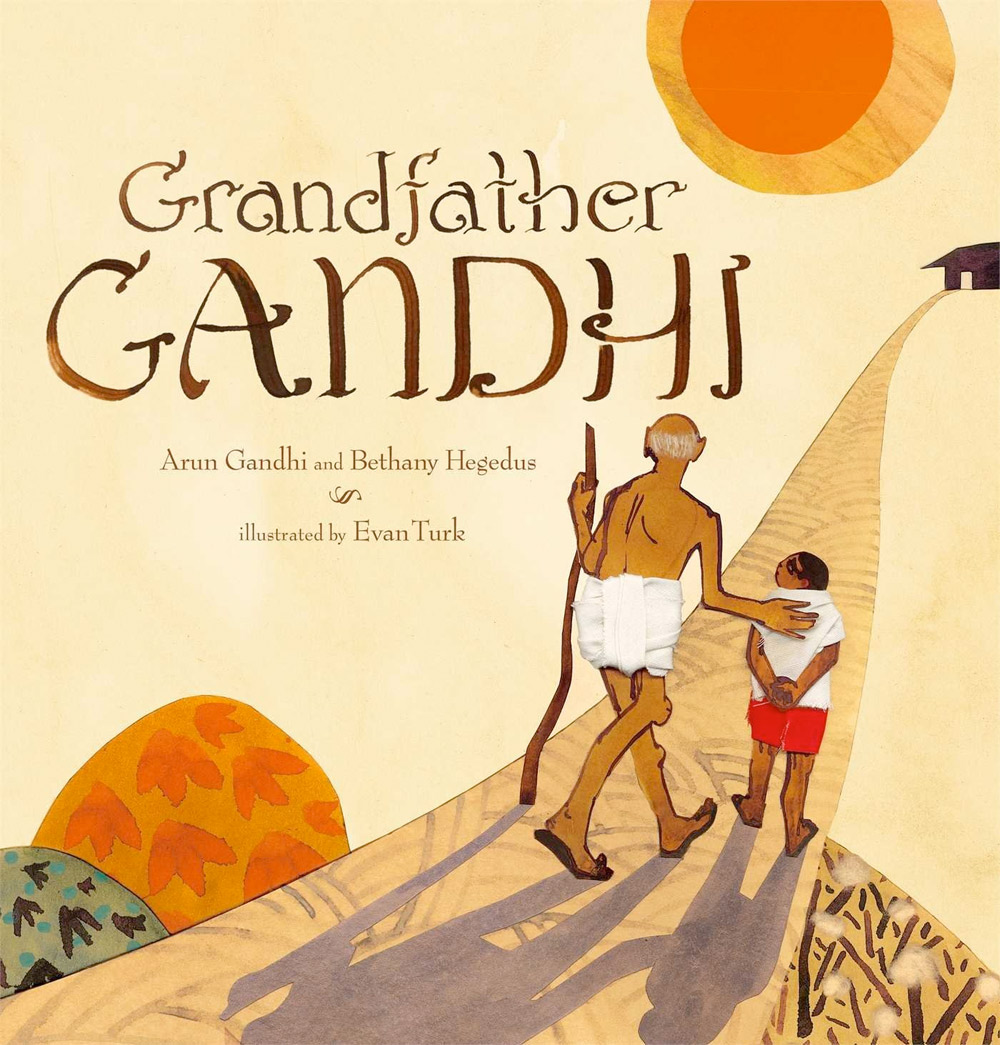
With the Grandfather Gandhi publicity train out of the station, I thought it would be fun to share some of the preparatory work and drawings from the very early stages of the book! We have been receiving wonderful reviews so far, even being named as a possible Caldecott 2015 book by Betsy Bird over at Fuse 8, who does annual predictions for the Caldecott/Newbery awards. She also wrote a beautiful review of the book, and really understood everything Bethany, Arun, and I wanted the book to do. So gratifying!


Once I had been offered a chance to illustrate the book, by Ann Bobco and Namrata Tripathi at Atheneum/Simon & Schuster, they asked to see some samples of how I would illustrate the book and the characters. 


Above were the first character sketches, where I played around with the idea of using fabric and thread in the illustrations as a way of referencing the spinning wheel in the story, and Gandhi's political movement for India to free itself from Britain by spinning their own cotton thread and fabric, instead of submitting to high British taxes.


This idea then became a major symbol throughout the book, with the transformation of the raw unruly cotton into useful yarn mirroring young Arun learning to channel his anger.


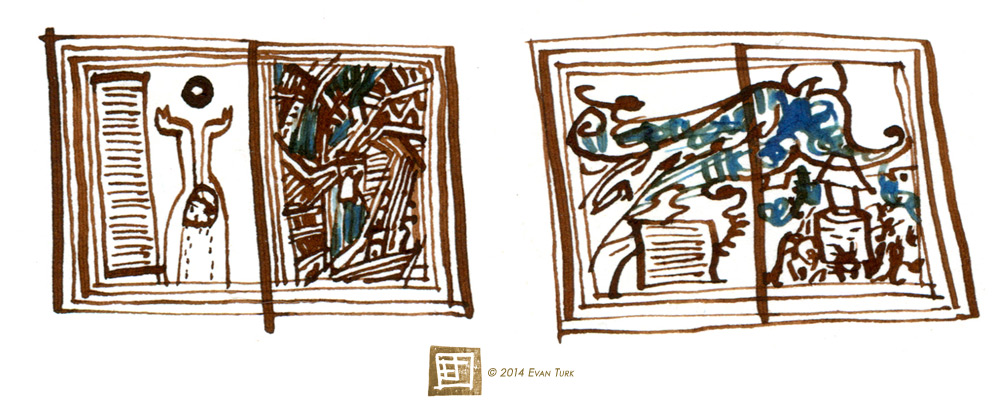
After I had been given the okay to illustrate the book, it was time to research and search for things in the manuscript to emphasize in the art. In notes on the margins, the idea of shadows and spinning as symbols throughout the book came out.


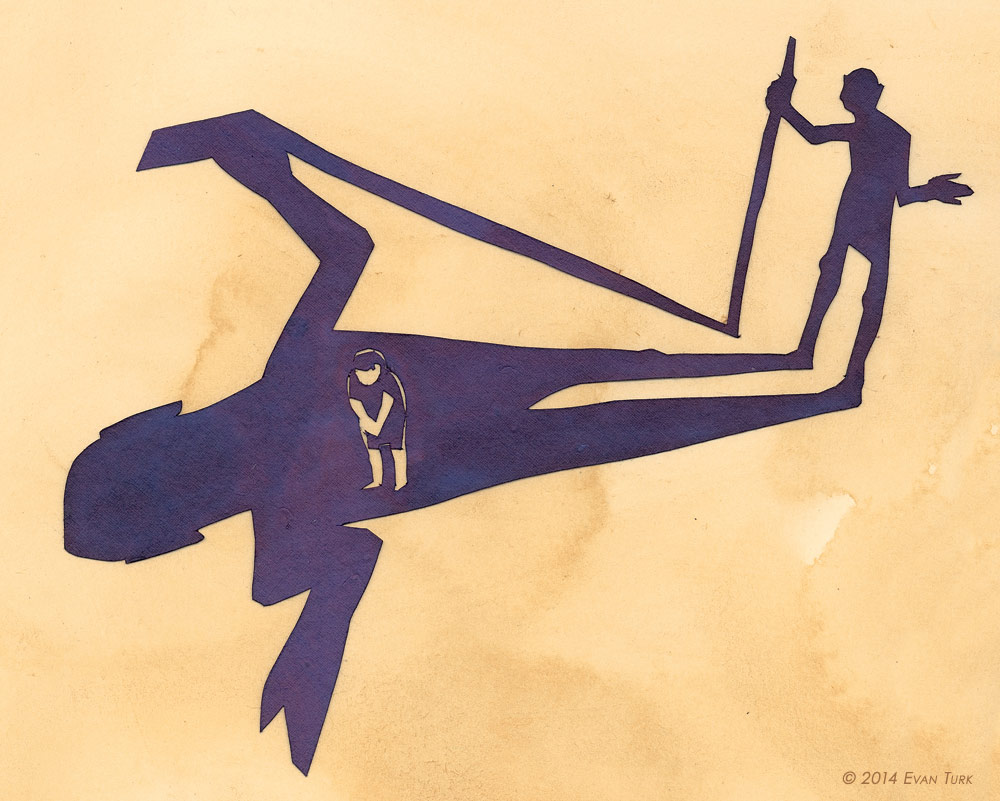
The idea of shadows showing Arun's emotional state throughout the book, came out of the thumbnail in the upper right-hand corner of the manuscript, with Arun literally standing in his grandfather's shadow (which ended up in the final book, too).


I then had a lot of fun playing around with colors, shapes, and patterns from Indian miniature paintings, textiles, and shadow puppets, to figure out the final look of the art. It's interesting for me to look back and see which things made the cut (the fabric, shadows, colors, etc...) and which things didn't (namely the patterned sky I seemed very fond of in the beginning).


 I wandered around the city picking drawing, and working out different ideas. In the drawing above, I was at the Bronx Botanical Garden, studying how plants were depicted in Indian miniature paintings.


I even came across a man on the subway who looked exactly like Gandhi (above)! 


The sketches got closer to the final look of the book as I started playing around with tea-staining the paper (with 100% "genuine" Indian chai! The final collages do smell nicely spiced...).


I was also able to see how the warm background enriched the already vibrant colors in the concentrated watercolors.


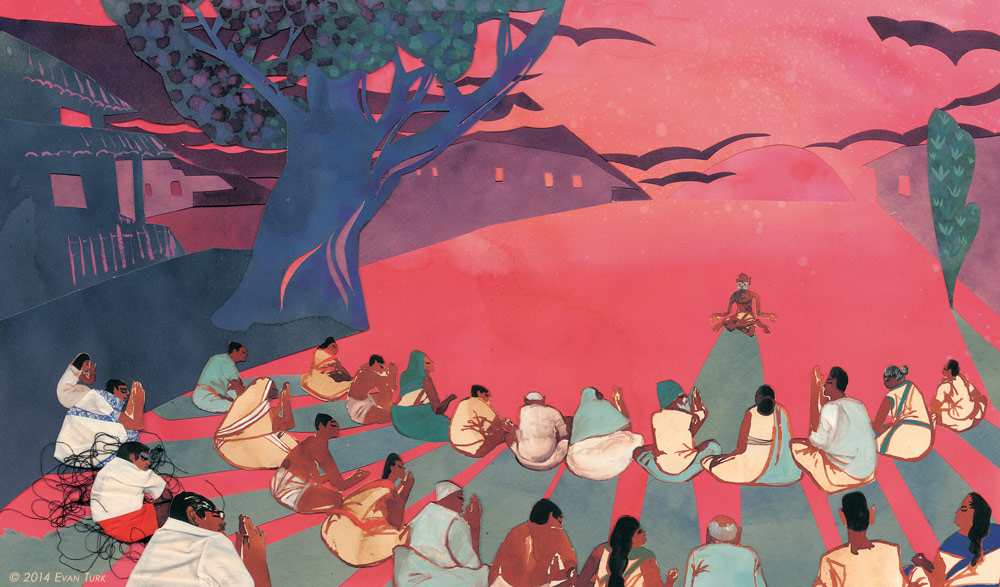
Finally, everything came together into the finished collage illustrations for the book! What an amazing project to work on. You can read more posts about the art in this book at the official site, GrandfatherGandhi.com, here: The Art of Grandfather Gandhi

Tuesday, March 18, 2014

Israel: Jerusalem: Western Wall


The Western Wall, or kotel, in Jerusalem is considered the most sacred place in Judaism, and has been a pilgrimage site for Jews since the 4th century. A wall of enormous blocks of Jerusalem limestone is all that remains of the Jewish temple built by King Herod in 516 BC, after its destruction by the Romans in 70 AD. When writing about holy Jewish and Muslim sites in Jerusalem, every sentence is a political statement. Even the previous sentence is loaded, since some Muslims believe that Judaism has no religious claims to anywhere in Jerusalem. When discussing the area around the Wall, it becomes even more difficult. Under Jordanian rule, from 1948 – 1967, Jews were forbidden to come to the wall. When Israel conquered Jerusalem in 1967, they liberated the wall for Jews in an emotional celebration, and demolished the Muslim neighborhoods that surrounded it in the now non-existent Moroccan Quarter.


Politics aside, there is no denying that the Western Wall is an incredible pilgrimage site for millions of Jews around the world. This pile of stones, with no special aesthetic value above any of the other stone walls around the ancient city, is made sacred only through the prayers and connections of the millions of pilgrims that place their hands against its cool, hand-worn surface.


In contrast to the solemnity and darkness of the Church of the Holy Sepulchre, the outdoor Wall Plaza is often full of singing and celebration. Bar mitzvahs, celebrations for boys entering manhood at age 13, are held in front of the wall every Monday and Thursday.


Boys beam from ear to ear as they carry enormous Torah scrolls with the men of their family. 
 

After the ceremony is complete, the congregations erupt into swirling circles of dancing and singing of the hora, as female relatives and onlookers peer over the divider between the men’s and women’s sides of the wall and toss candy as tradition.


Another Jewish tradition, tefillin, which consists of small black boxes containing verses from the Torah, and leather straps wrapped around the head, arm, hand, and fingers, is worn by observant Jews during weekday morning prayers. The origins of tefillin in the Torah are fairly vague in their symbolism, but they are described as a reminder of God’s bringing the Israelites out of Egypt and a protection against evil thoughts.


There is a stall near the plaza that will wrap the tefillin for you, to experience the prayer. The man asked if I would like to try it, and I asked what the meaning behind it was. He described the leather strap, which runs from the parchment scroll box, around the arm tightly down to between the fingers, serves as a symbol of connection between mind, heart, and hand. It is a physical reminder that a person should strive to connect his thoughts and feelings into action.


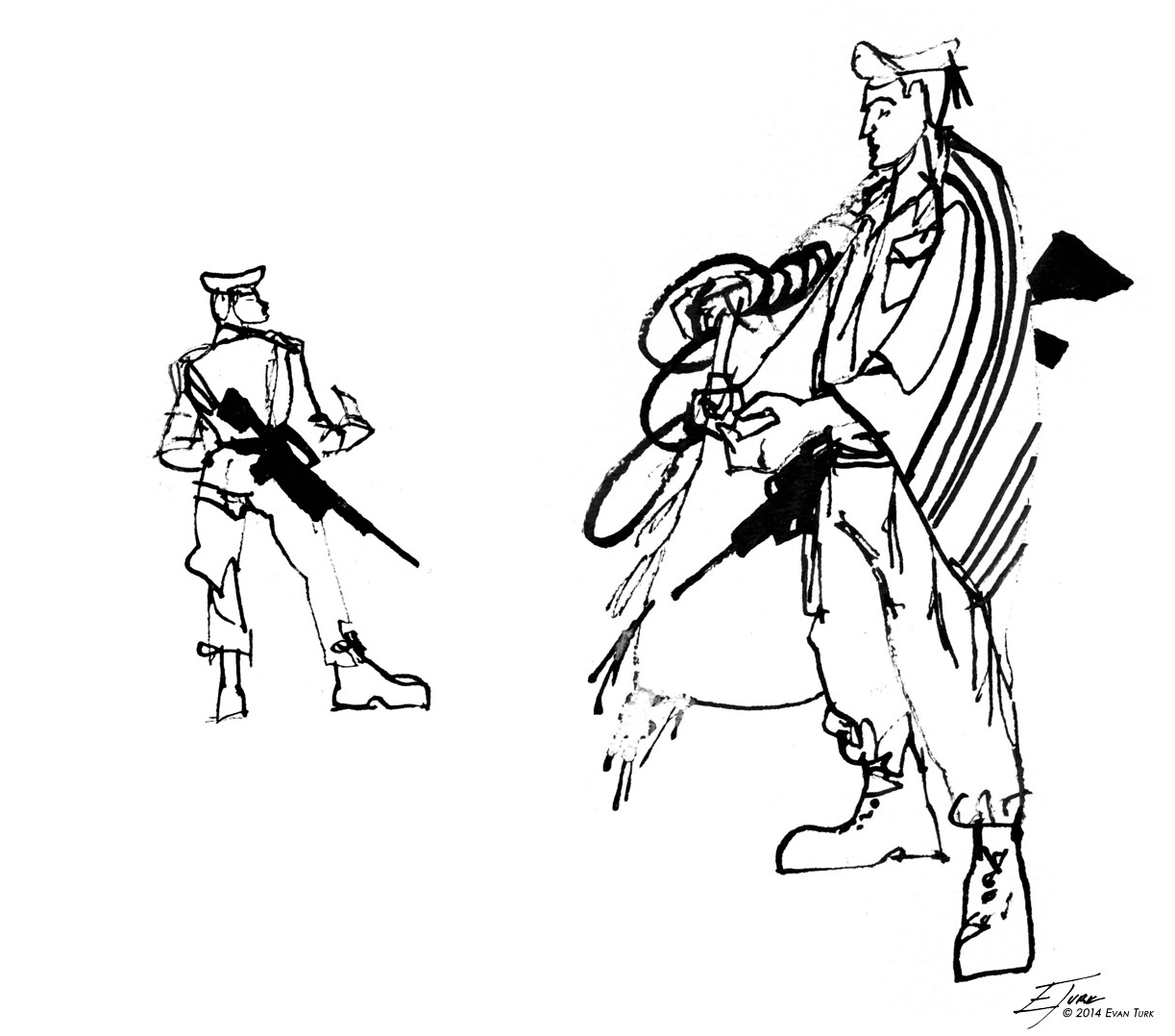
I saw a group of soldiers from the Israeli Army have the tefillin tied and the talit, prayer shawl, draped around their shoulders. They all then prayed at the wall, and several of them also wrote notes and put them in between the cracks of the stones.


Most of the moments at the Wall, though, are of quiet, personal connection. Young men and old men alike place their hands and heads against the Wall in quiet prayer. Proud fathers lead their sons to touch the wall for the first time.


Men often leaned against the Wall for so long, eyes closed, sometimes with tears falling down their cheeks, that when they opened their eyes, the sun was too bright and they looked like they had awakened from a trance.


The cracks between the stones burst with prayers and wishes written on scraps of paper and pushed as close to holiness as possible.


It is these spaces in between the stones that are sacred, physical reminders of hope. Like the plants that grow from in between the stones, there is the potential for life.
 

The Wall stands, not as a monument to a temple that existed two thousand years ago, but as a monument to tradition, hope, and connection.

For more of Evan Turk's travel illustration, check out the link below: