Thursday, July 28, 2016

Italy: Cinque Terre


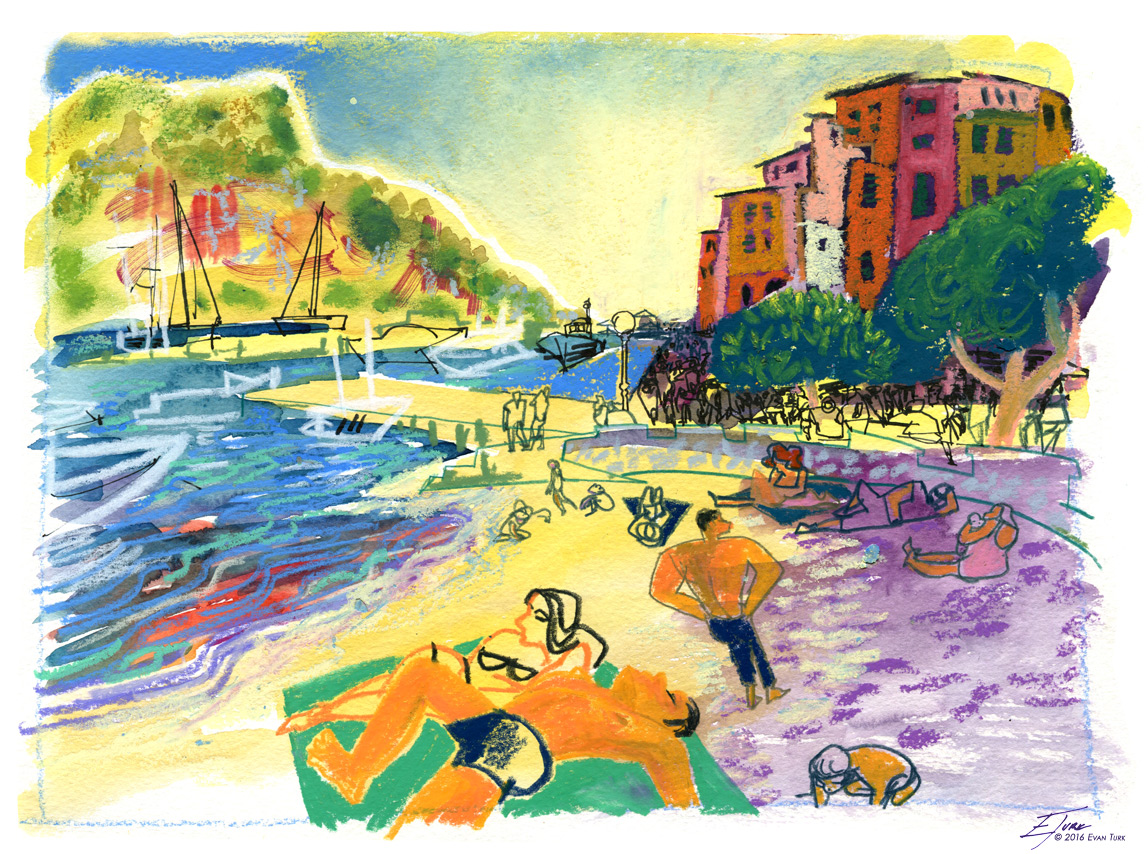
After Florence, we traveled to Italy's western Ligurian coast to see the famed Cinque Terre villages, a series of five impossibly quaint villages dotting the rocky coastline. We stayed outside the industrial hub of the area, La Spezia, overlooking the Golfo dei Poeti (Gulf of Poets), where poets and artists (including Lord Byron!) have come for centuries to absorb the beauty. Our first night, we went to Porto Venere, an honorary "sixth village" of the Cinque Terre, at the tip of a peninsula. Less secluded than the "Cinque", but also less touristed, it was wonderful to spend time in this charming and beautiful town.


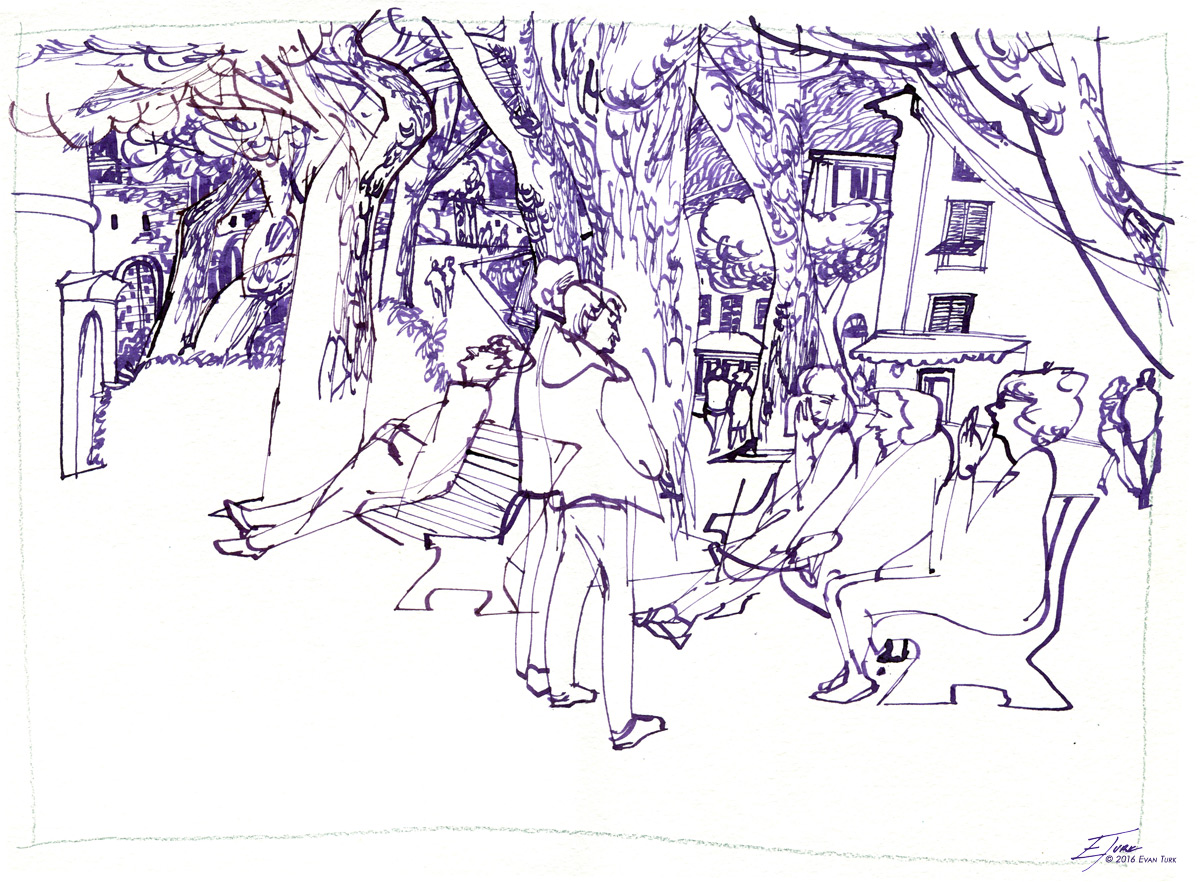
It felt more like a beach town for Italian tourists, rather than the international hotspot that the Cinque Terre have become. It was fun watching the Italian families gather, nap, chat, and relax under the shady, seaside trees.


A nearby wedding brought glamorously dressed guests, mixing with the older locals who sat and watched the sea and the visitors pass by.


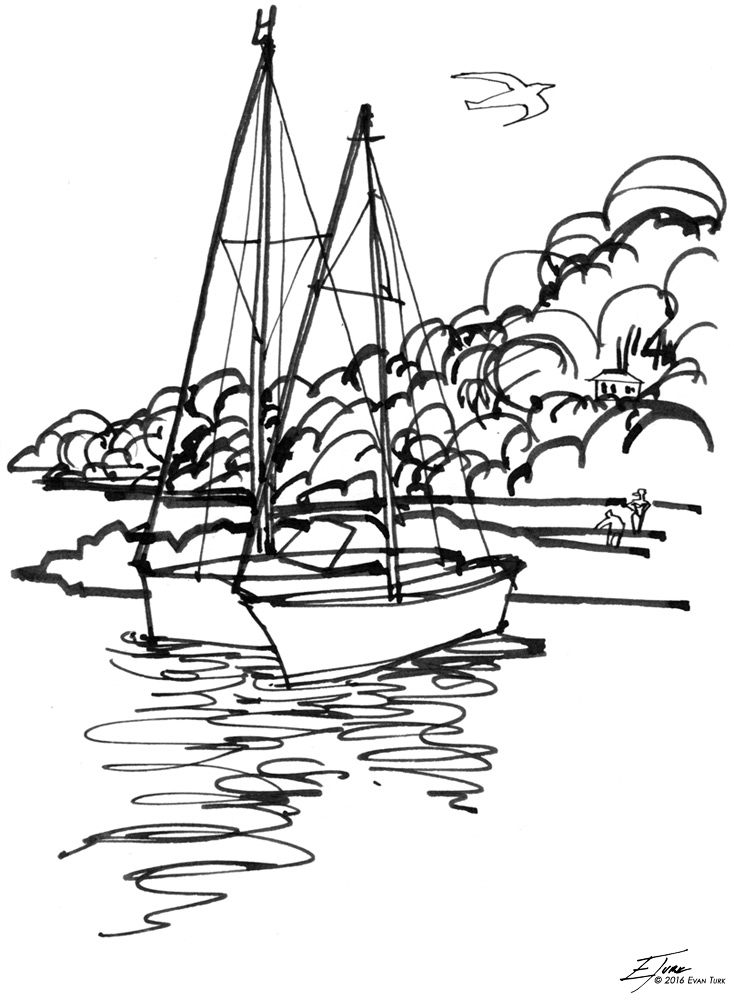
We enjoyed a perfect sunset over the marina as boats bobbed in the tide and seagulls soared overhead.


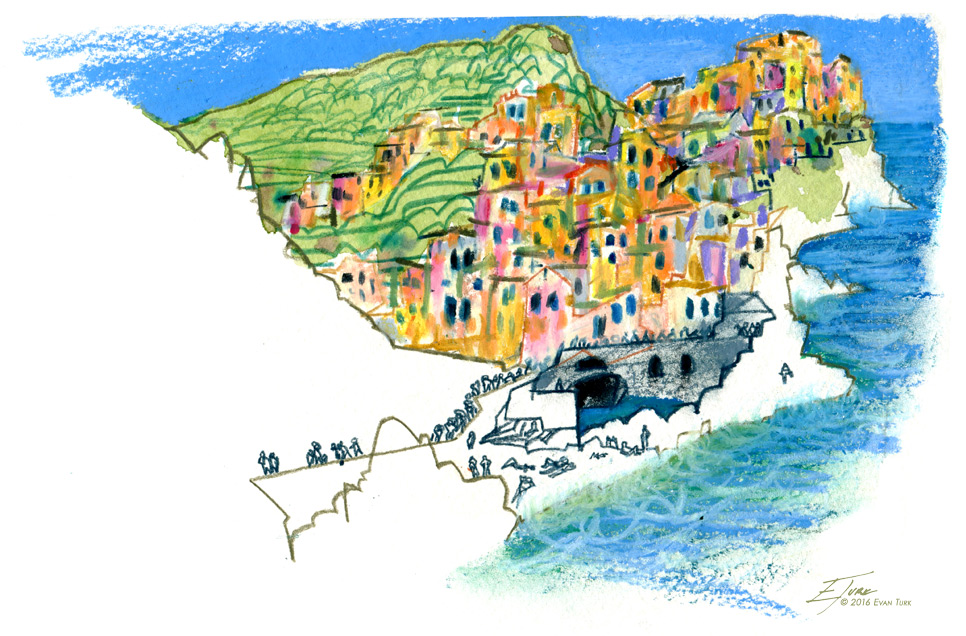
The next day, it was on to Manarola, one of the Cinque Terre villages. It's not hard to see why the towns are so heavily touristed, as you see the gorgeous, brightly-colored houses tumble down impossibly steep streets into the lapping waves of a grotto at the seas edge.


Up the inclines, the town dissolves into sweeping hills of vineyards that surround the city.


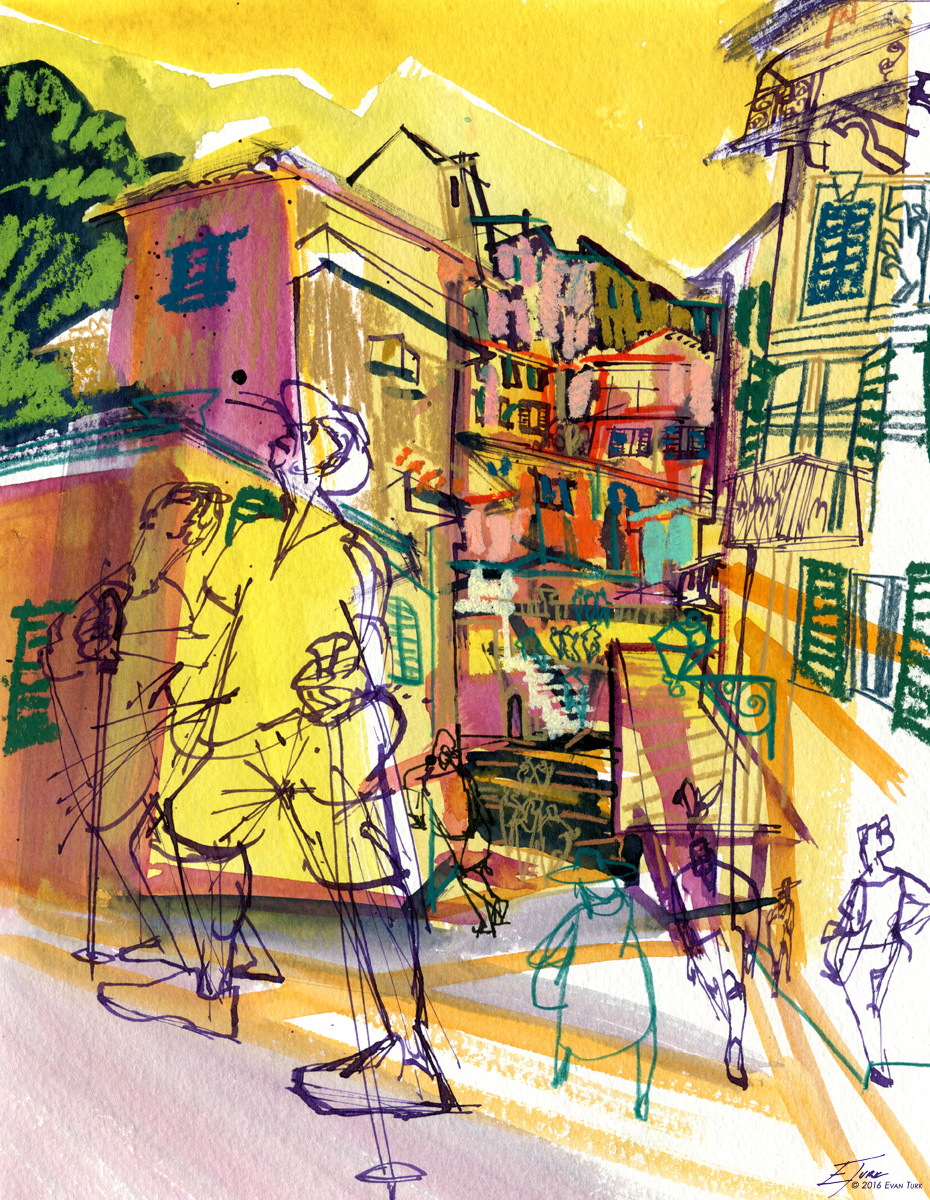
The bustling town during the day is a far cry from its quaint, isolated former days as crowds of foreign tourists pour in every hour on the trains.


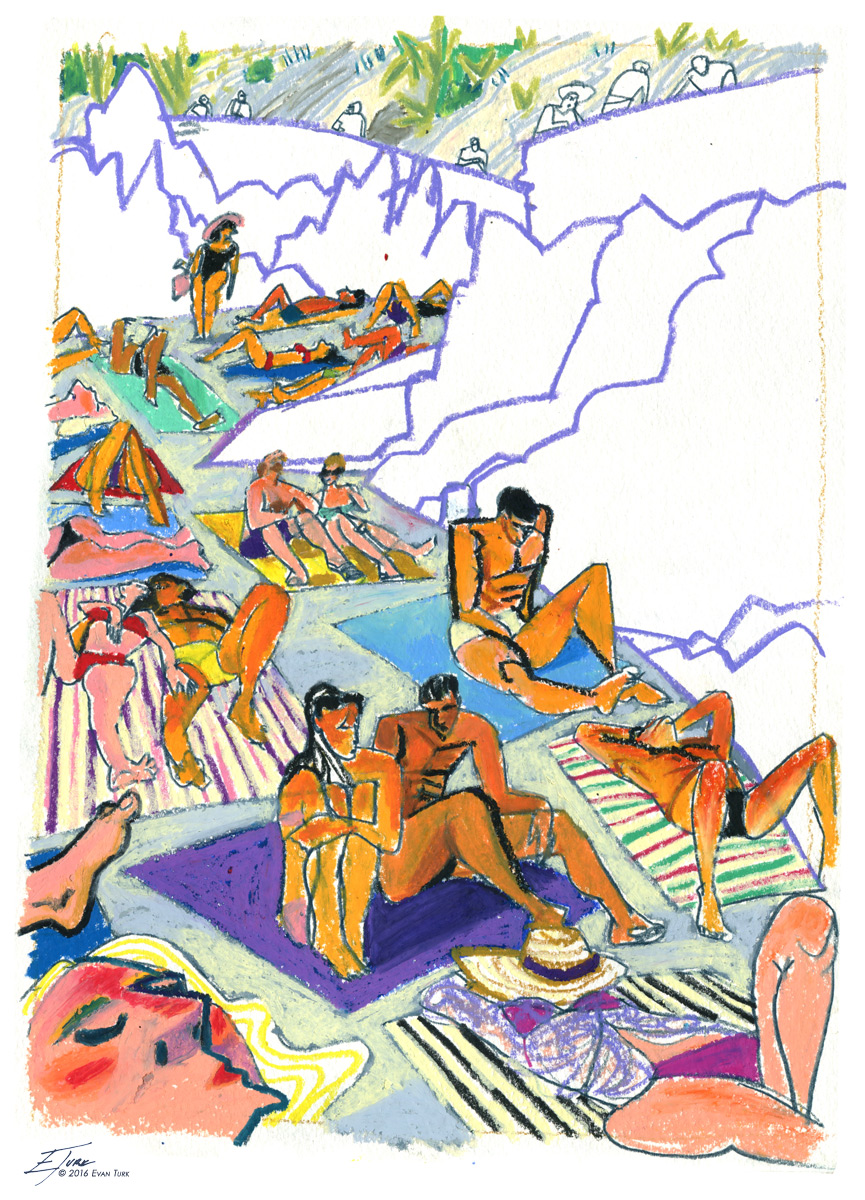
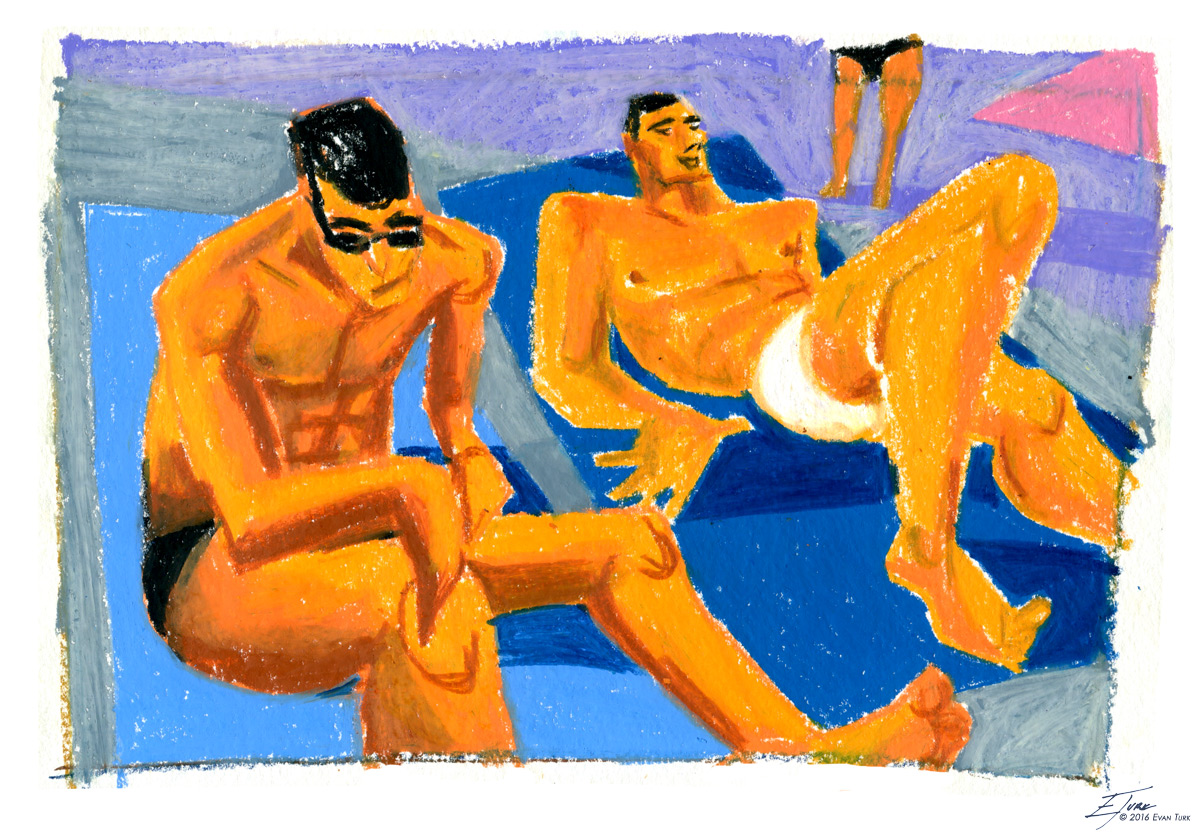
Although Manarola is without a true beach, dozens of sun-worshippers plop themselves out on the hot, steep pavement near the grotto to soak up the rays. Chris and I dubbed it "walrus-ing".


Both men and women donned their teeniest bathing suits to display their tanned and toned physiques. No complaints!


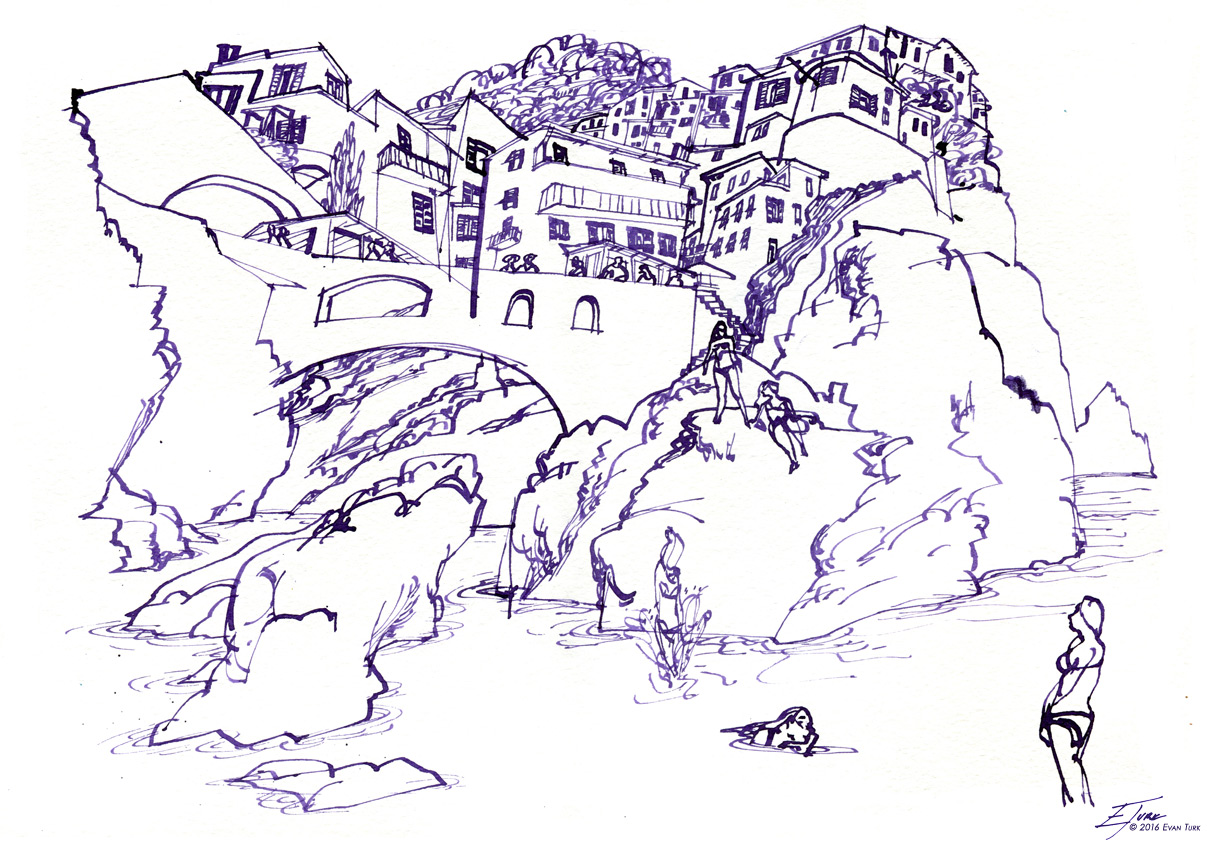
As the sun set, the crowds began to thin, the walruses departed, and the town began to feel small and cut off from the modern world again. I made this last drawing inside the grotto, perched on a rock as I watched a group of girls swimming and jumping from the cliffs into the water below. What a magical place!

This post is part of a series of travel illustration from a three week tour of Italy. For more of Evan Turk's travel illustration, check out the link below: 

Wednesday, July 20, 2016

Italy: The Duomo of Florence


Florence, the capital of the Tuscany region, is almost more impressive than beautiful. While other cities, like Siena or Venice, are breathtaking in their elegance, the architecture of Florence feels somewhat austere and almost macho. Its crown jewel, the Cathedral of Santa Maria del Fiore is jaw-droppingly massive. Adorned with Brunelleschi's incredible dome, it makes for a soaring spectacle.


One can easily imagine the overwhelming awe and fear that pilgrims centuries ago must have felt upon seeing a building of this grandeur. Even today, I couldn't stop exclaiming just how HUGE the cathedral feels. From certain angles, it appears more like an entire city than a single building.


Today's pilgrims help themselves to dozens of selfies, trying to fit the whole building into the frame.


It is an incredible feat of engineering. As you move around the building, the distances and angles are so immense that it feels like it moves along with you.


The locals seem to be a mix of refined, fashionable, artsy types, and faces that populated the paintings of the great Florentine Renaissance painters.


But as the sun begins to set, and the crowds of day trippers disperse, the light transforms the architecture and makes you understand the beauty that inspired the bravado of the city.

This post is part of a series of travel illustration from a three week tour of Italy. For more of Evan Turk's travel illustration, check out the link below: 
Evan Turk Travel Illustration

Tuesday, July 5, 2016

Italy: Tuscany


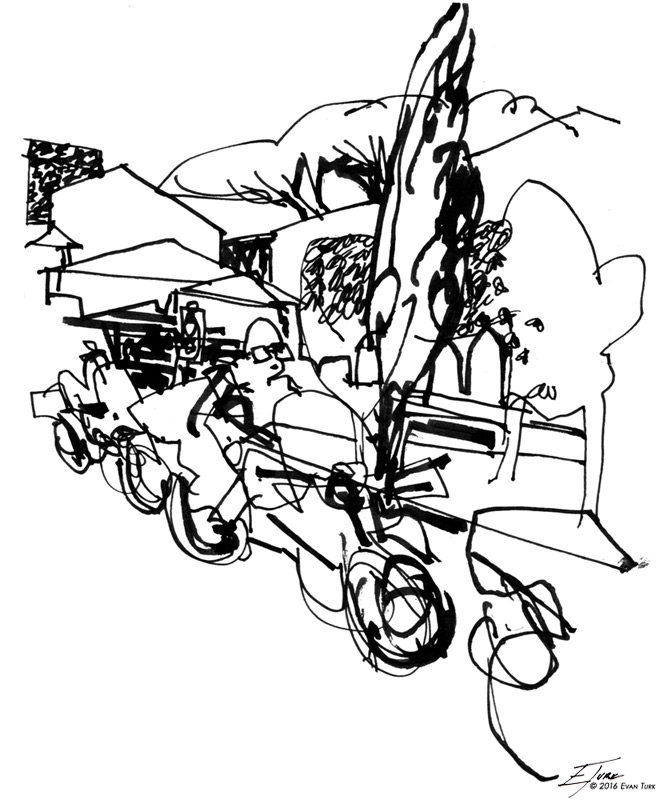
Ahh Tuscany! From Rome we drove north towards the Val D'Orcia, a UNESCO World Heritage Site in the Tuscany region with rolling hills and regiments of spire-like cypresses punctuating the hillsides.


On the way to where we were staying, we planned to visit the town of Marta for a spring festival called La Barrabata. After a series of delays, we arrived in Marta just as the parade made it's last turn through the center of town. I drew frantically as the procession got swallowed up by the crowd following it. Only men marched in the parade, most with straw hats and plaid handkerchiefs, with floats displaying the fruits of their trades (fish, fruit, bread, cheese, vegetables, buffalo, sheaves of wheat). Women threw rose petals from the overlooking balconies as the crowds made their way up the hillside to the church.

With some help from an older local man, we made our way up to the church at the very top of the hill to find that the entire procession was now displayed for viewing behind the church. There were elaborate, flower-covered floats with tiny fountains, white buffalo, sheep, and hundreds of people celebrating. Just as I started to draw, the clouds that had been building emptied into a steady downpour. After trying to wait it out, we eventually joined the umbrella-ed masses descending the slope. I suppose when traveling you are always supposed to leave something undone, so there is a reason to come back! Next time!


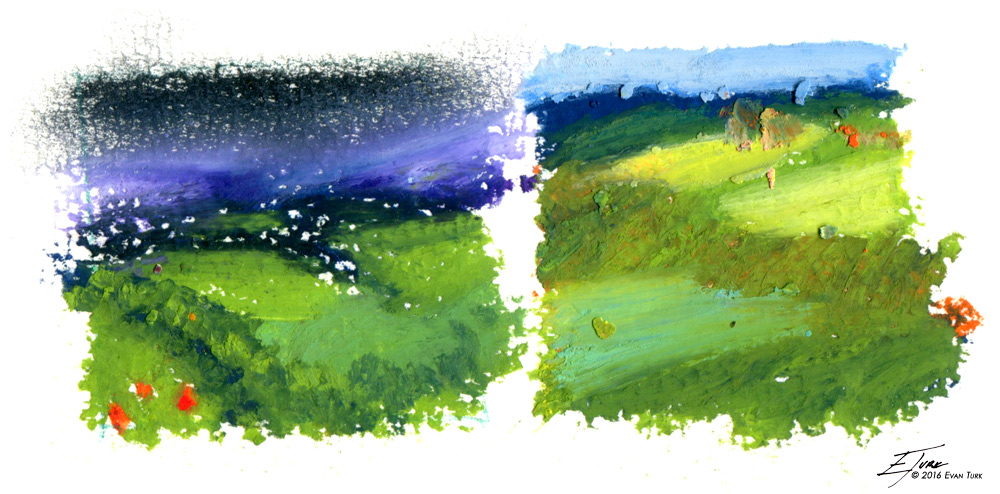
It was rainy on and off for most of our stay, but that just made the landscapes more dramatic. We hadn't expected it to be so green and lush! It was amazing to see the dark thunderstorms roll over the towns and hills in the distance.


There is so much beauty, big and small. The roads are lined with tiny, delicate paper poppies and dramatic rows of cypresses.


We learned that some of the cypresses in the area date back to the 11th century when they were planted along the pilgrimage routes Via Roma and Via Francigena that led through the area between Canterbury and Rome. The trees were seen as pillars to the heavens because of their vertical nature. Many of the farmhouses sit on hilltops and were lookout posts to aid travelers as the route was often plagued by robbers and thieves.


Built by Aeneas Silvius Piccolomini, also known as Pope Pius II, Pienza was constructed in 1459 as the Piccolomini's idea of the ideal Renaissance town. After being there, it's not a stretch! It has gorgeous piazzi, palazzi, and narrow cobblestone streets. The air is full of the cooing of wood pigeons and clanging bells, and the smell of delicious pecorino toscano cheese.


The city is surrounded by a walled walkway with incredible panoramic views of the Val D'Orcia. Layer after layer of hills, cypresses, villas and towns that disappear and blend into the rolling storms.


In the center of the town is the beautiful duomo, a very early Renaissance cathedral. We were there on a Sunday, so locals from the region were out in full force along with the tourists to enjoy the beautiful day. There was even a woman playing the flute under the colonnade as I was making the drawing above.


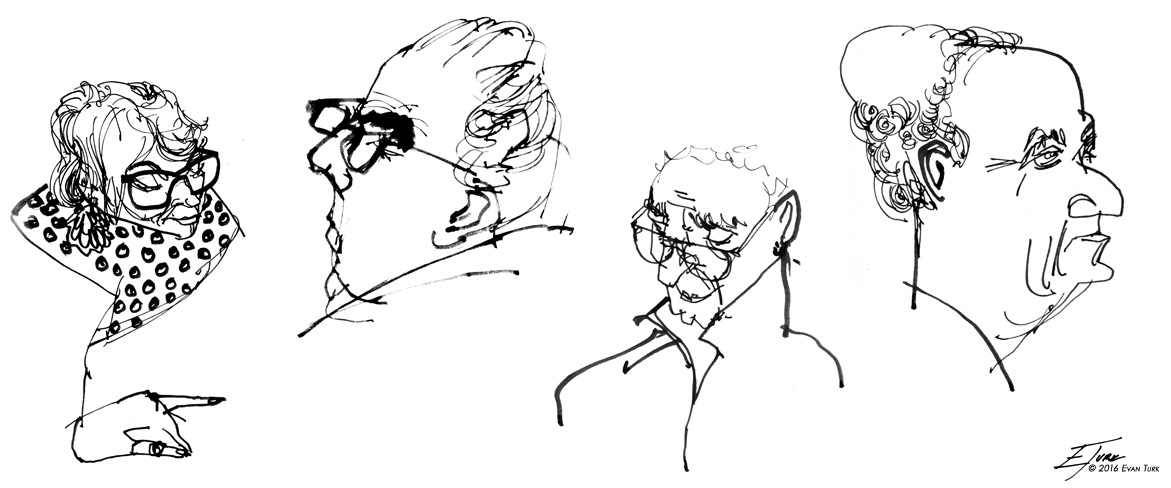
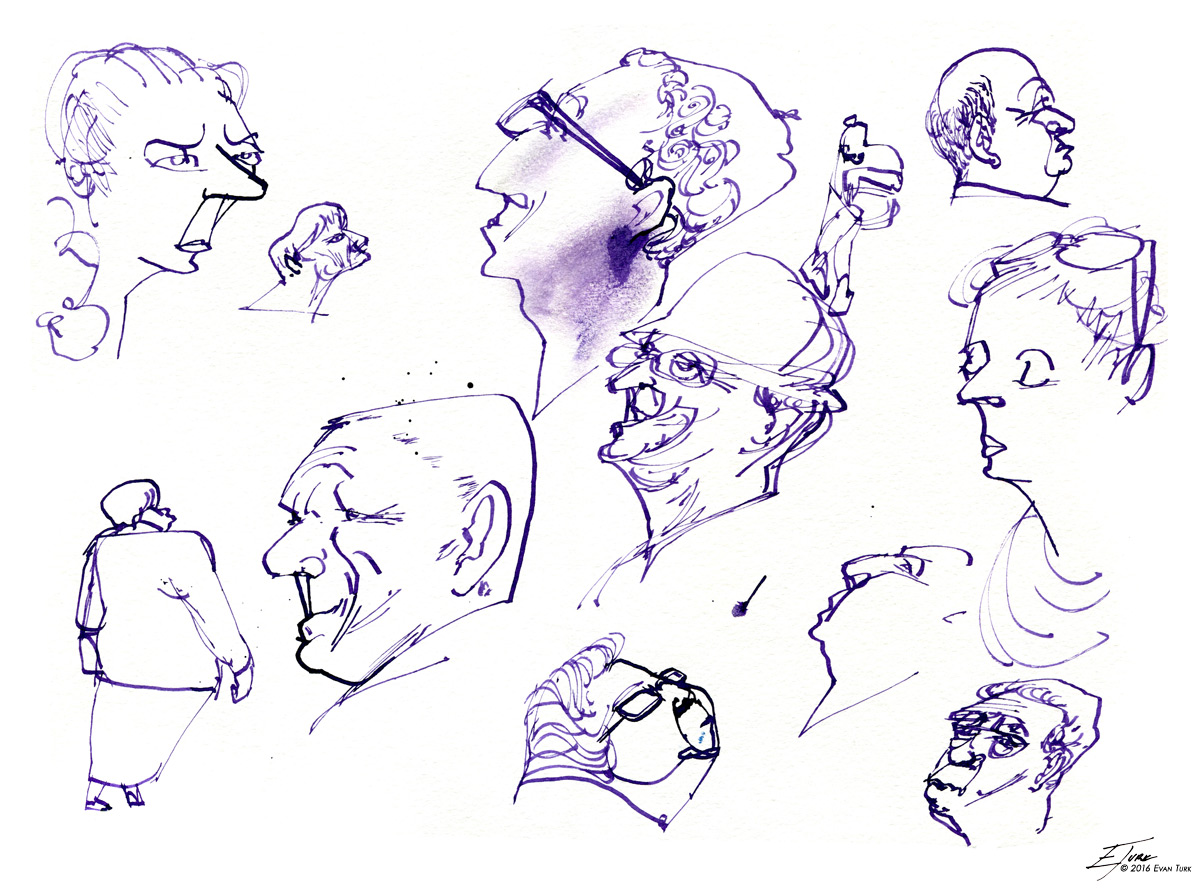
It's always nice to be able to draw the locals when traveling. People's faces in Italy often feel like they came straight out of a Renaissance painting.


On one excursion, we visited a nearby natural hot spring, or acqu calda, named Fosso Bianco. After a short walk down the hill through the woods, you can smell the sulfurous mineral baths as you approach. Steaming mineral water pours down over the enormous, white calcium-covered terraces as people collect in the various pools to bask in the warmth.


On our last day, we left the Tuscany countryside for Florence, but made a stop in Siena, one of the most beautiful cities in the area. The medieval city boasts unique, rich architecture, the Piazza del Campo where the famous Palio horse race occurs (next time!), and a striking striped cathedral. After only a couple hours, it was onto Florence, but we will definitely be returning to Siena!

This post is part of a series of travel illustration from a three week tour of Italy. For more of Evan Turk's travel illustration, check out the link below: 

Wednesday, June 29, 2016

The Storyteller


I am so excited to announce that my debut as author/illustrator, 'The Storyteller', is now out in stores! Take a look at the trailer below:


Featuring music by NYC-based Moroccan gnawa ensemble Innov Gnawa.

It's been amazing to see the great reception so far! I hope you will check it out. There will be a book launch party at Books of Wonder on Thursday, June 30 from 6-8PM, so I hope you can come down and celebrate with me! There will be book signing, original art, a window display, and light refreshments. Check out the event here:


For more information about the book, its inspiration, teaching resources, and reviews, check out the website:

The Storyteller Website

Get your copy at:
Amazon | Indiebound | Books-A-Million | Barnes & Noble | Simon & Schuster
Or better yet, at your local independent bookstore! 

Friday, June 3, 2016

Italy: Rome


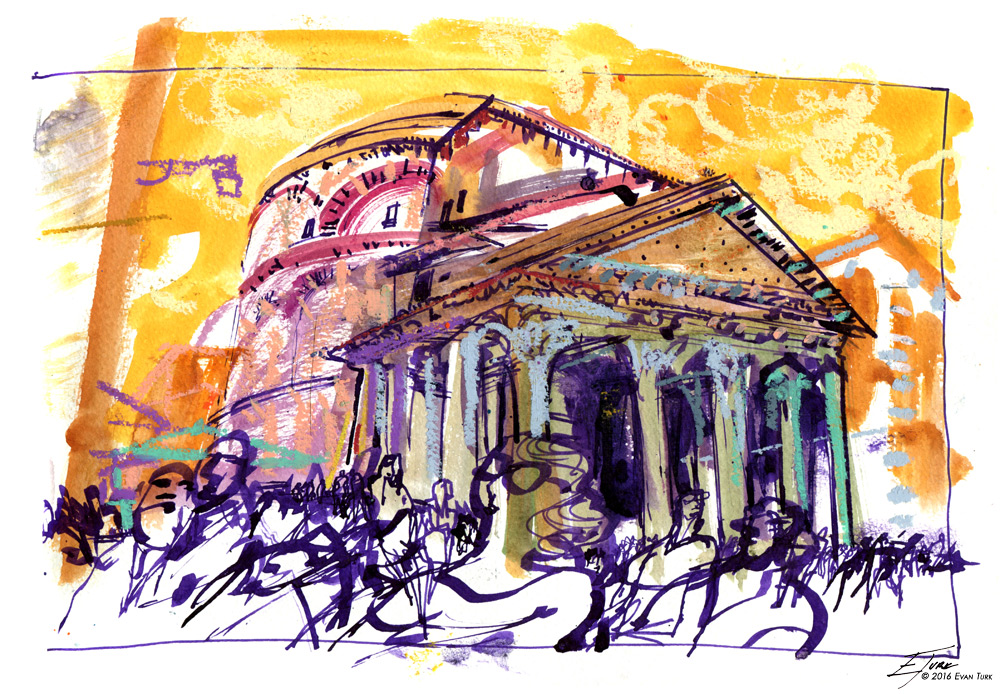
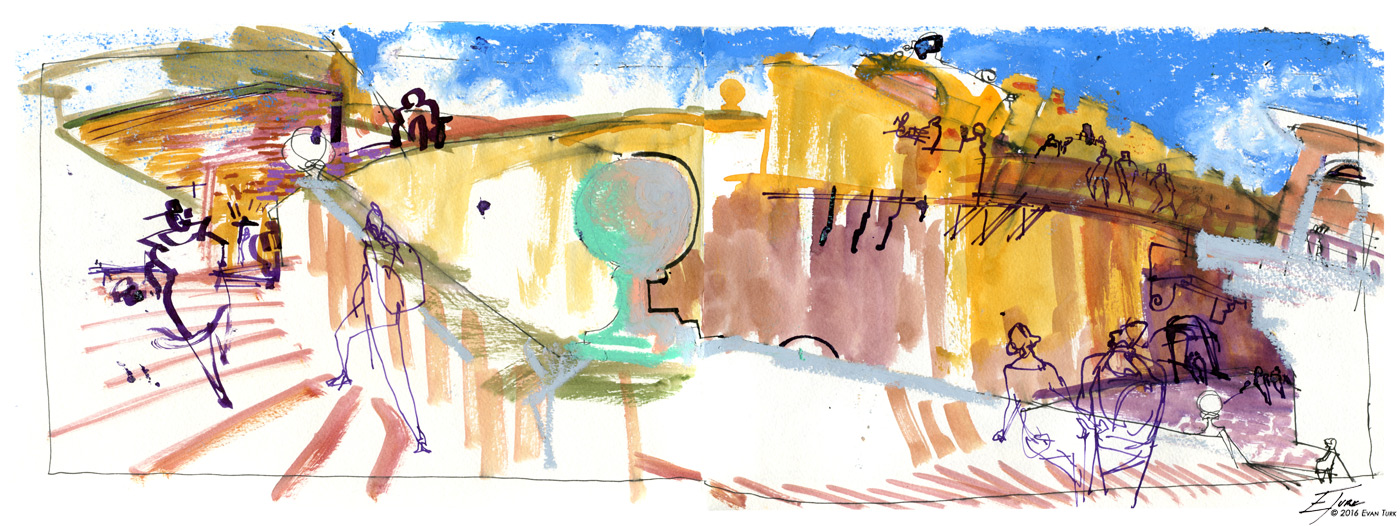
I just got back from a three week trip to Italy and am slowly adjusting to real life. What an amazing country with so much beauty packed into such a small place! We were surprised by how much we liked Rome, and were a little disappointed we had only booked two and a half days there. Hopefully we will be back! For an imperial city, it feels unexpectedly inviting. The Tiber River carves an elegant path crossed by grand bridges, and many of the ancient buildings are draped with jasmine that perfumes the whole city.


We sort of just wandered from place to place, admiring every street, statue, and piece of architecture, and smelling every flower. Not a bad way to spend a couple of days! We drew in the piazza near the Pantheon (above) as we were serenaded by a street performer singing opera.


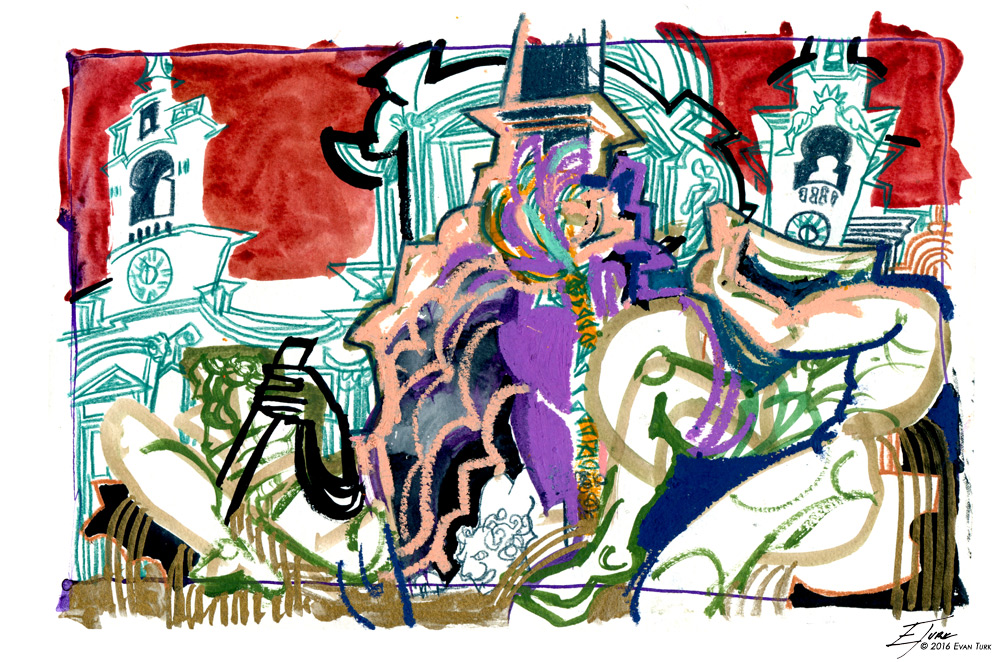
Then we wandered to the Piazza Navona and admired Bernini's Fontana dei Quattro Fiumi or Fountain of the Four Rivers. The allegorical figures represent the four continents and their prominent. rivers: Africa's Nile, Europe's Danube, Asia's Ganges, and the Americas' Río de la Plata. This drawing is of the Ganges on the left, holding an oar representing its navigability, and the Nile on the right, with his head draped to show that people did not know the source of the river at that time.


We also visited the Castel Sant'Angelo which was a wonderful surprise. Between its construction in 134 AD and 1900, it served as a mausoleum, fortress, Papal residence, and a prison. This mishmash of uses created a very unique structure with layers and layers of history. It also has amazing views of the Tiber River and the whole city.


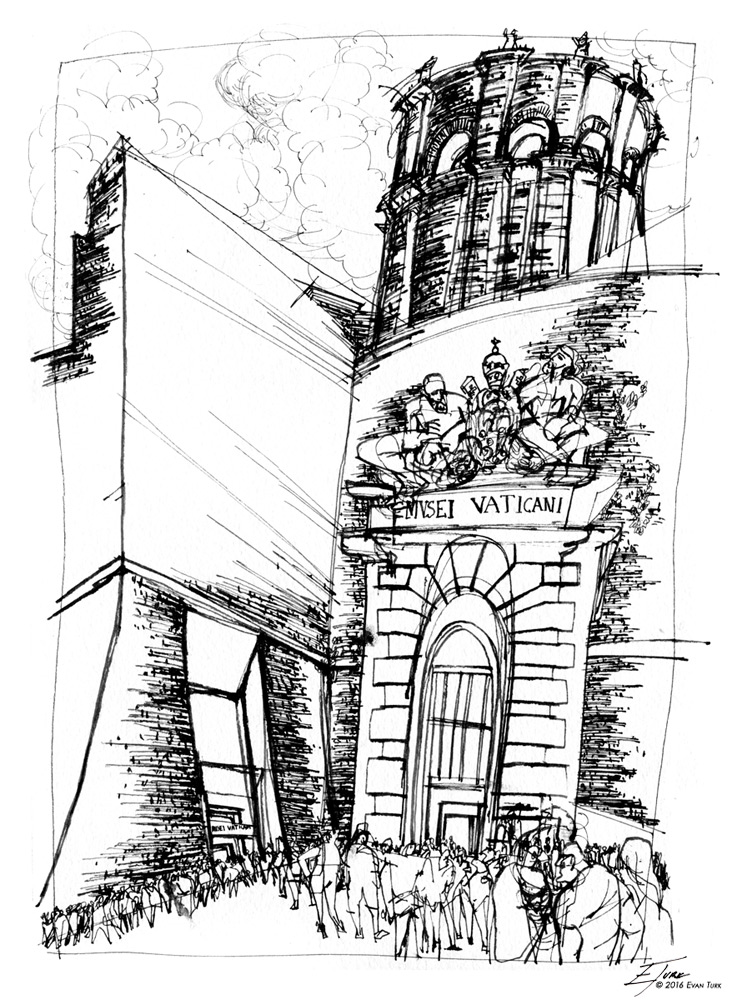
No visit to Rome would be complete without a stop at the Vatican and St. Peter's. I had gone to the Vatican Museum when I was a kid, and really only remembered the Sistine Chapel. Nothing could have prepared me for the exhaustion of the rest of the museum. You are moved in hordes through beautiful room after beautiful room as they slowly lessen the air conditioning to thin the herd before arriving at the Chapel. The ceiling is incredible and well worth it, but by that point you really need a nap.


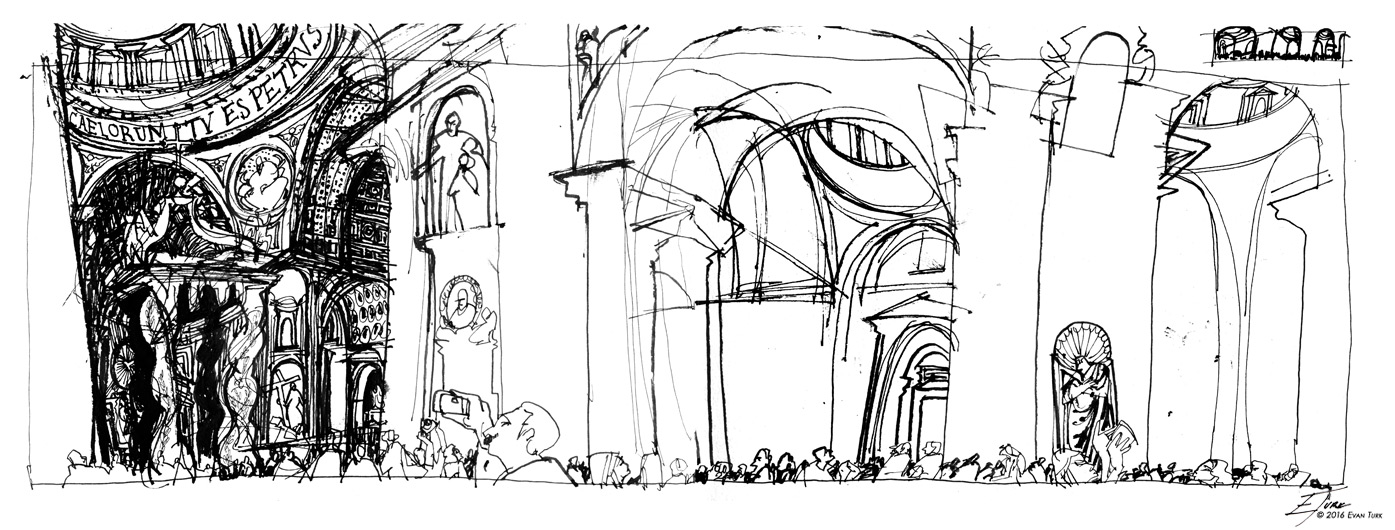
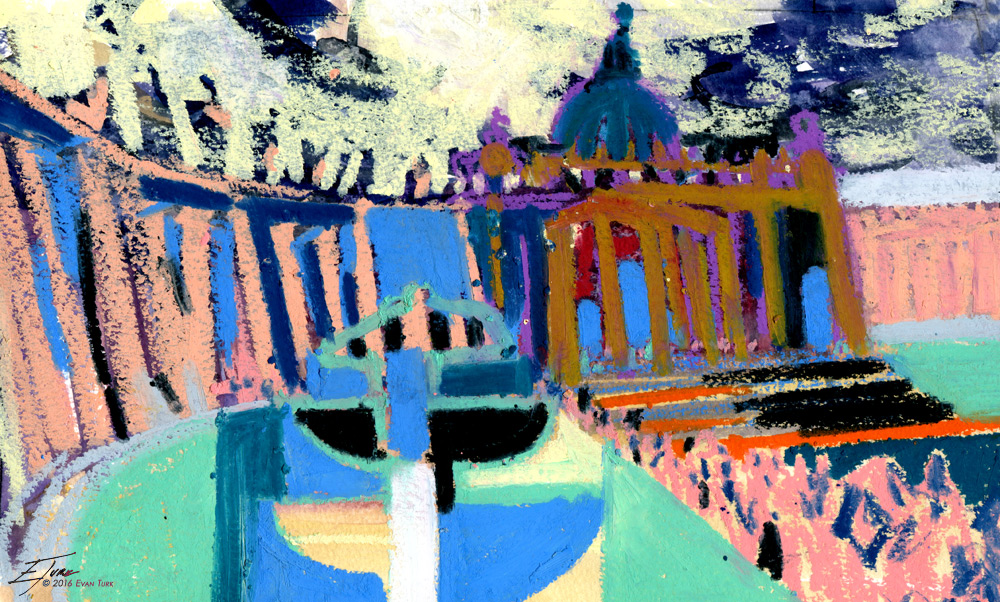
After the Vatican, we went to St. Peter's Basilica, and its impressive, expansive plaza. Inside, the cathedral is wall to wall heavy stone, mosaic, and gilt. It is beautiful, but in an oppressive, heavy-handed way. (Also, they don't let you lean or sit against anything to draw...)


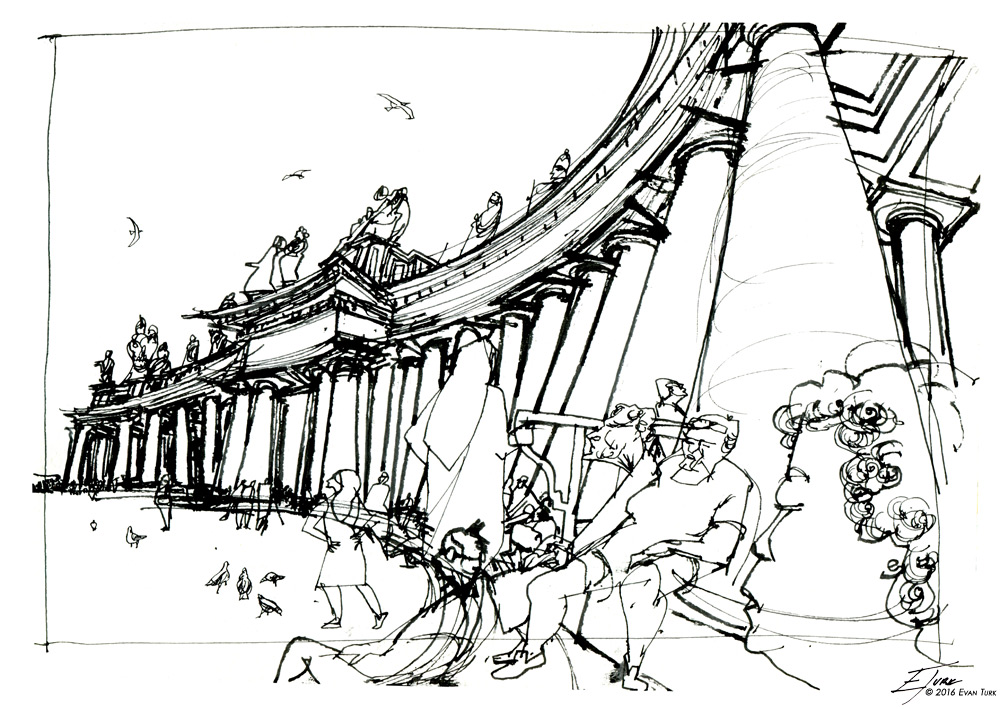
Outside, in the much airier, but equally overwhelming plaza, crowds of tourists exhausted after the Vatican Museum slumped against the endless colonnade.

What a beautiful city; I can't wait to return! But this time, it was on to Tuscany...

This post is part of a series of travel illustration from a three week tour of Italy. For more of Evan Turk's travel illustration, check out the link below: 
 

Sunday, April 24, 2016

Morocco: The weaver as storyteller

I've been busily working on preparing for the release of my new book The Storyteller and have been neglecting my blog! But there are many new posts on The Storyteller website to read about the creation of the book and its art, as well as reviews, event announcements, and educational materials as the release gets closer (June 28!)

I'm so excited for everyone to finally see the book! It has been a long but rewarding process. And the book has been met with a wonderful reception so far! It has received a starred review from Kirkus Reviews and Publishers Weekly, as well as an amazingly thorough and thoughtful review from Betsy Bird at Fuse #8 over at School Library Journal. It is also a Fall 2016 Junior Library Guild selection. 

I am also very excited to announce that original artwork from The Storyteller, as well as some of these reportage drawings from Morocco and preparatory sketches, can be seen at the Brooklyn Public Library as a part of author/illustrator Pat Cummings' show "The Turn of the Page". Pat was one of my favorite teachers at Parsons, and is having a well-deserved residency at the Library. She has invited some of her former students who work in children's books to exhibit with her, and I am so honored to be included! I hope you'll come by and check it out! Opening reception the evening of May 9.

The post below is from The Storyteller website and features drawings from a research trip I took for the book in the fall of 2014. 


 ---
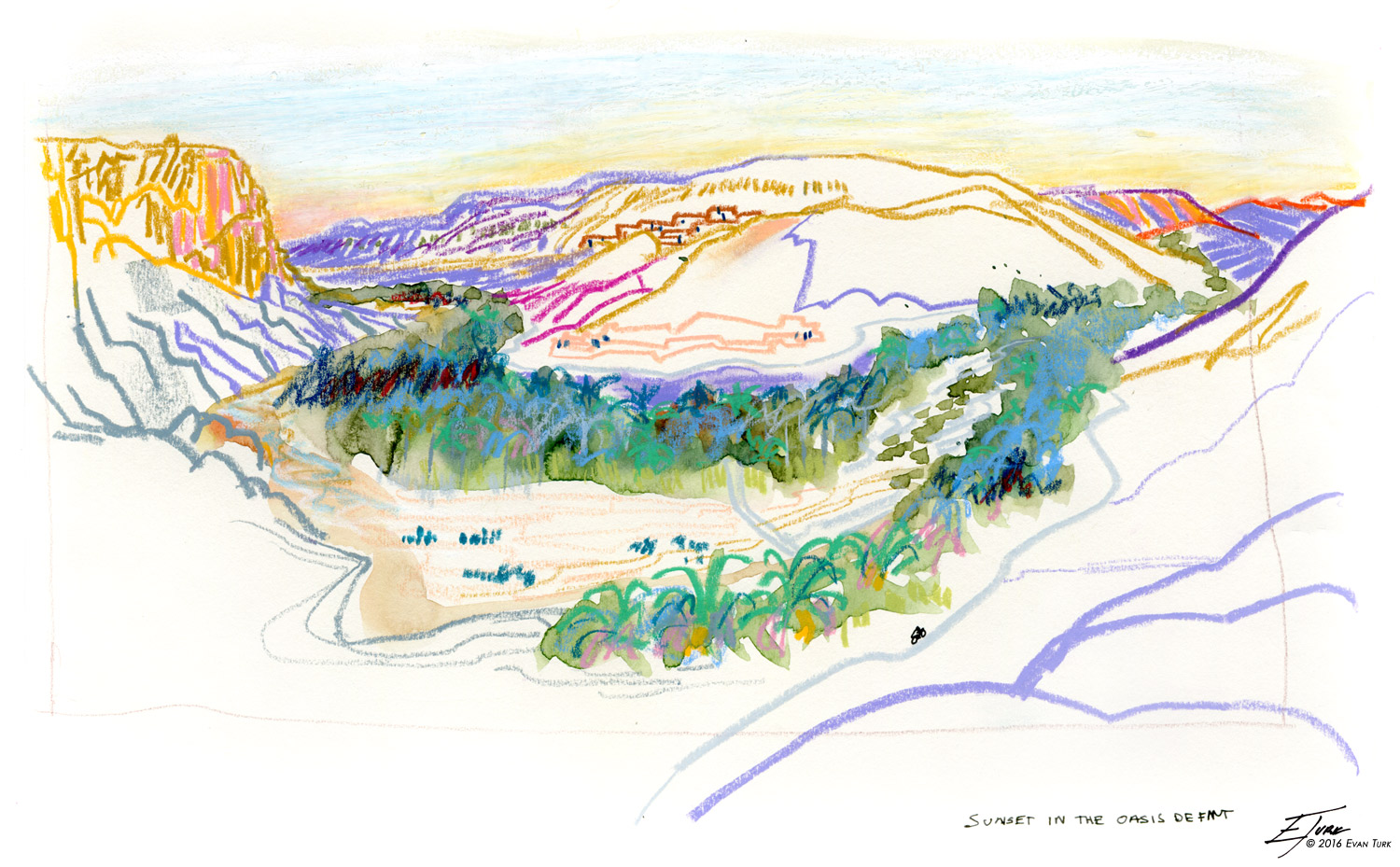
In October 2014 I took a trip to Morocco to do research for The Storyteller. One of my favorite experiences was spending a day in the village of Anzal in southern Morocco and meeting the women carpet weavers there and their family. These drawings (aside from the illustrations from the book at the end) were done on-location in Anzal and the nearby Oasis de Fint.
weaver15

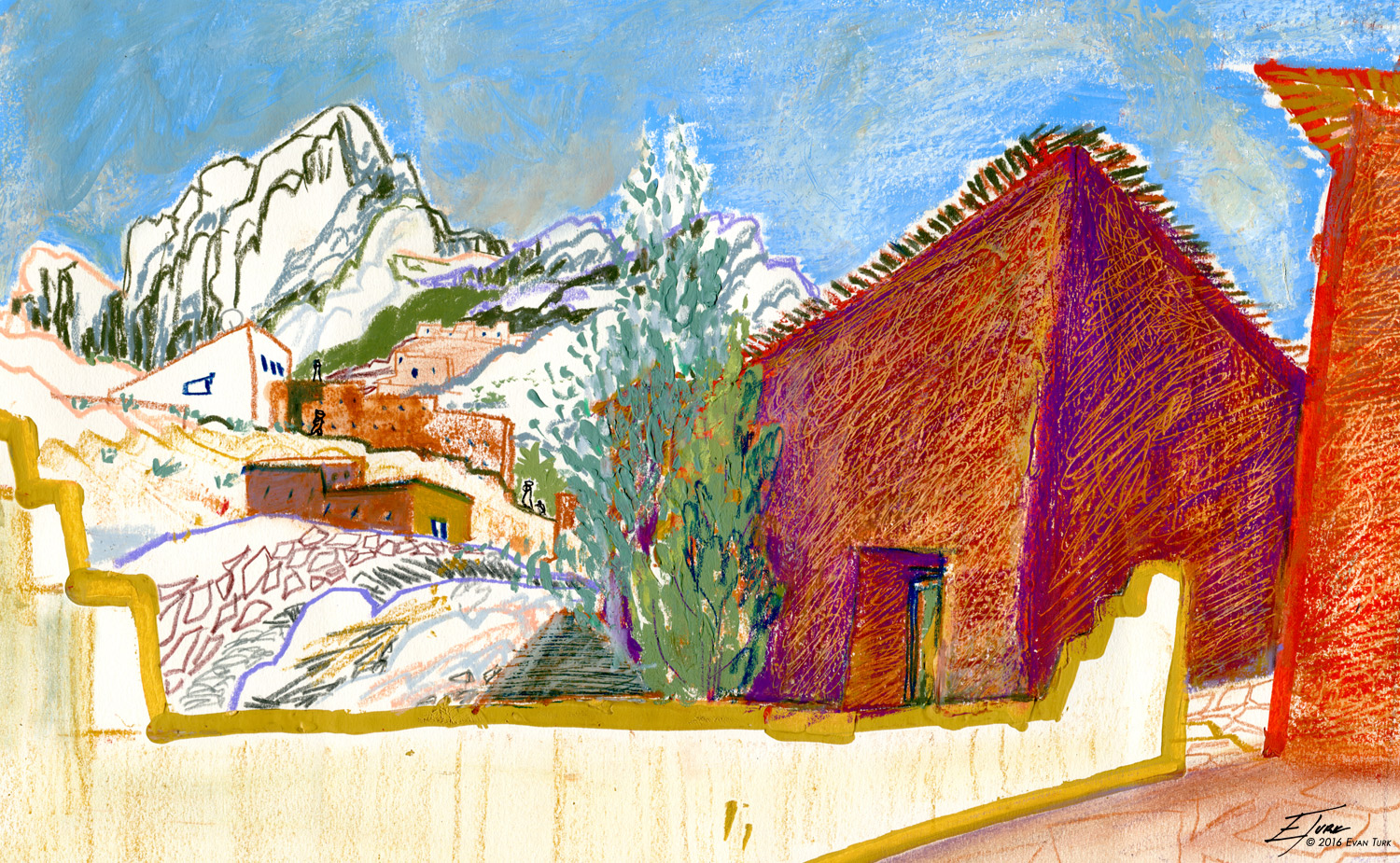
I arrived at the village of Anzal and met, Naoual, a twenty two year old woman from the village who translated for me and told me about her village and the weaving association. The village is nestled in a valley between harsh, dry mountains. The landscape is both empty and calming. The ground and sky seem to extend in all directions for eternity. It is said that the top crossbar of a loom is often called “the beam of heaven” and the bottom bar, “the earth”, with everything between as “creation.”
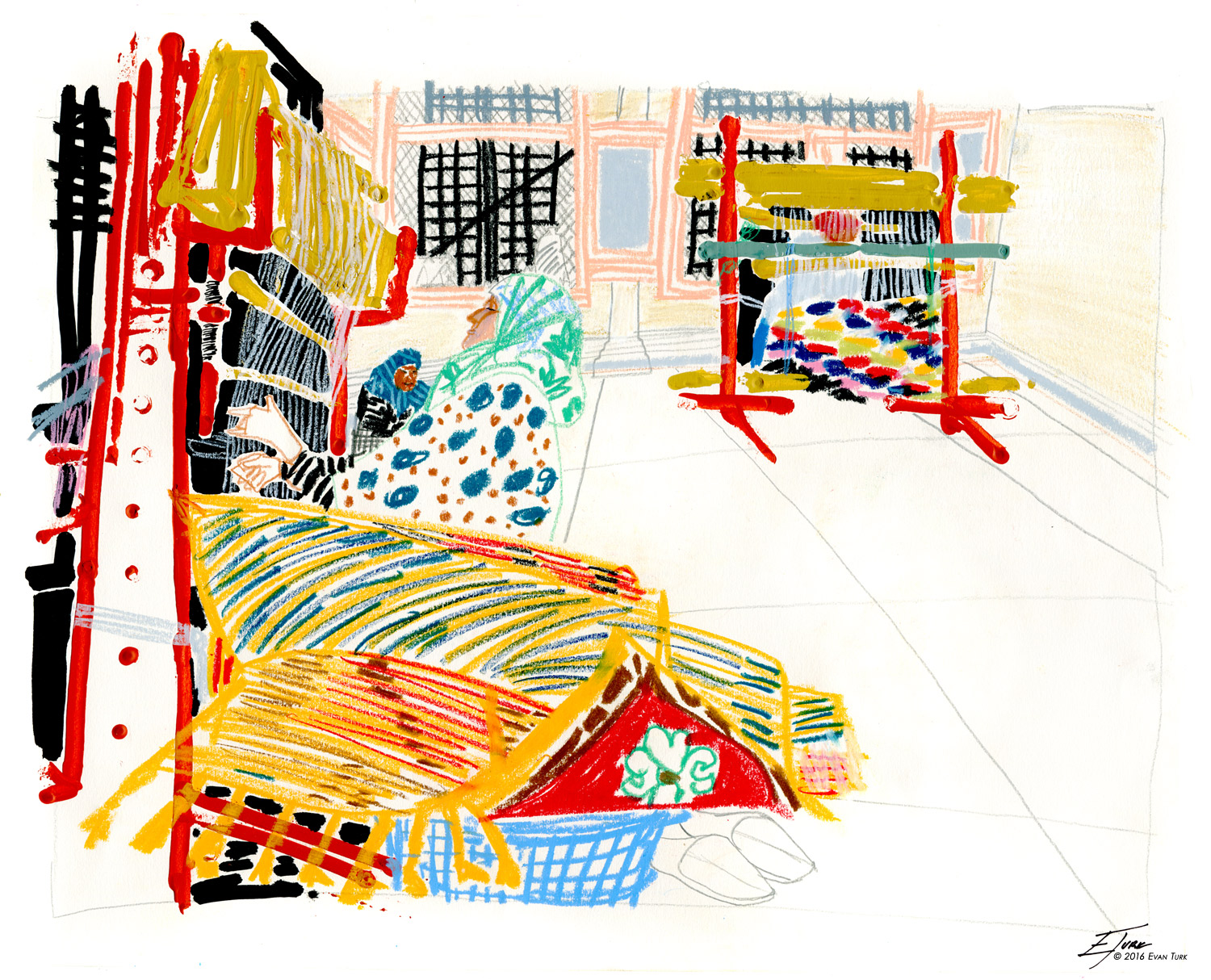
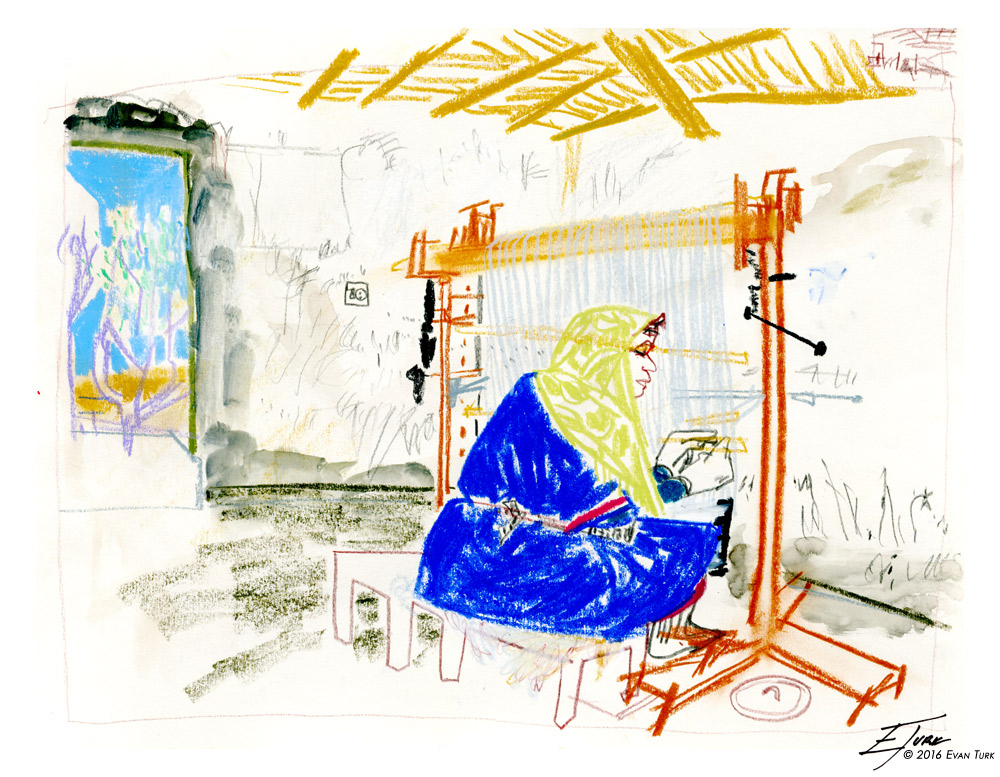
Naoual led me the short distance to the Association where I met Aicha, Fatima, and Rahma, Naoual’s mother-in-law. Aicha and Rahma were seated in front of their looms, made out of red steel I-beams and heavy wooden crossbars. A net of vertical yarns, the warp, stretched between the two crossbars in front of each weaver. Beside them were bags and cans of brightly colored, short pieces of yarn that would be knotted individually around each of the warp threads into a colorful design, the weft.

weaver06

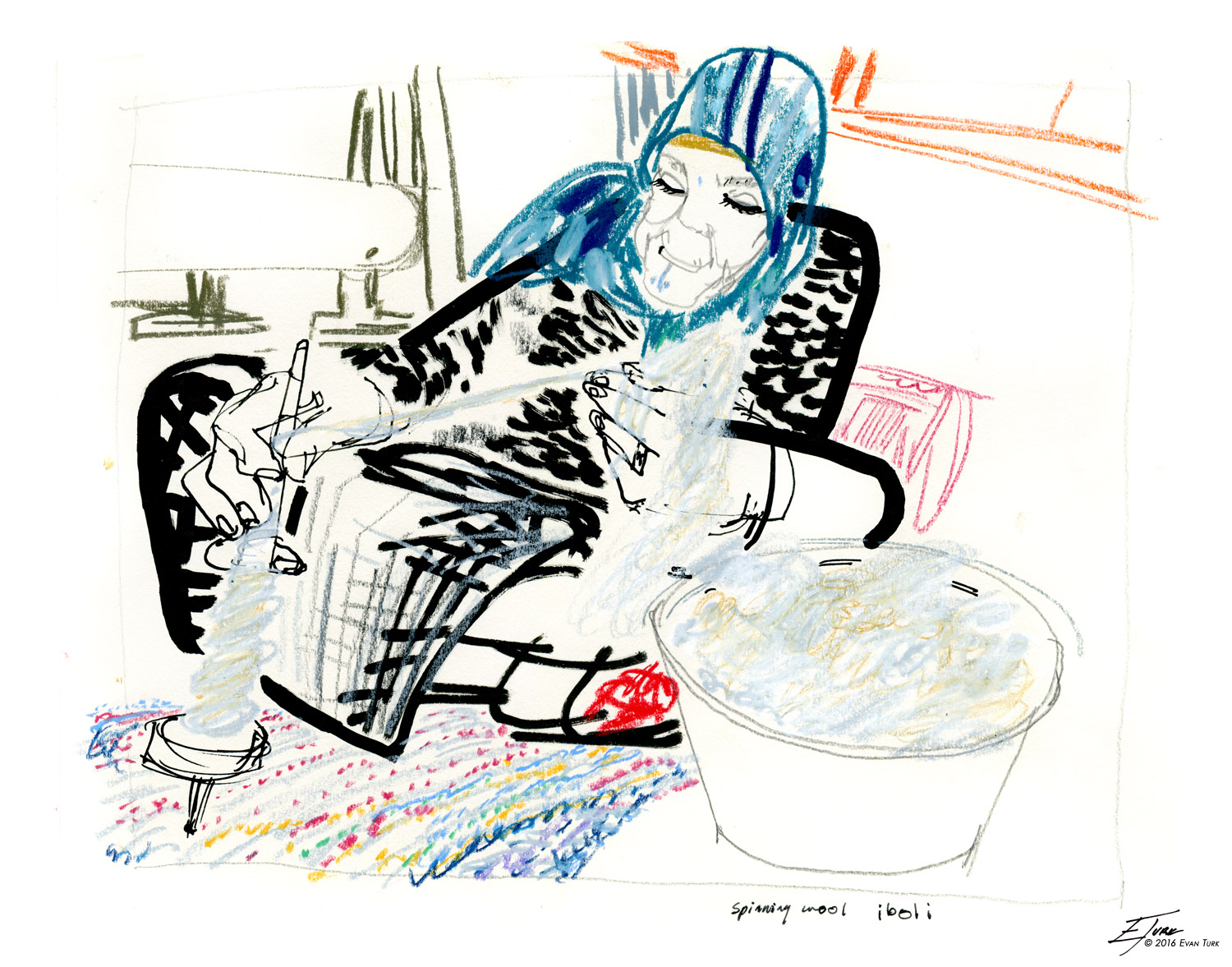
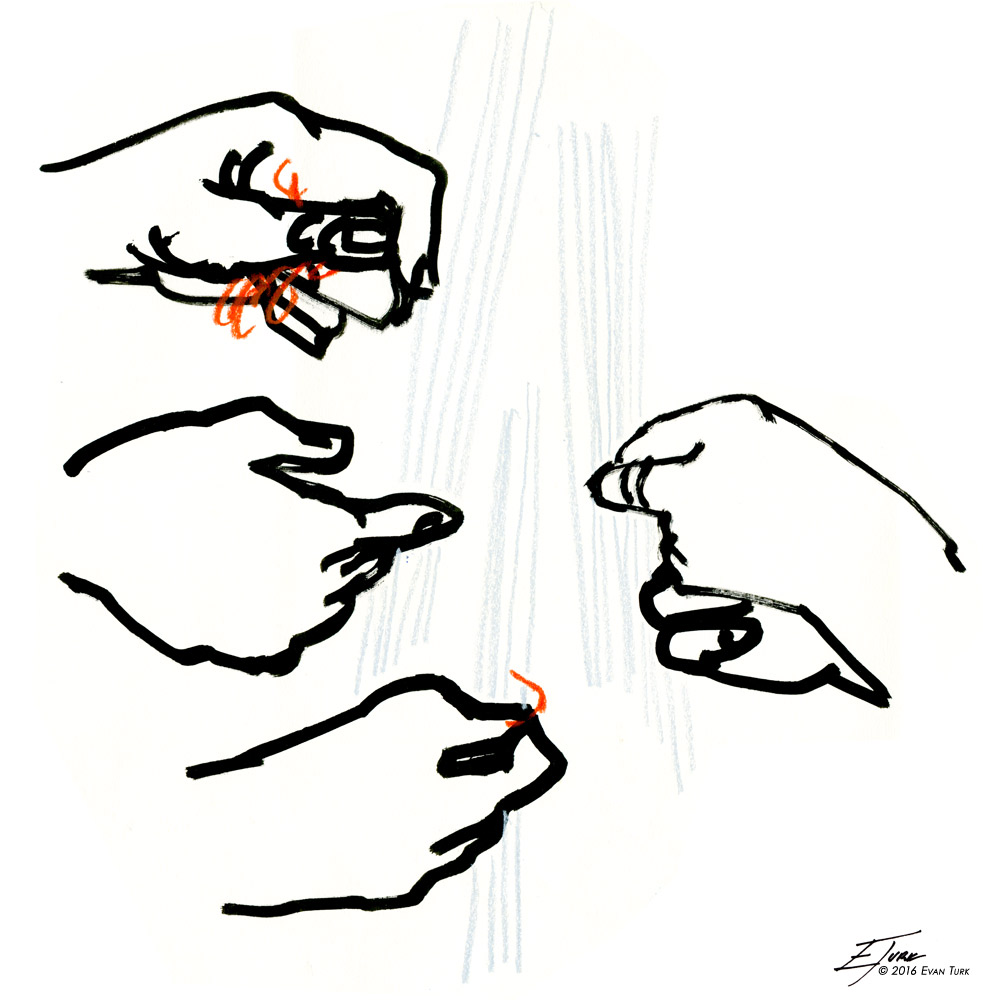
Fatima sat nearby Aicha, taking tufts of wool and winding them into yarn on a spindle, whirring between her fingers.

weaver07

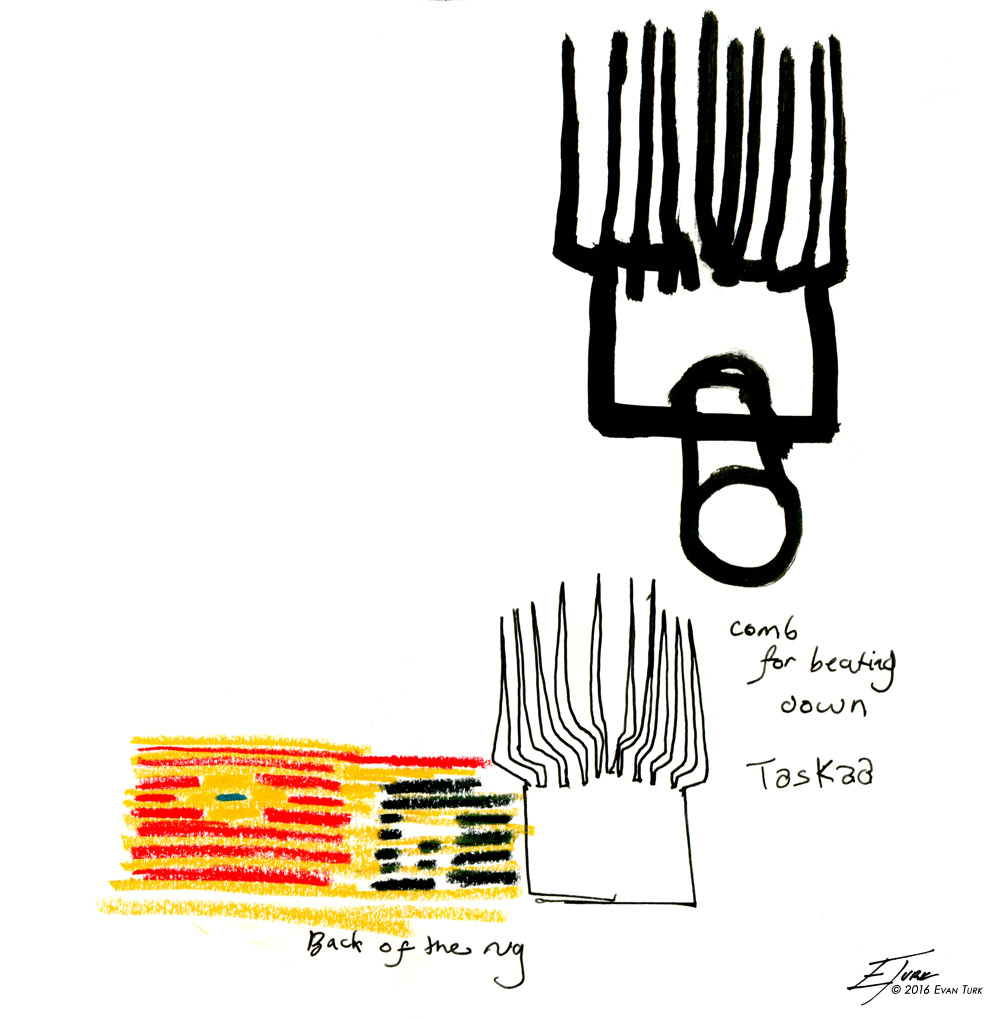
Aicha’s hands worked quickly, knotting each row, and then smacking the knots down with a comb called a taskaa, which resembled a big spider.

weaver09

Spiders are often associated with weavers, and their magical creative ability in forming webs. The act of weaving feels both magical and utilitarian. When you see a finished carpet, the staggering amount of work is both hidden behind the beauty, but also evident in each individual knot.
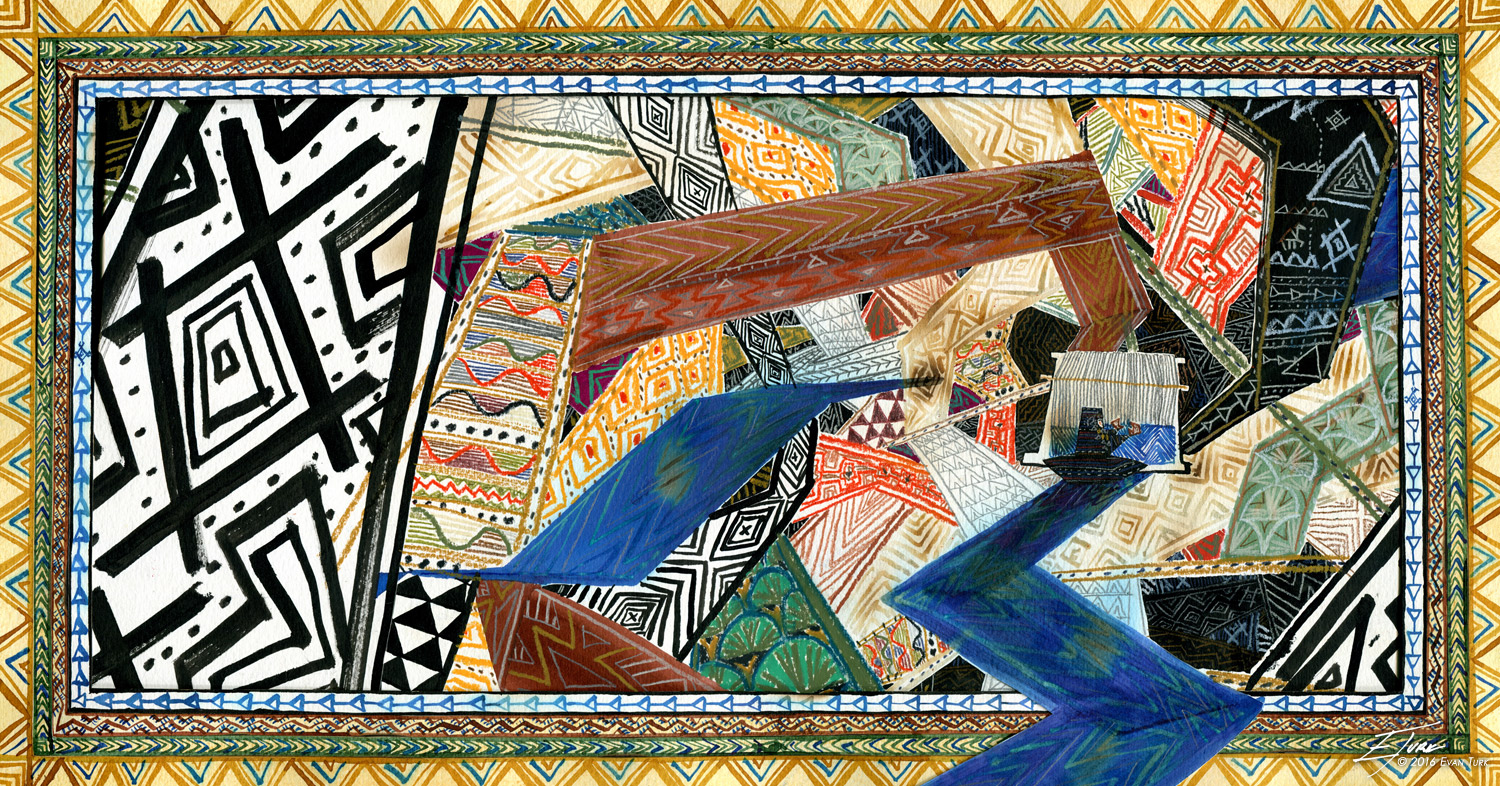
Patterns spread across the warp, slowly appearing as the weaver moves from side to side, row to row. Symbols, triangles, diamonds, zig-zags, and other shapes emerge. The symbols are infused with historic meaning, but also with the individual whims of the weavers.

weaver13

I watched as Rahma struggled in contemplation in the early stages of her weaving, trying to decide on a color and a direction. The dreaded “blank page syndrome” that plagues all artists at some point, manifests in the even more daunting “blank loom” which will be the home for her hands for the next many hours and days.

weaver17

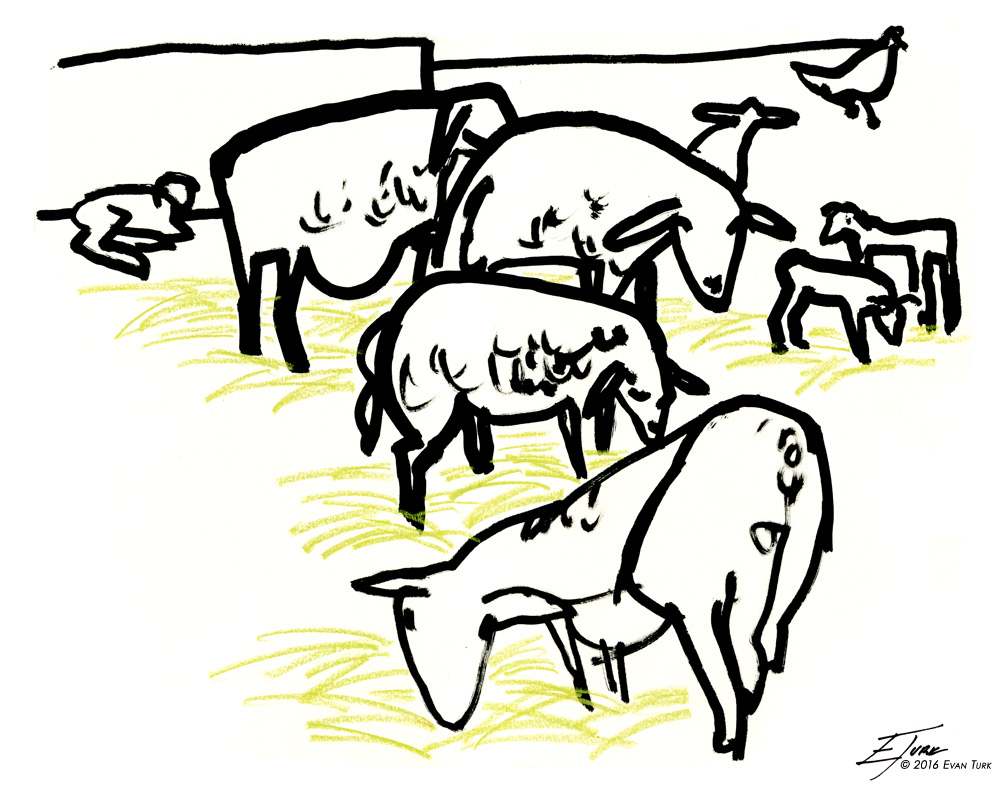
Naoual showed me her family's sheep pen (who's wool is taken for the carpets), and led me to her own house for tea and lunch with her mother-in-law, Rahma, and Fatima, the spinner. I listened as they all spoke back in forth in Tamazigh, as Naoual tried to keep me up to speed on the conversation. We discussed the growing presence of Tamazigh people in the national conversation, as it became an official language in Morocco, in addition to Arabic. Over 80% of the population of Morocco has Tamazigh ancestry, but their language was not recognized until recently. New possibilities are growing as the diversity of the country is embraced.

weaver16

Naoual and her friend then took me on a small tour of the gardens behind the town. She showed me the water source, where Anzal’s water is filtered in from a nearby spring. The water descends from the spring into two divergent paths, towards the reservoir, or off towards the village. Trees line the cement channel made for the water. Twinkling olive trees baked in the sunlight, and shriveled pomegranates littered the ground with their seeds. The gentle breeze flowed through the valley, as if it had come from far off mountains, and the eternity of ground and sky. We talked about our lives, the differences and similarities, hopes and possibilities. As the sun began to set, we made our way back to the Association.

weaver08


We left the open valley and returned to the unadorned room with the weavers.

weaver11

A new weaver, Fatima, joined them with her carpet stretched on the loom. Undulating mountainous forms (or are they clouds?) overlap and emerge as she worked. The pattern grows, creating both ground and sky within the confines of her warp, but extending in all directions into infinity.

Sketch © Evan Turk

We then went to her mother’s house where I met her mother, brother, and sisters as we ate bread, honey, almonds, and ground dates, and laughed while sipping our hundredth cup of delicious mint tea.

weaver14

She took me to her aunt’s house where her cousins, aunt, and grandmother were doing household chores and weaving.

weaver12

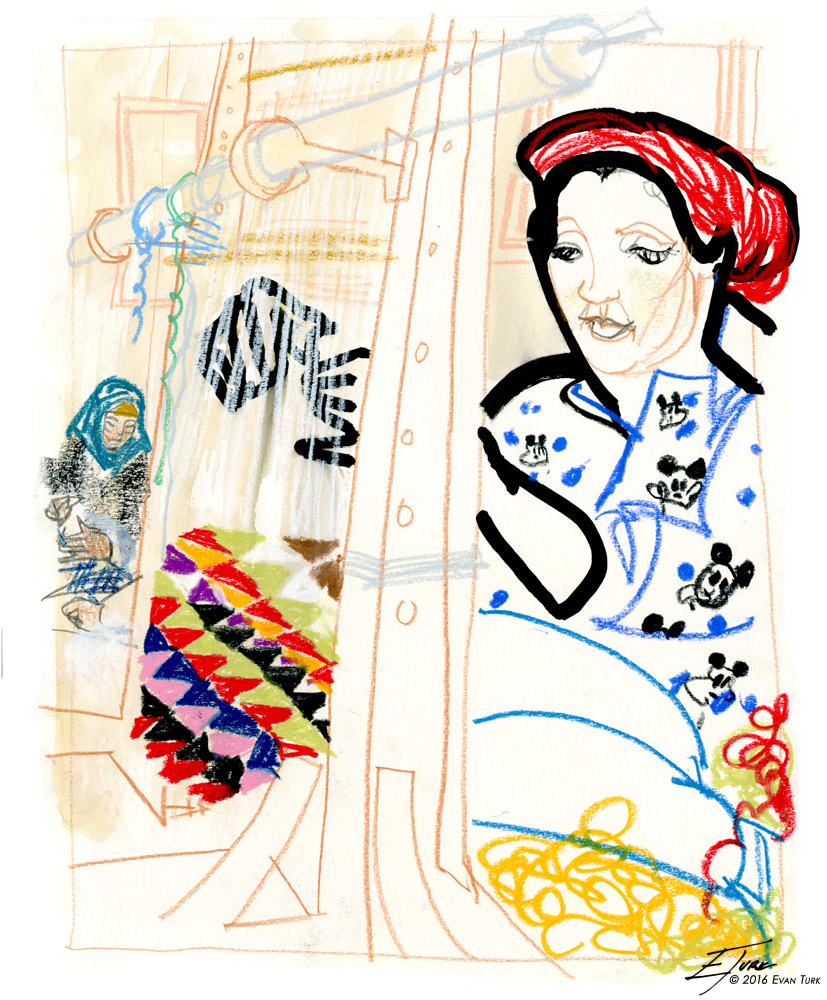
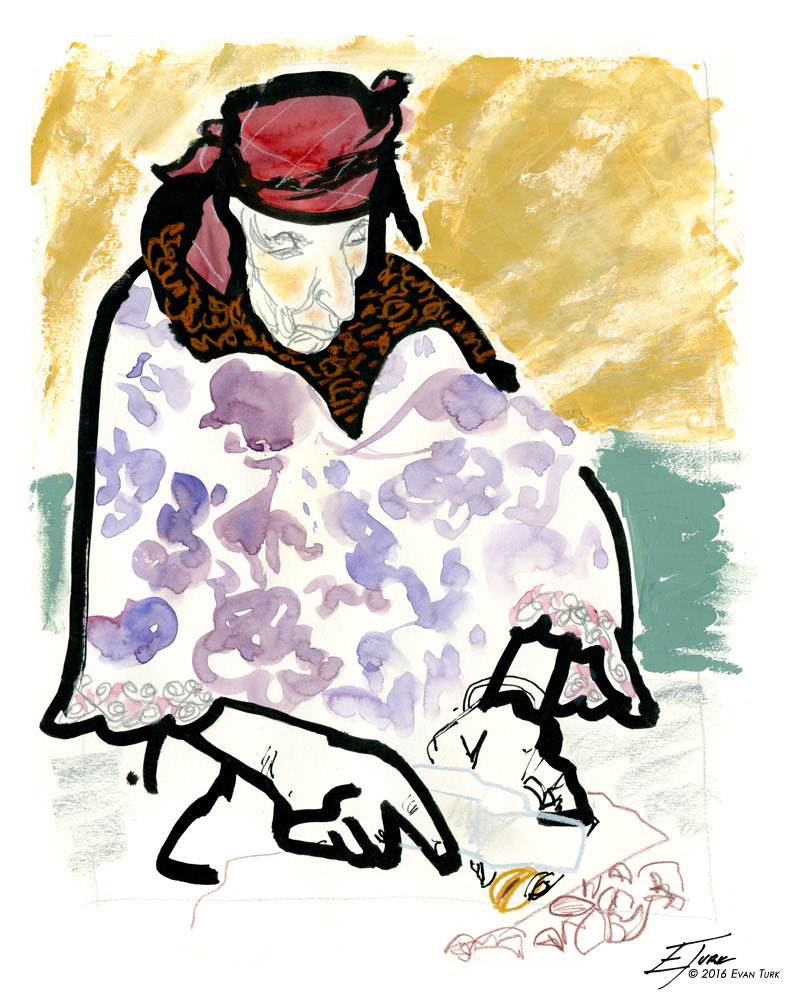
Her grandmother, with high, bronze cheeks and a warm smile, cracked almonds from their trees out of their shells with a stone in the back. She laughed as she saw her portrait, saying she couldn’t wait to tell her son that today she met a man from America who said she looked like his own grandmother.

weaver04

The act of weaving is often related to that of speech, or storytelling. A tale is referred to as a “good yarn” and stories are “woven” in twists and turns. The words "text" and "textile" even come from the same Latin root, texare, which means "weaving." The looms serve as repositories for words and thoughts not necessarily spoken. Patterns and symbols come together across the landscapes of the carpets, often with stories of pregnancies, births, deaths, and weddings. Like scrapbooks, created over months, the knots are woven in time as life events unfold. Older carpets seem to have been formed organically, with no plan in mind. There is just the warp to hold it together, and life to fill in the spaces as it comes.

weaver01

In the ebb and flow,
In warp and weft,
Cradle and grave,
An eternal sea,
A changing patchwork,
A glowing life,
At the whirring loom of Time I weave
The living clothes of the deity.
Goethe, Faust

For more of Evan Turk's travel illustration, check out the link below: 
Evan Turk Travel Illustration