Saturday, March 16, 2013

Morocco: Return to Fes


After the Sahara, we returned to Fes for a couple days and then headed back to New York. Morocco is an amazing place, but not always an easy one. It's exhausting and magical at the same time.

There aren't a lot of places in the world where you can make a drawing like the one above: There is a man riding side-saddle on a mule, who is stepping daintily over the cobblestones of a precariously narrow medieval street perched on a steep hillside, while a man in the distance twirls silk into thread down the long winding streets, as the sun begins to set, turning the whole street to gold.

I certainly can't wait to go back.

Thursday, March 7, 2013

Morocco: The Desert


Our final excursion out of Fes was to the Sahara near the border with Algeria. From Fes, it was a 9 hour drive to the dunes through some of the most amazing landscapes I've ever seen. We passed through Mediterranean rolling hills, an Atlas cedar forest, a French ski village, a whirling dust storm, one of the world's largest oases, and a high desert plateau surrounded by soaring peaks that were about to receive their first snow of the year.

We arrived at our hotel after a long drive across a desolate black plateau in the middle of a sand storm. We could barely see 5 feet on either side of the car, and even then it was only parched black earth. Our hosts came out to help us scramble inside as the blowing sand proceeded to wedge itself into every mouth, eye, ear, and otherwise.


After a tasty meal, our hosts treated us to some Berber drumming and we turned in for the night as the sandstorm blew on.

We awoke to a serene breeze through the window, and the wall of blowing black sand outside had settled to reveal endless golden dunes only 20 feet away. We ate a quick breakfast and went out to start our journey.


We met our two camels, one brown was brown and wooly and the other beige with a nose ring. Of course we named them after our brown and beige cats at home, Bert and Pica (We eagerly asked the camel drivers if they already had names, he answered "No. They are camels.").

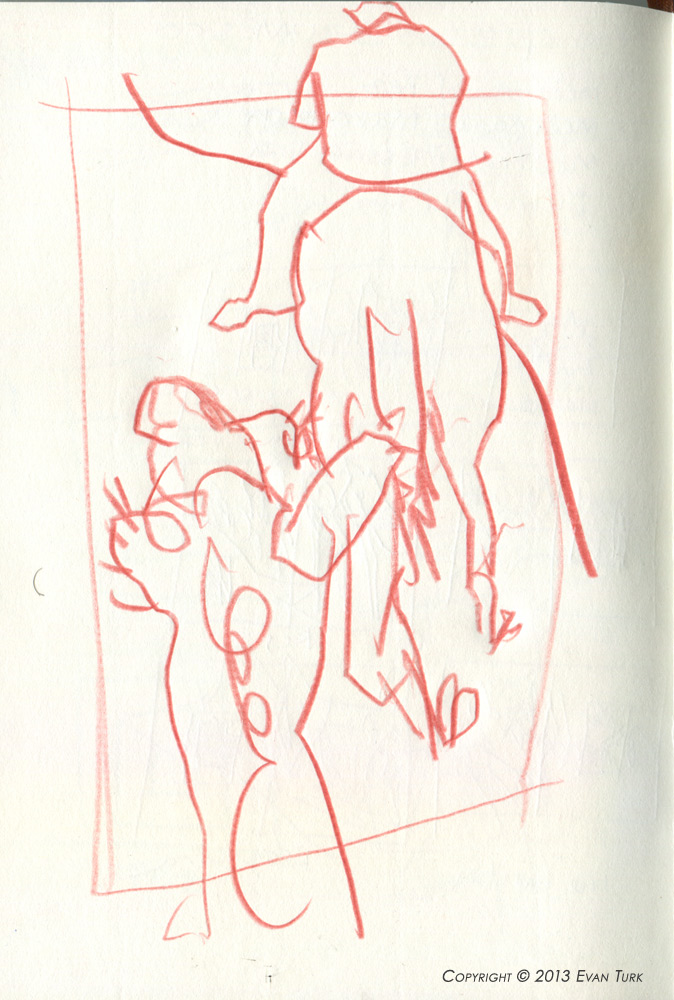
The back view of Chris on the camel in front of me.

 After a long, beautiful camel ride through the martian landscape (through which the blustering wind and camel jostling made drawing close to impossible), we settled into our Berber campsite for the night, hoping to see the amazing starry skies you can only see when you're miles from civilization.

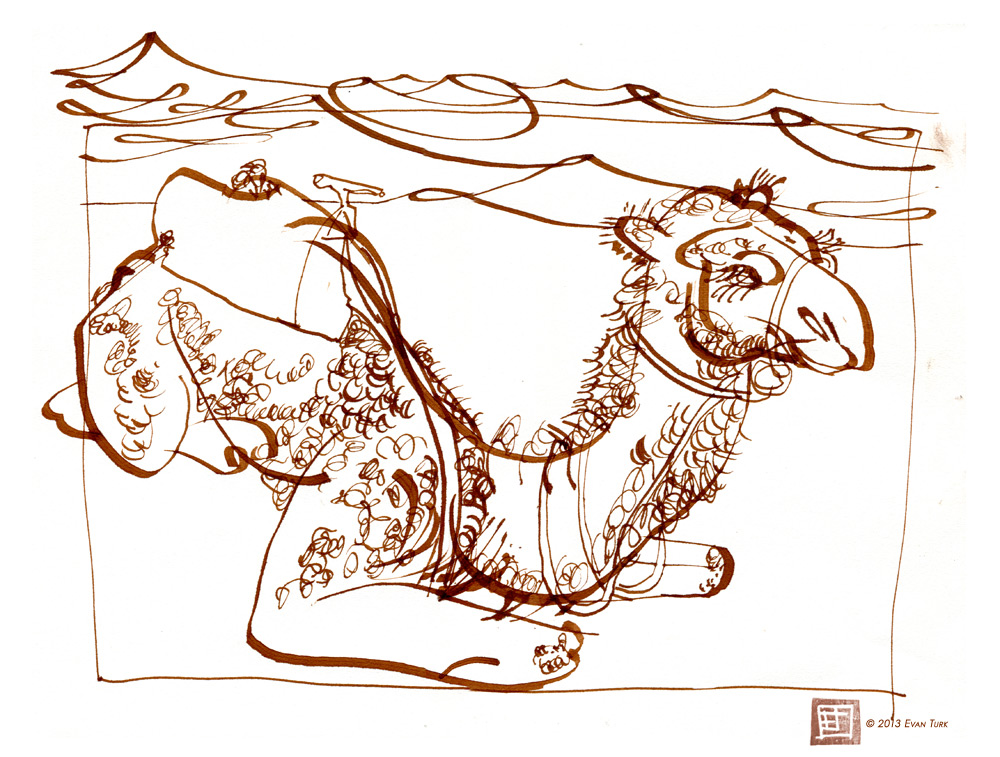
Pica the camel.

Naturally, as the sun was going down, the storm clouds were rolling in. As we were lying in our tent, trying to sleep through the booming thunder, we began to feel the pitter-patter of rain drops on our faces. The carpet/bamboo roof of our tent was not exactly waterproof, and as the frequency of the drops began to increase, we scrambled our things together and ran into the main tent where we huddled with a nice Australian family under the more substantial roof. We were treated to a torrential downpour in the middle of the Sahara desert as the deluge of water poured into the tent on all sides of our little mattresses in the center.


We didn't end up seeing any stars at all, but I feel like a rainstorm in the Sahara is just as unique of an experience, and we can see the stars the next time. Plus the sunrise the next morning made all the rain worth it, as the dunes that had been faded and shifting yesterday became crisp, solid, and vibrant after the rain.


Saturday, February 9, 2013

Morocco: The Iron Worker


When we returned to Fes, Chris and I went out into the souks and happened upon a tiny, unusual shop on one of the many alleys of craftsmen. The man, dressed in black and grey with salt & pepper hair, was making black iron work with silver wire hammered into intricate designs. The iron-worker was such a sweet man, and a real artist. We found out later that the technique is one called Damasquine, and is a Moroccan version of a Syrian craft that originally used gold wire in much more formal Islamic designs. This man, while he created the more formal Moroccan style work as well, had walls of beautiful and whimsical animals that he had drawn himself. They felt like little Picasso drawings made out of iron and silver.

After picking out all of our Christmas gifts for the year, we asked if we could stay and draw him while he worked. We were able to see him create one animal from, from start to finish, in his tiny 5x5 shop.


He began by sawing the iron into the shape of a fish.


He then scored the iron and polished it with a jade-tipped utensil.


Then he heated the iron in a burner and it came out hot and jet black.


Then, using a tiny hammer, he hammered the silver wire into a design, like drawing.

 Once he finished, he polished it again with the jade, and gave it to us as a gift. It was so wonderful to see someone so passionate about what he was doing. His father had done Damasquine in gold, and he was the 5th generation of Damasquine workers in his family. He is the only one to practice the craft in Fes (although a dozen or so others do in the nearby city of Meknes), and he said that while his children enjoy drawing, they didn't like the hard manual labor that goes with creating the iron work, so he may be the last.

Sunday, February 3, 2013

Morocco: The Blue City


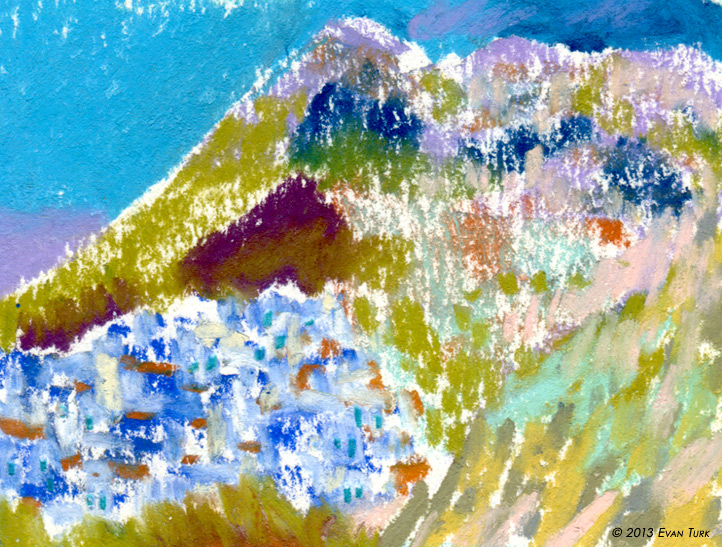
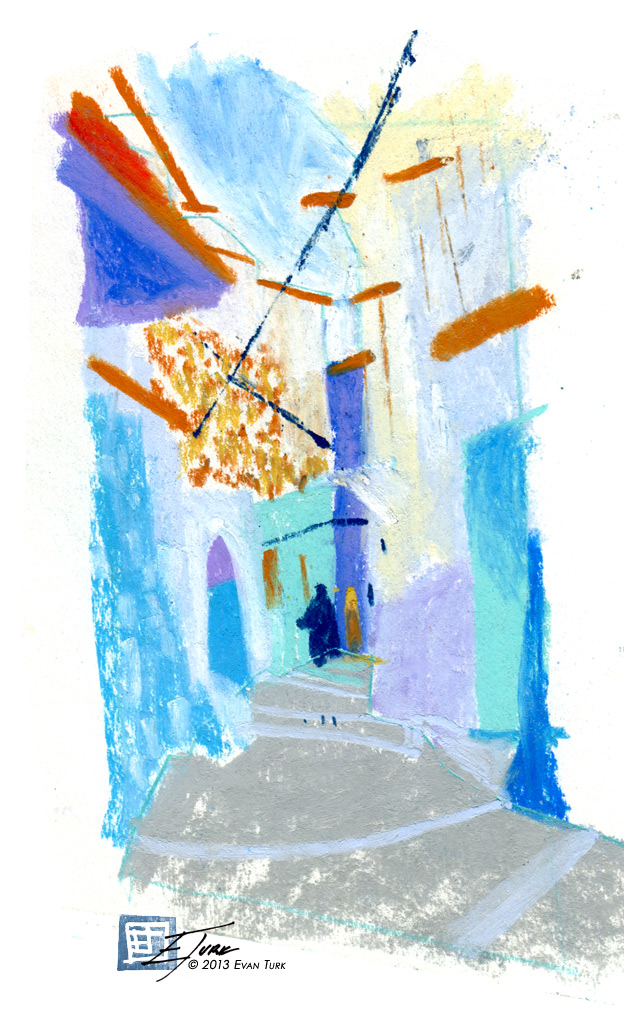
We took a short trip from Fez, through the Rif mountains to the beautiful blue city of Chefchaouen. The small town lies perched on a hillside in a valley surrounded by soaring, jagged peaks.


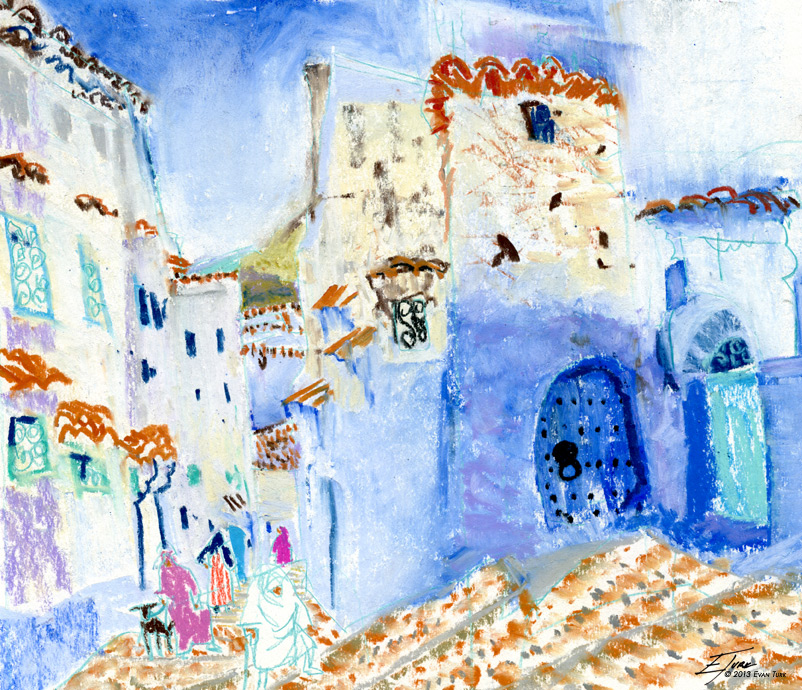
Since the 1930's, the walls of Chefchaouen's medina have been washed with blue pigment (possibly as a result of Jewish immigrants fleeing Europe). Thick layers of every color of blue imaginable coat the walls and streets of the city.


Because of the sheer cliffs of the Riff mountains, the city is connected by a web of incredibly steep stone staircases, which surprise you with bizarre, twisting, otherworldly views.


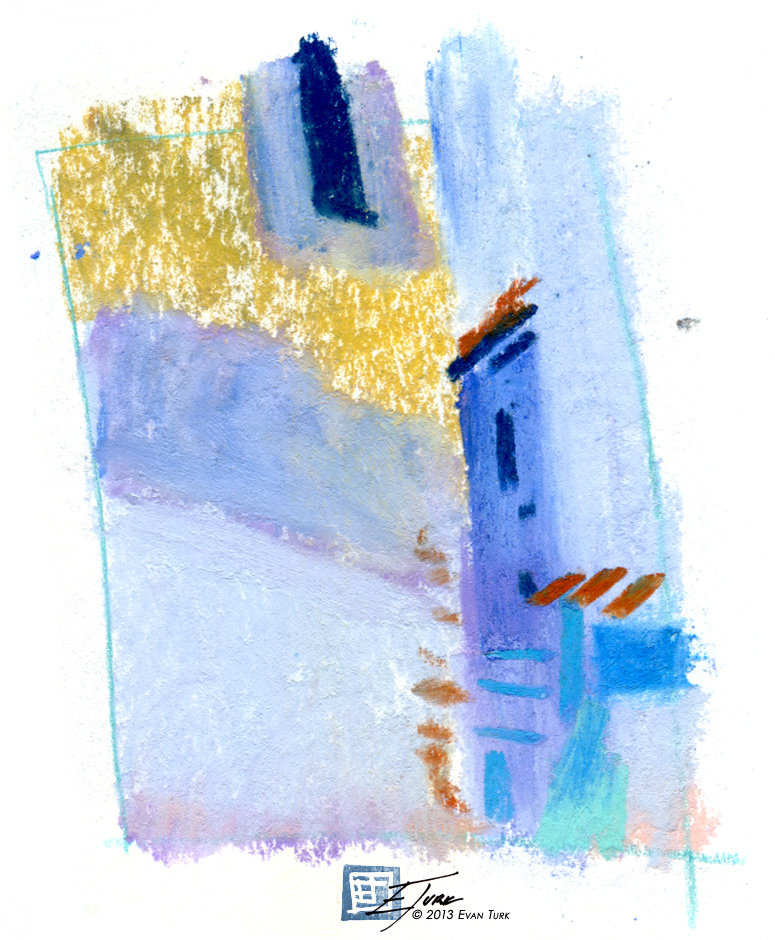
Some streets have so many colors at once that they feel like an abstract mosaic instead of a real city.


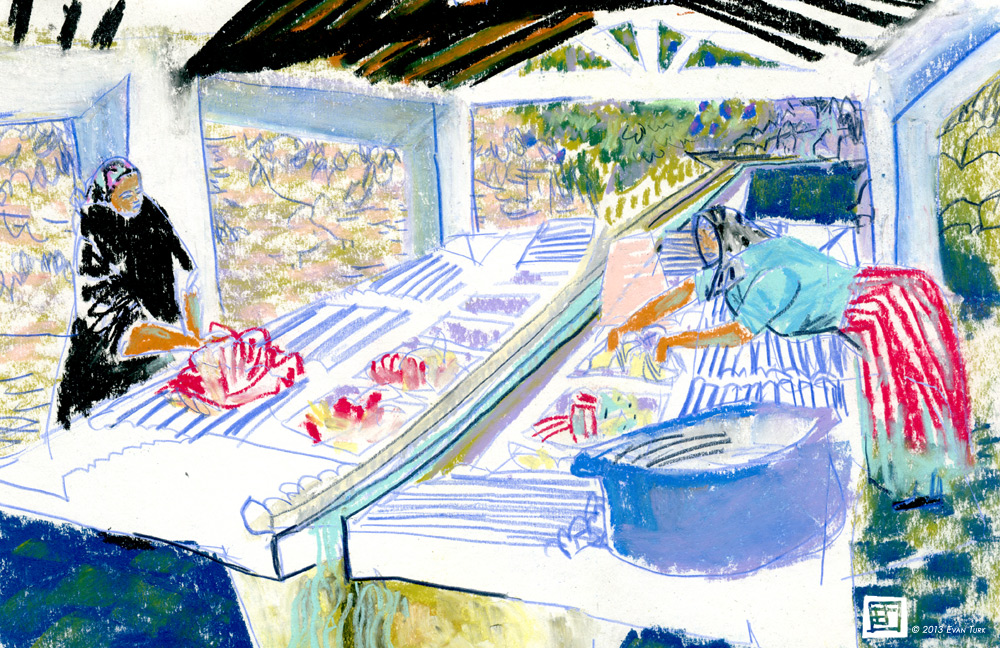
 Down one long staircase at the edge of the city, you find the Ras el-Maa river trickling down the stone steps into the valley. Here the women do their laundry on huge concrete beds in the river, in some of the most beautiful surroundings you can imagine. I couldn't help but want to draw, even though I felt a little intrusive drawing people just doing their laundry. My broken French was enough to get us through most of Morocco, but here on the eastern coast, they only speak Spanish and Arabic. Not knowing a word of Spanish, I mimed my way into asking whether or not it was okay for me to draw them.
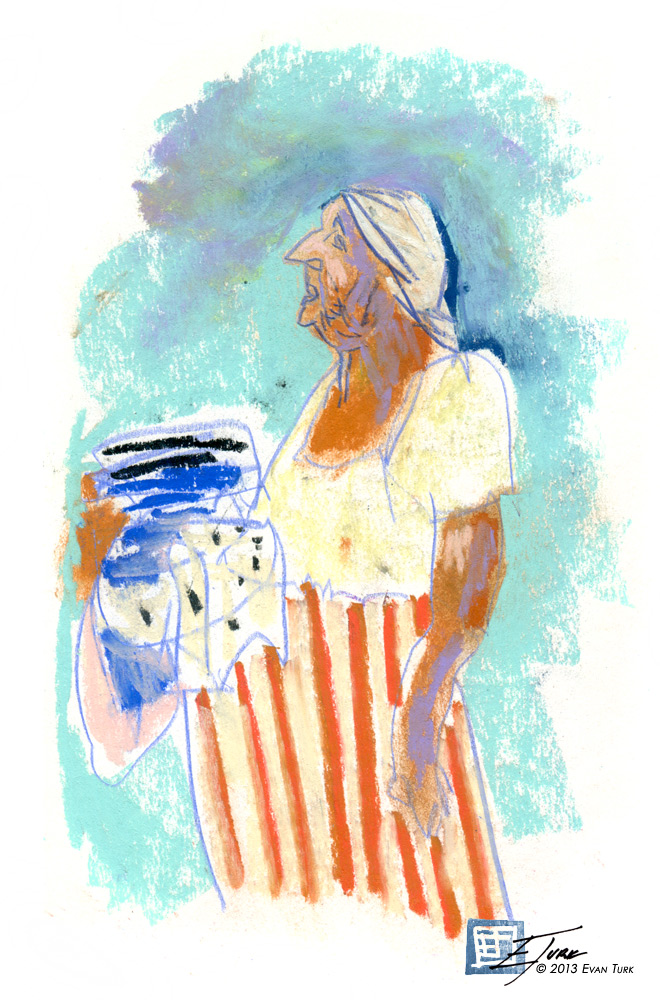
 

Initially they seemed wary, so I contented myself with just drawing the scenery and leaving the women out. The old woman of the group came over and sat next to me while I drew for a while, and smiled as I struggled to ask her questions. Eventually, I successfully gestured my question, and she consented to let me draw them. They went on with their business, laughing and singing together over the sound of the trickling stream and the soft breeze rustling through the hillsides of morning glories.
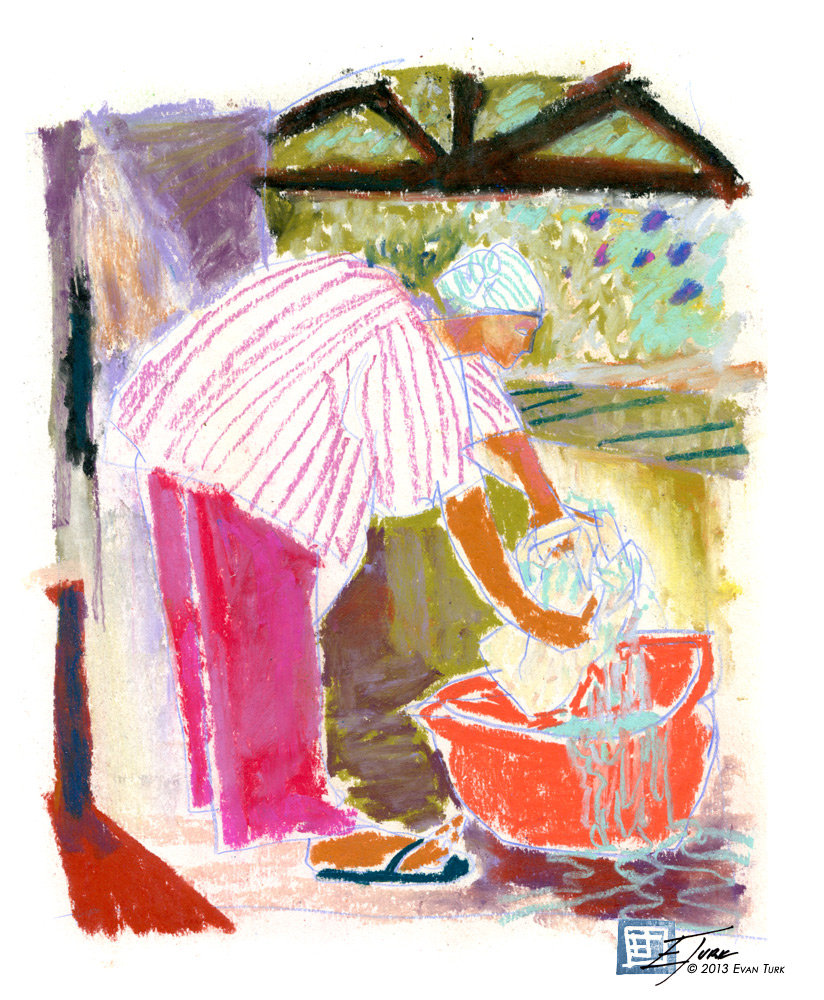

As I was drawing the teenage girl above, she seemed bashful because she was in her laundry clothes, and the old woman laughed and started asking me something in Spanish. I couldn't understand a word she was saying, or why the girl suddenly started blushing and laughing until I heard the word "matrimonio" pop out. Once I realized she was asking me, jokingly, if I was planning to marry her after such a tender drawing, I blushed and instinctively blurted out "No!". We all burst out laughing, and my cheeks turned more and more red as I frantically tried to make a more diplomatic decline of the offer (I don't think she took it personally).

The view out of our room at Casa La Palma


Our wonderful hosts, Ana and Carlos, at the beautiful bed and breakfast Casa La Palma were originally from Spain (only a couple hours away), and fell in love with Chefchaouen and moved there. With the incredible beauty, the calm, soothing air, and slow, trickling way of life, it's definitely a difficult city to leave.

Monday, January 21, 2013

Obama Inauguration 2013: Potential


"I have always believed that hope is that stubborn thing inside us that insists, despite all the evidence to the contrary, that something better awaits us so long as we have the courage to keep reaching, to keep working, to keep fighting."

 -President Barack Obama
in his acceptance of the Presidency, 2012


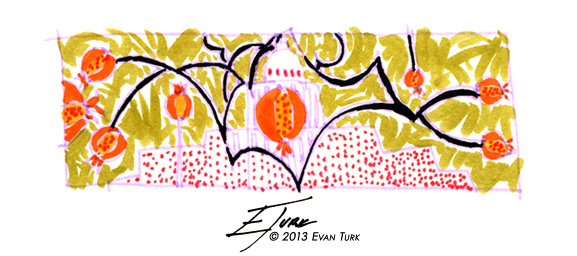
Last week, during a class with Dalvero Academy in Washington DC, we were fortunate enough to witness the rehearsal for President Obama's second inauguration. The capitol disappeared behind a sheet of fog as patriotic music beamed over thousands of empty chairs, waiting for an audience.


I listened from the nearby Bartholdi Garden under the branches of a pomegranate tree, thinking about the idea of potential. Inside this little fruit are dozens of seeds, bursting with potential. Each one could grow into a tree and bear it's own fruit. Today those thousands of chairs were full of people, each full of their own seeds of hope and the potential for unlimited possibilities.


With each new inauguration, there is more than just a change (or continuation) of leadership. There is the birth of thousands of new ideas and possibilities. People can hope for change whether it's now or in 4 years when another president will bring the potential for change.


So here's to 4 more years of hope, change and possibilities!

Saturday, January 19, 2013

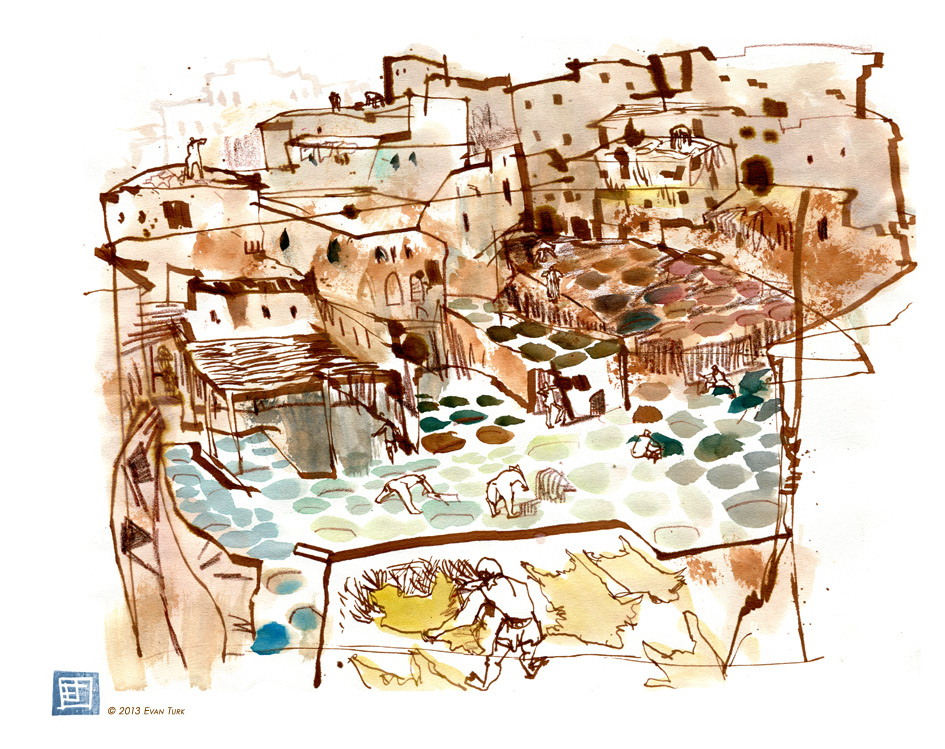
Morocco: The Tanneries


In Fes, one of the main attractions are the leather tanneries. Here, in the oldest leather tannery in the world, they produce leather using the same methods that were used nine centuries ago. After climbing the stairs, we emerged on a balcony overlooking sprawling rooftops perforated with giant vats of foul-smelling mixtures and vegetable dyes. The tour guides often give their groups sprigs of mint to hold in front of their noses to combat the smell (caused in part by large vats of acidic pigeon excrement and the raw hides themselves). Men worked in and in between the vats, scraping, cleaning, dying, and drying the mountains of animal hides.


Friday, January 4, 2013

Happy New Year!


Happy New Year! I'm a few days late, but I found this drawing and it felt like a good first post of the New Year. Pine trees are symbolic of strength in adversity, fertility, creativity, regeneration, and good luck. All good hopes for 2013!

I drew this at Kissena Park in Queens during the nice warm summer, and now that the holiday season is over, the weather is officially allowed to skip straight ahead to spring.